


POVERTY, NOT ILLITERACY IS THE BANE OF UNDERDEVELOPMENT IN NIGERIA
Poverty is one of the greatest enemies of national development. In a country like Nigeria where feeding, shelter and education has become luxury, poverty is more than a one man issue, it has become a national emergency. Underdevelopment is a condition in which an economy, society, or region falls significantly below its potential for economic, social and technological progress while illiteracy is the inability to read and write with understanding and poverty is a state or condition in which a person or community lacks the financial resources, income, and essentials needed for a basic standard of living.
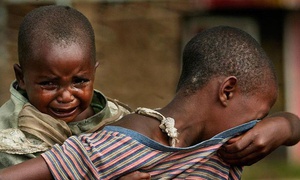
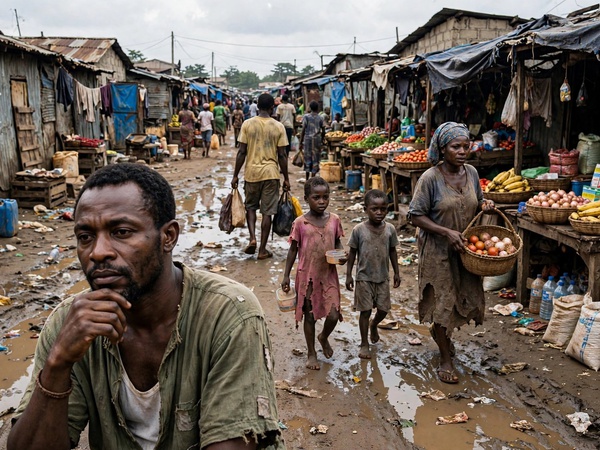
Poverty in Nigeria; an estimated 133 million to 141 million Nigerians representing roughly 62% to 63% of the population live in poverty, driven by high inflation, rising energy cost, weak real income growth, and food insecurity. The Average Nigerian lacks access to the basic resources of life much more the resources needed for a stable economy.
Illiteracy is not the bane of underdevelopment in Nigeria as we have a lot of thriving sectors dominated by Nigerians that have not been confined in the four walls of a classroom. Going extensively further; individuals without formal reading and writing skills in Nigeria thrive primarily within the informal economy which generates roughly 80% of the nation's total employment and contributes between 41% and 65% of the country's GDP. Entry into these industries relies on hands-on apprenticeships, physical labour, and verbal negotiation rather than academic credentials. Millions of non-literate Nigerians build sustainable livelihoods and successful enterprises across several key sectors but there is a common issue for both the literates and non-literates in Nigeria, an unsustainable economy, little or no jobs, bad infrastructure, inflation, insecurity and frequent blackout, poor road networks, weak public health delivery, erratic government policies and a lack of basic safety nets.
These issues and many more others do not only affect the illiterates in Nigeria. Nigerian universities and tertiary institutions produce over 500,000 to 1.7 million tertiary graduates and the formal economy generates only about 650,000 new jobs a year, leading to a massive annual deficit where millions are left without formal employment year after year. So while encouraging Nigerians to get formal education we must also create more job opportunities, stable economy that accomodates great business ideas and technology innovations as this itself is more than the great push people with the "school is scam" mentality need to take a step towards formal education. Development without poverty alleviation can not work.
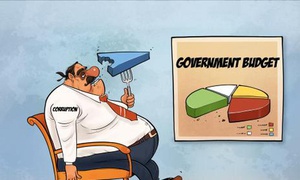
The real bane of underdevelopment in Nigeria is not a single isolated factor, but a combination of poor leadership, systemic corruption, and an over- dependence on a monocultural oil economy. Billions of dollars in public funds have been mismanaged, power often been personalized and controlled by political "godfather", successive administrations frequently abandon long-term national plans in favour of short-sighted ones. Let's not also forget that POVERTY is the major reason the average Nigerian does not have access to education.
In conclusion, the state of poverty in Nigeria is very much responsible for the underdevelopment. A nation without access to basic amenities and standard of living cannot thrive in both the social and economic sector. A great step towards development in Nigeria is tackling the real cause creating a stable economy that gives not only the literates a great standard of living but also the average Nigerians without access to education. Education in Nigeria can only be meaningful with the proper structure.


 31