BLACK SCREEN.
Sound first: a plastic fan rattling, a distant generator, the squeak of a bench.
FADE IN.
INT. COMMUNITY HALL, LAGOS – DAY
A hall that was never meant to be a courtroom. Louvre windows. Dust hangs in stripes of sunlight.
At the front, two tables. At one, the DEFENCE LAWYER sits beside the ACCUSED. At the other, the PROSECUTOR shuffles papers. Beside him is an empty chair with a thick file on its seat. Next to the chair, an old monitor on a stool, its cable snaking away to a generator extension. On the screen, glowing: 87% LIKELY MACHINE.
The fan's shadow sweeps across the screen again and again.
CLERK: "The accused is charged with sounding… too intelligent."
A hum from the crowd. Nobody laughs.
JUDGE (tapping the file): "The accuser has submitted its findings. It is not available for questions."
DEFENCE LAWYER: "It is never available, my lord."
THE ACCUSED
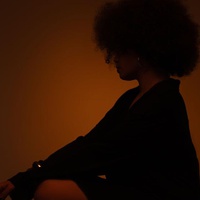
The Accused is twenty-two. A school bag sits on her lap. She unzips it slowly and the sound fills the hall. Crumpled pages. A cracked dictionary. A pen chewed flat. A journal.
ACCUSED: "That is what I used." She muttered.
PROSECUTOR (not looking up): "A machine could carry a bag."
She doesn't cry. She sits straighter.
The TEACHER sits down already sorry.
TEACHER: "Last term, three students handed me the same paragraph, word for word. A machine wrote it. I reported them, and I was right to."
DEFENCE LAWYER: "You were."
TEACHER: "So when this essay came, and she wrote 'juxtaposition,' I did not think a student from here…"
He stops. In the silence, he hears himself.
DEFENCE LAWYER (softly): "From here. Please finish."
He doesn't.
THE PROSECUTION'S CASE
The Prosecutor finally stands.
PROSECUTOR: "My lord, cheating is real. Every honest student in this country is cheated when it goes unpunished. The teacher has seen it. And the defence asks us to doubt a detector because it dislikes the result? Pages can be forged. Journals can be written afterwards. What does the defence offer, except sentiment?"
A murmur of agreement. The judge nods slowly. It is a fair blow, and the whole room feels it land.
The Defence Lawyer rises.
DEFENCE LAWYER: "A fair question. Let see."
THE CROSS-EXAMINATION
He walks to the prosecutor's table. The fan's shadow crosses the empty chair.
DEFENCE LAWYER: "Counsel, the software that accused my client. How does it decide?"
PROSECUTOR: "It measures how predictable the writing is. Machines choose the most likely next word. Predictable text scores high."
DEFENCE LAWYER: "And who is taught to choose the safe word? The textbook sentence? The correct one?"
Silence.
He turns to the court.
DEFENCE LAWYER: "A student who learned English from a grammar book and a cracked dictionary, because she cannot afford to be careless with a language that was never careless with her.
She's taught early to speak well, dot her i's, slash her t's
Her habits are not the machine's. The machine's habits are hers. Writers, teachers, storytellers, whose words were fed into these systems by the million. The machine did not invent eloquence. It learned from us. It wears our voices like borrowed clothes, and then it tries to sound like us."
He faces the judge.
DEFENCE LAWYER: "So if my client sounds like the machine, which of them is the copy?"
A murmur. The judge's pen stops.
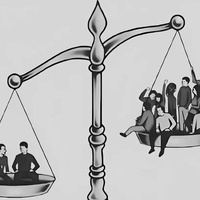
DEFENCE LAWYER: "And this number. Does 87% measure who wrote the words, or only how closely they follow the rules the machine learned?"
PROSECUTOR (after a pause): "It measures patterns."
DEFENCE LAWYER: "Patterns. My client's come from her proverbs, her language, her street. A program that has never met them calls them suspicious."
He lifts a paper from the table.
DEFENCE LAWYER: "In 2023, researchers at Stanford tested seven of these detectors on English essays written by non-native speakers. More than half were flagged as machine-written. The same detectors, on essays by native-born American eighth graders, were almost always right. Those were not African students, my lord. But it is the same mechanism, and it points the same way."
He turns to the empty chair.
DEFENCE LAWYER: "How did you reach 87%?"
Nothing. The fan turns.
DEFENCE LAWYER: "Let the record show the witness has declined to answer. Again."
WHICH AFRICA?
PROSECUTOR (sharper now): "The detector is calibrated against typical African student writing."
DEFENCE LAWYER: "Typical. Whose? Lagos? Kano? Nairobi? Accra? Dakar? Fifty-four countries. Over two thousand languages. Which of them did it meet?"
He holds up a second printout.
DEFENCE LAWYER: "This morning we also ran my client's Pidgin through it. A page from her journal."
He reads, plainly, without performance:
DEFENCE LAWYER: "'Dem say make I write like person wey no sabi book. Na so?'"
Some people in the hall smile. Someone says "Na so o" under their breath.
DEFENCE LAWYER: "The software's verdict: unrecognised language, low confidence. Her English is too good, so it is a machine. Her Pidgin is not good enough, so it is noise. My lord, tell me what she is allowed to be."
The judge does not answer. He looks at the screen. The number glows back at him.
DEFENCE LAWYER: "Let the record show it has mistaken unfamiliar for fake."
THE JOURNAL
JUDGE: "The defence said to ask for the drafts. This court is asking."
The Accused takes out the journal and carries it to the bench herself. The judge turns the pages. We see them over his shoulder: dates, ink in three colours, words struck through, arrows, a coffee ring, a margin full of small furious corrections.
PROSECUTOR: "My lord, pages can be written afterwards."
DEFENCE LAWYER: "They can. So do not ask the pages. Ask her."
The judge looks up.
JUDGE: "You wrote 'juxtaposition.' Tell me about that word."
A long beat. The Accused speaks for the first time, steady.
ACCUSED: "Outside my house, a man sells generators. Beside him, a woman sells pawpaw on a tray. Every day, the loudest machine and the softest fruit, side by side. I wanted a word for it."
She points at the journal.
ACCUSED: "First I wrote 'difference.' I crossed it out. Then 'side by side.' Crossed out. Then 'next to each other.' I found the word on page 412 of that dictionary, on the second night. The light had gone at nine. I finished by my phone torch."
She sets the cracked dictionary on the bench.
ACCUSED: "Take the word if you like, my lord. You cannot take the two nights."
The courtroom is very still. Even the fan seems to slow.
THE TEACHER, AGAIN
The Teacher half-rises.
TEACHER: "My lord. May I finish?"
The judge nods.
TEACHER: "I did not think a student from here… I thought brilliance came from somewhere else. I was wrong. And the machine only agreed with me."
He sits. He does not look at the Accused. She looks at him, and does not look away.
THE GRANDMOTHER
The doors creak open. Sunlight spills in. We hear the tap of a walking stick before we see her. She stops to greet a man in the second row by name.
The judge, without meaning to, sits up.
She lowers herself into the witness chair and lets the whole court wait while she settles her wrapper.
PROSECUTOR: "Madam, is it not possible your granddaughter used a machine?"
GRANDMOTHER: "I cannot read what she wrote. I can tell you how long it took her. Our light goes at nine. She wrote after nine, every night, for two weeks."
PROSECUTOR: "Yes or no, please."
GRANDMOTHER: "You ask me about a machine. Let me ask you about a river. Does the river apologise for being deep?"
She leans forward.
GRANDMOTHER: "Òwe lẹ́ṣin ọ̀rọ̀; ọ̀rọ̀ lẹ́ṣin òwe. Bí ọ̀rọ̀ bá sọnù, òwe la fi ń wá a."
(SUBTITLE: A proverb is the horse of speech. When speech is lost, a proverb is how we find it.)
GRANDMOTHER: "Your machine is lost, my son. It does not remember where it learned to talk. I do. It borrowed our mouths."
The camera drifts to the empty chair. The file seems smaller now.
THE VERDICT
JUDGE: "This court accepts that people do cheat with machines. Honest work must be protected."
DEFENCE LAWYER: "Then protect it properly. Ask for the drafts. Ask who watched her write. Ask her to explain her words. Do not ask how it sounds. Ask how it was made."
He stands, no notes.
DEFENCE LAWYER: "My lord, the prosecution brought a number. We brought a bag of crumpled pages, a cracked dictionary, and a woman who has been speaking well since before this building had a roof. Only one side of this room can be questioned.
No one here says machines never write. But a detector that cannot explain itself, and punishes anyone who sounds unlike its idea of Africa, protects no one. It only decides who is allowed to be brilliant."
He sits. Only the fan is heard.
The judge looks at the screen, at the grandmother, at the Accused, at the screen again.
JUDGE: "This court finds the accused not guilty of writing too well.
And since the question was asked in my court, I will answer it. A voice is yours not because it is plain, and not because it is polished. It is yours because of who raised it, what it carried, and the work behind it. That cannot be measured by a number. It can only be heard, and it can be asked about."
The Clerk crosses to the monitor and switches it off. For the first time, we see the room's reflection in the
black glass: the court, the fan, the empty chair.
The Grandmother rises. She pauses at the empty chair, straightens the file on its seat like a child's schoolbook, and walks out into the sunlight.
FADE OUT.



 30