THE COUNTRY WHERE NOTHING WORKS, YET EVERYONE SURVIVES
Wahala: The Absurdity of Being Nigerian
Welcome to Nigeria
Welcome to Nigeria, where our problems seem to outweigh our achievements, yet no one seems to have enough of a voice to challenge the situation. A country where speaking about the problems sometimes feels like committing an offence, where a person who dares to question the system is often reminded to be patient, remain hopeful and keep moving.
Welcome to a country where almost everything seems to demand extra effort, yet people continue to work, dream and find reasons to be happy.
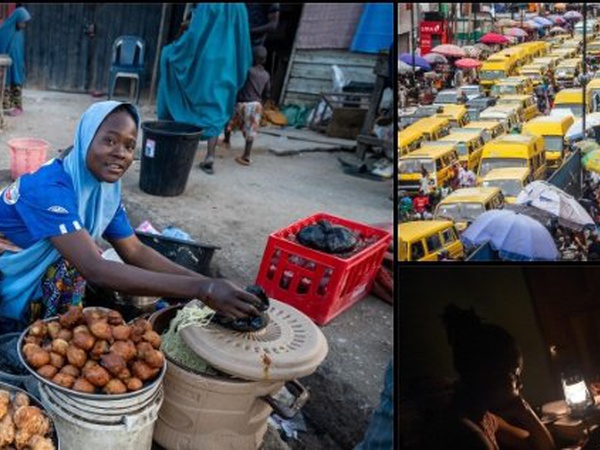
Here, electricity is a visitor rather than a permanent resident. Water is sometimes a luxury, good roads are a privilege, and an ordinary journey can become an unexpected adventure. The price of food changes so frequently that yesterday's budget can become today's disappointment. Even the simple act of buying groceries requires careful calculations.
Yet, somehow, Nigerians survive.
We wake up every morning, complain about the same problems, make jokes about situations that are anything but funny, say our prayers and go about our businesses. We have mastered the art of turning frustration into comedy and disappointment into another reason to say, "God dey."
In Nigeria, a generator is not just a machine; it is a household necessity. The sound of generators competing across neighbourhoods has become so familiar that silence sometimes feels unusual. When electricity finally returns, neighbours announce it with excitement, as though an important national achievement has just been recorded.
And when it disappears again, nobody is particularly surprised.
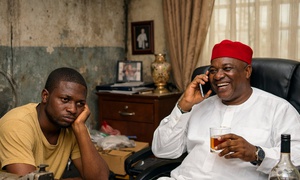
Our markets tell another story. A woman walks in with enough money to buy five items and leaves with two, carefully arranging them in her shopping bag as though she has accomplished something extraordinary. A student calculates transportation costs against the money meant for feeding. A father works from morning until night, yet returns home wondering how his salary disappeared before the month even began.
These are not extraordinary events in Nigeria. They are ordinary days.
Lagos: The City That Never Stops Struggling
Take a journey through Lagos, the city popularly described as the centre of opportunities, and you will encounter a different kind of survival story.
Lagos is always moving. Vehicles struggle through endless traffic, traders compete for customers, conductors shout their destinations, and pedestrians navigate roads that seem to have no patience for anyone.
But look closely at what happens in the traffic.
You will find children moving between vehicles, carrying sachets of water, biscuits and snacks, calling out to motorists who may or may not have enough money to buy from them. While other children their age are sitting in classrooms, some are learning how to make sales before they have even discovered what they want to become.
You will see people sleeping beneath bridges, turning spaces that were never intended to be homes into places of shelter. Some have lost their jobs, some have experienced difficult circumstances, and others have simply run out of places to turn.
And above them, the city continues moving.
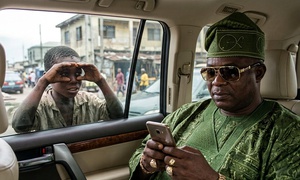
A child knocks on a car window to sell water. A driver winds up the window. Another person waves the child away. The traffic light changes, the vehicles move, and the child runs towards the next line of cars.
Perhaps tomorrow, that child will be there again.
The saddest part is how easily we have learnt to look away. We have become so accustomed to seeing hardship that sometimes we notice it without truly seeing it.
It is difficult to understand how a society can become comfortable with children having to fend for themselves in dangerous traffic while their education and childhood take a back seat.
A Land of Resources, A People of Struggle
Nigeria is not a country without blessings. It is richly endowed with natural resources, including crude oil, natural gas, coal and fertile agricultural land. Its people are talented, creative and hardworking. Nigerians have made remarkable contributions in medicine, technology, entertainment, education and other fields across the world.
Yet, at home, the story often feels different.
We have crude oil, yet the cost of fuel continues to trouble ordinary citizens. We have fertile land, yet putting food on the table has become increasingly difficult for many families. We have educated minds and talented graduates, yet unemployment and limited opportunities continue to frustrate their ambitions.
It is almost as though we are living in a house filled with treasures but struggling to find enough money to repair its leaking roof.
And then there is education, the very thing we are told holds the key to a better future.
In a country where education should open doors regardless of one's background, obtaining it has become an increasingly difficult financial journey for many poor families. School fees rise, textbooks become expensive, transportation costs increase, and parents are forced to make sacrifices that sometimes leave them struggling to meet their own needs.
Some children are not lacking intelligence or ambition; they are simply lacking the financial opportunity to develop their potential. Some students attend lectures with empty stomachs, worry about outstanding fees and struggle to purchase the basic materials needed for their studies.
We tell the poor that education is their way out of poverty, yet the price of obtaining that education sometimes becomes another form of poverty.
What happens to the child whose only limitation is being born into a family that cannot afford the opportunity to learn?
We have turned the pursuit of education into a financial battle, forgetting that the future of a nation depends largely on the opportunities it gives its young people.
The Price of Leadership and Borrowed Promises
Perhaps another Nigerian contradiction lies in the difference between what the country possesses and what its people experience.
We hear about billions allocated to projects, millions borrowed in the name of national development and promises of a better tomorrow. Yet, many citizens continue to struggle with the most basic necessities.
Loans are taken in the name of the country, but ordinary citizens still wonder what visible improvements those borrowed funds have brought to their communities. The money is borrowed in the name of the nation, but the responsibility of repayment stretches into the future, including the future of children who had no say in those decisions.
And then comes the uncomfortable question: what happens when money meant for public development is diverted for private benefit?
While families struggle to pay school fees, provide food and afford healthcare, public resources are sometimes mismanaged or misappropriated by those entrusted with protecting them. The comfort of a few appears to matter more than the welfare of the many.
A nation cannot borrow endlessly and expect its people to remain unaffected by the consequences.
The ordinary citizen is left asking: if so much is being borrowed and so much is being allocated, why do so many communities still lack the things they need?
The struggle does not end there. Young people spend years studying, hoping that their certificates will open doors to a better future. Yet, after graduation, many spend years searching for jobs that never seem to come. Unemployment has become so familiar that "I'm still looking for work" almost sounds like an ordinary introduction.
Behind these repeated disappointments are people battling financial pressure, anxiety and depression, often silently. Sadly, people experiencing serious mental-health crises can face stigma and punishment instead of the compassion and professional help they need.
Then comes election season. Politicians arrive with promises of employment, better roads, affordable education and reliable electricity. For a hungry family, the small amount offered in exchange for a vote can seem like immediate relief. But when the elections are over, the money is gone, the promises fade, and the people are left to face the same difficulties for another four years. The money may last a day, but the consequences of leadership decisions can last for years.
And yet, life continues. Children still hawk in traffic, graduates still search for opportunities, parents still struggle to pay school fees, and somewhere beneath a bridge, someone prepares to spend another night without a proper home. But at the other end of the street, music is playing, a wedding is taking place, people are dancing and laughter fills the air. Even in difficult circumstances, Nigerians somehow find reasons to celebrate.
Perhaps that is our greatest contradiction. We are hardworking, creative, resourceful and hopeful, yet we have become so accustomed to hardship that we sometimes mistake survival for progress. We keep adjusting to circumstances that should change and postponing dreams that should have had the opportunity to flourish.
Tomorrow, Nigerians will wake up again. They will work, complain, pray, laugh and hope. They will say, "We thank God," and find another way to make the day count.
That is Nigeria: a country with enormous potential, extraordinary people and everyday contradictions. Perhaps what we need is not another generation of people who know how to survive, but a country where people can finally learn how to live.
After all, a nation should not measure the strength of its people by how much hardship they can endure, but by how much opportunity it gives them to thrive.
Thank you for reading.



 1