Score |
437






The Good woman trap I
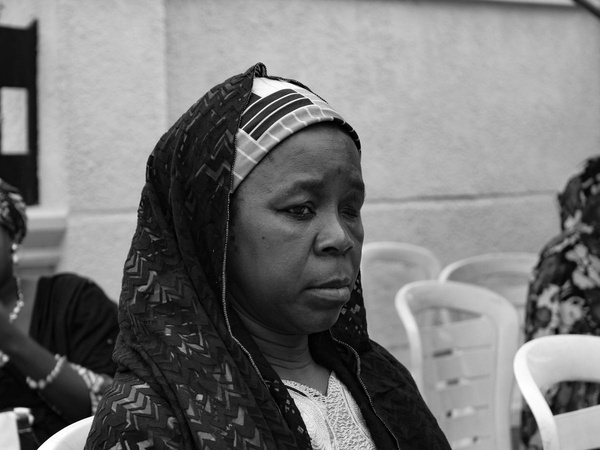
<p>An essay on how Nigerian Culture weaponises the archetype of the "Strong, Quiet Woman" to normalise the erasure of women's pain and ambition.</p><p><br/></p><p><img alt="" src="/media/inline_insight_image/muhammad-taha-ibrahim-2LQMr6gEhz8-unsplash.jpg"/></p><p style="text-align: center; ">Photo by Muhammad-Taha Ibrahim on Unsplash</p><p><br/></p><p>There is a woman you have met a thousand times. You have watched her at family gatherings, moving quietly around the kitchen while the men eat first. People praised her in the way Nigerians praise women they have decided are exceptional: <em>She is so patient, does not complain and holds her home together all while smiling through suffering</em>. Perhaps, you have been told, if you are a woman you should be like her. As a man, you should marry her. She is real and everywhere. The problem is what we have decided her reality means.</p><p>We have built a culture that does not simply admire the strong, quiet woman. We have built one that <strong>requires </strong>her. We have made her existence the measure of good womanhood and in doing so, we have constructed one of the most elegant traps in the history of patriarchal engineering. It is a trap that does not look like a trap but a compliment.</p><p>This essay is about that trap and the cultural, religious, legal and interpersonal architecture of it. It is about the women it has already consumed (some of whose names we know), many of whose names we will never learn, every counterargument you may be assembling in your head right now, every "but our culture has its merits," is not a rebuttal but an extension of the trap itself.</p><h4><br/><strong>What do we actually mean when we say "Good Woman"?</strong></h4><p>Before we can dissect a trap, we must name its parts.</p><p>The Nigerian "Good Woman" archetype is composite and deeply coded. She is Proverbs 31, she is an <em>obedient wife</em>, the woman who "manages her home", which in practice means she manages everyone's emotions, calendars, hunger, anger and grief while suppressing her own. She is praised for being <em>long-suffering,</em> a word that has been so thoroughly baptised in the church and the compound that we have stopped noticing it is, in plain English, a description of enduring suffering for a long time. We have taken an experience of pain and made it a virtue. More than that, we have made it a prerequisite.</p><p>The archetype operates through what sociologists call <strong>complementary </strong>oppression I.e. a system where the woman's restriction is presented as her elevation. She is not silent; she is "dignified." She is not powerless; she is "leaving room for God." She is not erased; she is "supporting her household." Every vocabulary word used to describe her confinement has been polished until it sounds like a crown. In here lies the genius of the trap, it makes the imprisoned woman feel regal.</p><p>The training begins early. A Nigerian girl learns, before she learns to read, that her pain is either a private matter or a spiritual assignment. She learns this in how adults respond when she cries ("don't be a baby"), in how she is taught to cook and clean while her brothers are not, in how her education is framed as secondary investment. As in, <em>after all, she will marry into someone else's family and take their last name which discontinues the family's heritage.</em> By the time she is an adult woman, she has been so thoroughly conditioned that she enforces the archetype herself, often on other women. A confirmation of the internalization of the jailer.</p><p>What is being trained out of her systematically and across decades, is the right to acknowledge pain as legitimate and to act on that acknowledgment. When she marries, she does not simply <em>endure</em>, she applies the belief that endurance is the truest form of love irrespective of whatever is done to her. This sets the foundation for the massive exploitation and abuse of women we see in our society today and as usual, in order to fit into the mould she has been formed in, she keeps quiet and endures it as usual. So much for the Proverbs 31 woman.</p><p><strong><br/></strong></p><h4><strong>Widowhood rites and what we reveal about women when we think nobody is watching</strong></h4><p>If you want to know what a culture truly thinks of its women, look at what it does to a woman when her husband dies. This reflects the true attitude, not what it says in speeches or what it presents to gender-studies conferences. </p><p>In many Nigerian communities, a woman's widowhood is not a period of grief. Here, we see an audition; an extended public performance of mourning that must be sufficiently convincing to prove she did not cause or wish for her husband's death. The rites she is subjected to tell us with a clarity that no amount of cultural diplomacy can soften, exactly how little value the culture places on her as a person.</p><p><img alt="" src="/media/inline_insight_image/Widow-being-shaved.png"/></p><p style="text-align: center; ">A widow head being shaved. Photo: asoyarelationshipmusings</p><p><br/></p><p>Academic research published in the <em>African Journal of Social Sciences and Humanities Research</em> documents what these rites look like across communities in Igboland alone. Widows are forced into ritual seclusion, confined to a designated space, prohibited from bathing for extended periods, compelled to eat from broken plates and made to sleep on the bare floor. The "ritual contamination" framework that governs these practices treats the widow herself as the impurity hence, she must be cleansed removing the need for comfort. <em>The Conversation</em>, in a 2023 analysis by Nigerian scholars, documents that in some communities, widowhood automatically made a woman "unclean" and that the practices extended to <em>widow inheritance</em>, an euphemism for requiring a woman to marry her late husband's brother or another male relative, whether she consented or not.</p><p>The property dimension is perhaps the most materially devastating. A landmark 1997 court case, <em>Mojekwu v. Mojekwu</em> decided by the Nigerian Court of Appeal addressed a widow who was denied access to her late husband's property under the "Oli-Ekpe" custom of Nnewi, Anambra State, a custom that reserved inheritance exclusively for male relatives, even when the deceased had no male children. The court found the custom "repugnant to natural justice, equity and good conscience." The fact that it required a formal court ruling to establish that a widow could inherit from her own husband tells us everything we need to know about the baseline assumptions embedded in the culture.</p><p>Widowhood, as documented by the rights organisation AWJAI and by researchers at the <em>Nigerian Journals Online</em> is not an outlier or the excess of an uncivilised fringe. It is the system operating at maximum transparency. When the man is gone and there is no longer any social capital to gain from treating the woman well, the culture drops the performance. The breaking plates and the bare floor are not aberrations but the brutally honest face of culture.</p><p>Notice what does not happen to widowers. There are no equivalent rites, seclusion, broken dishes or ritual contamination. A man who loses his wife may remarry as soon as he chooses, collect condolences from a community that does not interrogate his culpability and goes on with life largely undisturbed. The asymmetry reflects a foundational belief that women exist in relationship to men. Their value, status, cleanliness, all defined entirely by their proximity to a living husband.</p><p>The Good Woman is obedient and quiet in life. The widowhood rites are what happens when the culture no longer needs to pretend the arrangement was mutual.</p><h4><br/><strong>The Lifetime guardianship problem</strong></h4><p>One of the most persistent myths about the oppression of Nigerian women is that it is a class or education issue. The idea that educated and economically independent women have escaped the structural diminishment that their less privileged counterparts face is a myth that is comfortable and false.</p><p>Consider the Nigerian Immigration Act that BellaNaija documented in a 2020 analysis. It requires married women applying for international passports to submit the <em>written consent</em> of their husbands. Single women? No. Married women? Yes! Women who are in every other legal sense adults. Women who may hold university degrees, senior corporate titles and bank accounts in their own names but who cannot obtain travel documents without a man's written permission. In some police stations across the country, women are not permitted to post bail for a detainee or stand as surety until a man arrives. This doesn't happen because any law explicitly prohibits it, this happens because the cultural default assumes that a woman's word and presence are insufficient without male authentication.</p><blockquote>Women are never allowed to be adults.</blockquote><p>Under Igbo customary law, as documented in the <em>South African Journal of Law</em> (Scielo), a woman married under customary law is not permitted to acquire and own property to the exclusion of her husband. The historical justification that in pre-colonial times, both a woman's trading capital and her income were considered to belong to her husband was never fully dismantled by statutory law but simply migrated into informal enforcement.</p><p>A peer-reviewed study published in <em>BMC Women's Health</em> (National Center for Biotechnology Information, 2022) found that Nigeria's patriarchal system gives male partners "greater influence, power and authority over their female partners on fertility and reproductive matters", to the extent that many married women will not use contraception without their husbands' approval, even when it directly affects their own health. </p><p>Read that again carefully: <em>A grown woman, in consultation with her own body and her own doctor, cannot make a decision about her own reproductive health without first obtaining permission from a man</em>. This is structural disempowerment enforced through social pressure and often, physical consequences as opposed to the proposition of cultural preference.</p><p>The pattern holds even for women at the highest levels of social and economic achievement. The culture does not simply restrict poor women or rural women or uneducated women, it restricts women as a category. The mechanisms shift with class and context, but the principle remains: <em>a woman at any age is not fully a sovereign person .</em> She is always in some man's custody. First her father's, then her husband's, then, in widowhood, her in-laws'. The word "autonomy" is not typically in the vocabulary of what we call a "good woman". Autonomy is in many circles, the first marker of a "difficult" woman.</p><p><br/></p><h4><strong>"But our culture has its merits": Dissecting the counterarguments</strong></h4><p>At this point in any essay like this, a particular kind of reader, often well-meaning, sometimes not reaches for one of several arguments. Relax and let's examine them with the care they deserve.</p><p><br/></p><blockquote>"These are just traditional practices that are slowly disappearing. The new generation is different."</blockquote><p><br/></p><p>This argument is the cultural equivalent of saying a wound is healing while watching it bleed. Yes, urban, educated Nigeria has evolved in certain visible ways. Women now hold executive positions, girls attend universities and some marriages function as genuine partnerships (which are laudable). Sadly the evidence consistently shows that the fundamental architecture of women's subordination has not been dismantled but redecorated. The passport consent requirement is not a relic; it is still being enforced as the Nigerian state's official policy in recent memory. Widowhood rites are still practised across the Southeast and Southwest, as documented by multiple academic researchers. The social pressure on women to stay in abusive marriages did not disappear with urbanisation, it went to church.</p><p><br/></p><blockquote>"African women are not victims. They are strong and resilient."</blockquote><p><br/></p><p>This is perhaps the most insidious counterargument because it appropriates the language of feminist empowerment in service of patriarchal ends. The celebration of African women's strength is real and deserved. But strength should not be a reason to deny women protection. "She is strong" has become cultural code for "she does not need help" and that reframe has been weaponised to justify abandoning women who are suffering. Osinachi Nwachukwu was strong. Titilayo Arowolo was strong. Ronke Shonde was strong. Yet, their strength failed them because what they needed was not more strength. They needed a culture that would take their pain seriously while they were alive.</p><p><br/></p><blockquote>"We must respect cultural diversity. Western feminism cannot be imposed on African cultures."</blockquote><p><br/></p><p>The appeal to cultural diversity is legitimate in theory and catastrophically misused in practice. The issue is not whether African gender norms should be judged by Western standards. The issue is whether women (full human beings with the same capacity for suffering as men) should be protected from systematic harm. Cultures are said to be dynamic hence, cultures should change when they realize that they harm people. The pretence that criticising widowhood rites or forced domestic subjugation is "Western imperialism" is a strategy of deflection that preserves male privilege under the cover of cultural pride. The men who benefit most from these norms are invariably the loudest voices for "protecting our culture."</p><p><br/></p><blockquote>"These women had options. Nobody forced them to stay."</blockquote><p><br/></p><p>This argument reveals a profound misunderstanding of how social coercion works. When leaving a marriage means losing your children in a custody system biased toward fathers, your social standing in a community that treats divorced women as defective is reduced, church family in a faith community that considers divorce a sin, losing your financial security in an economy where women's property rights remain structurally compromised and potentially losing your life to a husband who has already demonstrated his capacity for violence, "options" is a cruel label. The women who stayed in dangerous marriages were navigating a system that had systematically eliminated their good options and then asked them to choose freely among the bad ones.</p><p><br/></p><h4><strong>The Pulpit and the Trap</strong></h4><p>Nigeria is one of the most religiously devout nations in the world, with over 95% of the population identifying as either Christian or Muslim. This is a beautiful thing about us, in many ways. It is also in the context of women's rights, a live wire as there have been instances of religious gaslighting in Nigeria churches and mosques.</p><p>The Nigerian church, particularly the Pentecostal and evangelical denominations that dominate the spiritual landscape, has been a primary transmission mechanism for the Good Woman archetype. The theological scaffolding is borrowed selectively from scripture: <em>Wives, submit yourselves to your own husbands as you do to the Lord</em> (Ephesians 5:22). <em>Let your women keep silence in the churches for it is not permitted for them to speak; but they are commanded to be under obedience, as also saith the law</em> (1 Corinthians 14:34). <em>I</em><em> do not permit a woman to teach or to assume authority over a man but to be in silence</em> (1 Timothy 2:12). And, fatally: <em>God hates divorce</em> (Malachi 2:16, as commonly interpreted). These verses haven't beenread in their full theological and historical context. Sadly, they have been extracted, amplified and dropped like anchors on the feet of women who are already trying to swim.</p><p>A peer-reviewed article in <em>Verbum et Ecclesia</em>, a South African theological journal (2019), documented how Nigerian churches respond to intimate partner violence and found the responses damning. The dominant pastoral response was to endeavour to keep marriages intact, even in abusive situations. Some denominations treat divorced women with open contempt, barring them from leading Sunday school classes, singing in choirs or serving on committees till they "made their ways right with the Lord". The study notes that "these punitive attitudes are supported from the Bible", confirming what many Nigerian women have experienced firsthand: the church does not simply fail to help battered women. In many cases, the church actively punishes women who try to leave.</p><p>Funke Oshonaike, African table tennis champion, spoke about her experience of domestic violence in the days following Osinachi Nwachukwu's death in 2022. She reported: "<em>They all told me he will change, or I should change from my ways, I should pray and fast for him, I should be patient etc but not to leave. Do you know that he even beat me in front of my daddy and even in front of my pastor?"</em> (Reported by The Cable, April 2022.) The damning statement "Do you know that he even beat me in front of my daddy and even in front of my pastor?", should stop every Nigerian pastor cold in their tracks. </p><p>The Pulse Nigeria explainer on religion and domestic violence (2024) further documents the Islamic dimension. Under some interpretations of Islamic law prevalent in Nigeria, a woman cannot initiate divorce, only the husband can. The framework for addressing a "disobedient" wife involves escalating steps before divorce is even considered and the institutional bias heavily favours preservation of the marriage over protection of the woman.</p><p>What makes the religious gaslighting particularly cruel is that it co-opts the woman's own faith against her. Osinachi Nwachukwu did not stay in her marriage despite her Christianity but <em>because </em>of it because the theology she had been given told her that leaving was failure, that prayer was the legitimate tool and longsuffering was evidence of sanctification. The FAME Foundation in its 2025 analysis of her case, confirmed that friends revealed Osinachi had confided in them about her fears and suffering but refused to leave "due to her deep religious beliefs and fear of judgement from her church community." She was not trapped by her weakness and faith, as it had been handed to her by people who should have known better.</p><p>The Bible passage commonly deployed which is Malachi 2:16 ("God hates divorce") has been the subject of serious theological scholarship showing that its original context was about protecting wives from being treacherously abandoned by their husbands, not about compelling abused women to remain in dangerous marriages. The Centre for Safety and Biblical Violence (CSBV) notes that using this verse to manipulate a woman into staying with an abuser is "an exact inversion of its original intent." This is what makes religious gaslighting so refined a cruelty that it takes the scripture that was meant to protect women and points it at them like a weapon.</p><p><br/></p><p><br/></p><p><br/></p>


 104
104


Other insights from Potato










Contributor Points

Points-to-Coupons

Referral Earning
Insights for you.


Can We Talk About Period Pain?
Yesterday I nearly died. And please, I’m not even exaggerating. Menstrual cramps are ac...
212 views
58 upvotes
60 comments


Disrespectfully, please leave
Dear Menstruation,We need to talk. Like right now.First of all, I’ll hand it to you— yo...
187 views
48 upvotes
45 comments

Papa wasn't mine...
My father died on a Tuesday.The man who raised me. The quiet one. The one who came home...
181 views
46 upvotes
47 comments

It Was Never About Pink
For years, I wore my hate for pink like a badge of honour. In family pictures, I’m the ...
523 views
37 upvotes
42 comments

Your Daughter Is Already Pretending
They grow up to be women who have turned pretense into an art form. And it starts early...
334 views
36 upvotes
38 comments

Hot Body?
Since I clocked thirteen, getting dressed has felt like walking through a minefield. It...
127 views
38 upvotes
43 comments


GOOD GIRLS DON’T WIN
I’m done being a good girl; let the streets judge me. They told us to cross our le...
788 views
38 upvotes
31 comments
We Are Watching You Watch Us
They buried her alive, and they did it in broad daylight. They did it with paperwork. W...
129 views
30 upvotes
32 comments
The Dangers of Ultra Feminism
I'm a strong feminist and a girl's girl, even if that sounds cheesy. But as much as I...
683 views
29 upvotes
30 comments


Are we punishing psychosis?: The Lind...
Are We Punishing Psychosis?A person commits a crime under the influence of psychosis. A...
158 views
31 upvotes
28 comments