Score |
22


Goodluck Onyeka
 tailor @ lagos, nigeria
tailor @ lagos, nigeria



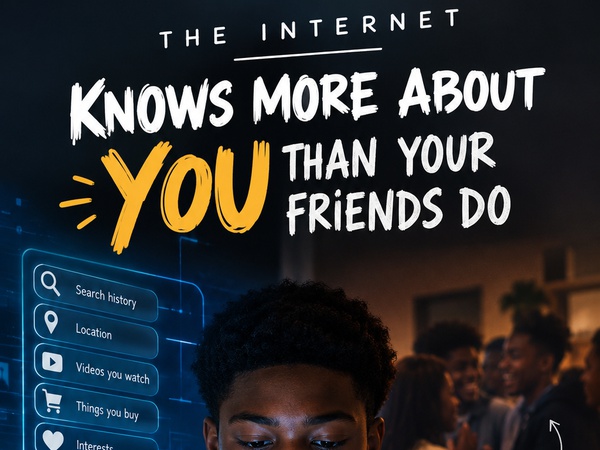
THE INTERNET KNOW MORE ABOUT YOU THAN YOUR FRIEND
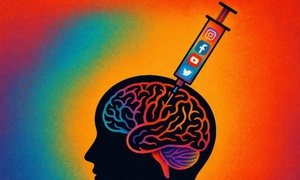
<p><br/></p><p><br/></p><p>“The internet does not need to know our secrets to shape our lives; it only needs to know what we are willing to reveal.”</p><p>My phone knows when I am awake, what I search for when I am confused, and the questions I am sometimes too embarrassed to ask another person. My friends may know my favourite food and the jokes that make me laugh, but the internet knows something deeper: my habits, interests, and private concerns.</p><p>This is the strange reality of modern life. We think of the internet as a tool we use, yet it is also a system that studies us. Every search, click, like, and online purchase leaves behind information. Individually, these details seem harmless. Together, they create a surprisingly accurate picture of who we are.</p><p>Our friends know the version of ourselves we choose to show them. The internet often knows the version we reveal without noticing.</p><p>A student searching for examination questions, scholarships, or career advice is revealing more than an interest. Those searches may expose ambitions, fears, and struggles that never appear in ordinary conversations. A friend may know that someone is preparing for an examination, but the internet may know the exact subject they find difficult.</p><p>The difference is that friendship is built on conversation, while the internet learns through observation.</p><p>Social media makes this even more complicated. When we watch a video, pause on a post, or repeatedly search for a topic, platforms use these actions to predict what we might want next. Our digital world becomes a mirror—not always of who we are, but of what an algorithm believes we will respond to.</p><p>This can be useful. The internet connects students to educational materials, opportunities, and people beyond their immediate surroundings. A young Nigerian writer can learn from international writers and join a global community without leaving home.</p><p>However, knowing more about us does not necessarily mean caring about us.</p><p>Our friends may listen because they love us. Companies collect information because it helps them predict behaviour, maintain attention, or sell products. A friend may ask, “Are you okay?” because they notice a change in our mood. A platform may notice the same change because we have started watching sad videos for longer. One responds with concern; the other may respond with more recommendations.</p><p>The internet does not truly understand our feelings. It recognises patterns.</p><p>There is also the question of privacy. Many people accept terms and conditions without reading them. Yet their information may be collected and stored in ways they do not fully understand. Privacy is not about having something shameful to hide. It is about having the right to decide what belongs to us and who deserves access to it.</p><p>Young people must therefore become responsible digital users. We should protect our accounts, avoid sharing sensitive information, question what we see, and think carefully before posting. A recommendation is not always a fact, and popularity is not always proof of value.</p><p>Most importantly, we must protect the human relationships technology cannot replace. A friend can understand the pain behind a smile. The internet may predict what we will click next, but it cannot fully understand why a song reminds us of someone we love.</p><p>The internet may know what we look at. Our friends may know what we say. But only we can decide who we are becoming.</p><p>That decision must never belong entirely to a machine.</p><p><br/></p>


 4
4


Other insights from Goodluck Onyeka







Contributor Points
Points-to-Coupons

Referral Earning
Insights for you.


My Unpopular opinions of Social Media.
I Really Hate Social MediaWait, hear me out.I'm not saying this from a place of pride o...
226 views
33 upvotes
40 comments

Meet Amina the AI
Well yes, the image attached to this post was created with DALLE. After some interestin...
1471 views
19 upvotes
12 comments

If You Can’t Beat Them, Join Them
I didn’t experience the “before.” Before landlines, before phones, before mobile money—...
319 views
28 upvotes
25 comments


Grandpa lied (A little)
"Grandpa said, farming pays and not even your AI can take that away" that was my cousin...
326 views
25 upvotes
26 comments

Social Media vs Reality – Let’s Be Fo...
Let’s talk. Be honest, have you ever looked at someone’s Instagram story and immediatel...
437 views
15 upvotes
15 comments

Are we becoming who we are, or who we...
We are shaped long before we realize itby things we do not question,by voices we do not...
300 views
19 upvotes
20 comments

Three (3) reasons why AI is losing to...
This article explains how Google's new policy affects AI-written content and flagging g...
822 views
18 upvotes
18 comments

Over sharing with a bot : it's not th...
Lately I’ve realized my most stable relationship might actually be with ChatGPT. 😭 I co...
463 views
16 upvotes
16 comments

The Impact Of Social Media vs Books: ...
A social media personality emerged on the internet months ago and a basic small toy tha...
374 views
19 upvotes
15 comments

Tech is the New White Collar Job
Tech is the New White Collar Job
Tech is the new currency; with tech, you can say cr...
1058 views
17 upvotes
11 comments