Score |
177


Aima
 Student @ Babcock University.
Student @ Babcock University.



The Stranger We Once Knew
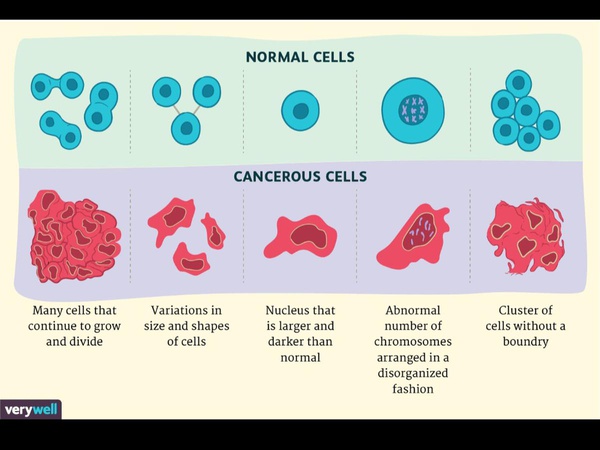
<p>She was once indistinguishable from the rest of us—a healthy cell, regulated and cooperative, contributing quietly to the body’s daily function. She responded to signals, divided only when instructed, and took no more than her share. There was nothing remarkable about her, and that was the point.</p><p>The change did not announce itself. At first, it was a lapse in attention, a missed signal, a slight delay in response. These deviations were easy to excuse. Cells adapt. Variation is not inherently dangerous.</p><p>Then her structure began to shift. She altered her appearance without altering her identity, acquiring mutations that allowed her to look normal while behaving otherwise. She grew larger, divided more frequently, and demanded increased resources. Blood vessels were redirected toward her. Nutrients were consumed at a rate disproportionate to her function.</p><p>What distinguished her was not aggression, but disregard. She no longer responded to inhibitory signals. The mechanisms that limited division no longer applied. Apoptosis, once a final act of cooperation, was resisted.</p><p>As she multiplied, the rest of us suffered. Oxygen delivery declined. Space became restricted. Normal tissue architecture was disrupted. The body weakened not because she attacked, but because she consumed.</p><p>At some point, she ceased to be regarded as a member of the system. Not out of malice, but necessity. What she had become no longer served the organism as a whole.</p><p>Intervention, when it came, was indiscriminate. Cells like us were destroyed alongside her. Tissue was cut away. Toxic agents were introduced in an attempt to restore balance. Survival, if achieved, came at a cost.</p><p>Cancer is not a foreign invader. It is a familiar cell that loses regulation, prioritizes replication over function, and persists beyond its usefulness. Its danger lies not in intent, but in autonomy—unchecked, unresponsive, and ultimately incompatible with the life it depends on.</p><p><br/></p>


 318
318


Other insights from Aima








Contributor Points

Points-to-Coupons

Referral Earning

Insights for you.


Health is wealth.
Health Is WealthSome days ago, we lost a friend in the space I’m building.A very young ...
91 views
31 upvotes
36 comments

Self-love or Self-sabotage
When we say "I love myself just the way I am," are we truly embracing ourselves, or are...
514 views
25 upvotes
26 comments
I Wish I Had 20/20 Vision
Sometimes I catch myself wishing I had perfect vision. Just plain, natural 20/20. No g...
489 views
27 upvotes
26 comments


THE ART OF FAT LOSS(An Insight)
📍How serious is the issue of obesity?Well, The World Obesity Atlas 2022, published by t...
400 views
22 upvotes
26 comments

Monkeypox new old virus 🦠 - In shorts
First discovered in 1974 in Democratic republic of Congo in West Africa, Nowadays in 22...
1058 views
22 upvotes
21 comments

Edible Rasengan
This is a story of terrorism. Just the other day, I got hit by a bomb. And survived. Ye...
271 views
18 upvotes
21 comments
Surgeons' endurance during operations...
**How Long Can Doctors Stand During a Single Operation?**
When we think of the life ...
1943 views
13 upvotes
21 comments


My Health⚕️My Country
I believe in Nigeria.It is because I do, that I am very much hopeful for times when qua...
492 views
10 upvotes
12 comments

The Vital Role of Draining Infected W...
In the medical field, draining infected wounds is a critical procedure with profound im...
1046 views
16 upvotes
18 comments

If I had known....
In the middle of 2024, someone very dear to me got diagnosed with multiple myeloma and ...
654 views
13 upvotes
14 comments