Score |
179


𝑫'𝒙𝑪𝑬𝑳𝑳𝑬𝑵𝑻 ™ ✍️🥇
 Content Writer @ University of Ilorin
Content Writer @ University of Ilorin



The Women Who Challenged Colonial Rule: The Aba Women's War of 1929.
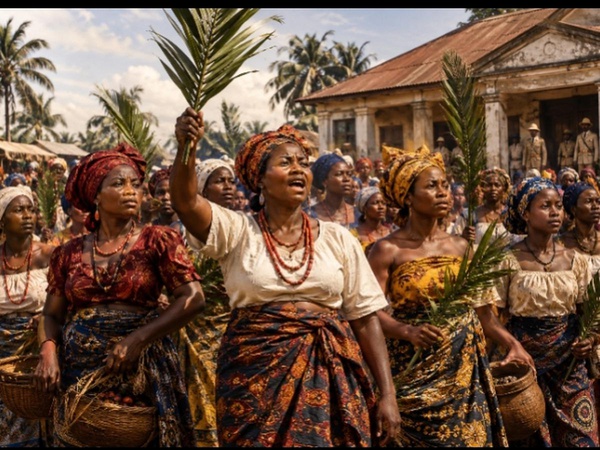
<h2><strong>AFRICA, UNCOVERED — EPISODE 4</strong></h2><p>Imagine thousands of women coming together because they believed that the people governing them had gone too far.</p><p><br/></p><p>They gathered, sang, protested, confronted local authorities, challenged a colonial system that had increasingly pushed their voices aside, and they became part of the force that demanded change.</p><p><img alt="" src="/media/inline_insight_image/Screenshot_20261017-071850.jpg"/></p><p>In November and December 1929, southeastern Nigeria witnessed one of the most remarkable anti-colonial movements in the country's history. It became known as the Aba Women's War.</p><p><br/></p><p>But to understand why these women rose, we must first understand the world they were living in.</p><h3><strong><br/></strong><strong>A SOCIETY UNDER COLONIAL RULE</strong></h3><p><img alt="" src="/media/inline_insight_image/Screenshot_20261017-071014.jpg"/></p><p>Before colonial rule transformed the region, women in many Igbo communities played important roles in markets, family economies, community associations, and collective decision-making. </p><p><br/></p><p>Their influence varied across communities, but they were not simply invisible figures waiting for men to speak for them.</p><p><br/></p><p>Colonial rule changed that balance. The British governed through indirect rule system, using local authorities and Native Courts to enforce colonial policies. Warrant chiefs appointed by the British became important instruments of this system.</p><p><br/></p><p>Many people resented the power these officials exercised, especially where they were seen as abusive or disconnected from local customs.</p><p><br/></p><p>Economic conditions were also difficult. Prices for palm produce were falling, and families were facing financial pressure.</p><p><br/></p><p>Then came a development that turned existing frustration into a much larger confrontation.</p><p><br/></p><h3> <strong>THE COUNT THAT SPARKED A MOVEMENT</strong></h3><p><img alt="" src="/media/inline_insight_image/Screenshot_20261017-072110.jpg"/></p><p>In Oloko, in present-day Abia State, a man associated with the local warrant chief, Okugo, was instructed to count people and household property.</p><p><br/></p><p>On 23 November 1929, the census exercise brought him into a confrontation with a woman named Nwanyeruwa.</p><p><br/></p><p>The details of their exchange are reported through historical accounts, but its significance is clear. The counting was understood by the women as a possible step towards taxing them.</p><p><br/></p><p>Taxation of men already existed. The women feared that they too would be made to pay, at a time when making ends meet was already difficult.</p><p><br/></p><p>The immediate trigger was the fear that women would be taxed, not a confirmed new tax on women that had already been implemented.</p><p><br/></p><p>The fear grew out of colonial taxation, unpopular local authorities, economic hardship, and a system in which the people affected by decisions had little control over them.</p><p><br/></p><p>Nwanyeruwa took the matter to other women. News spread, and the response grew beyond one household.</p><p><strong><br/></strong></p><h3><strong>WHEN THE WOMEN MOBILISED</strong></h3><p><img alt="" src="/media/inline_insight_image/Screenshot_20261017-072450.jpg"/></p><p>The women mobilised through existing community networks, and spread the message from one settlement to another. Palm leaves and other locally meaningful signals helped communicate and organise collective action.</p><p><br/></p><p>Thousands of women converged on Oloko and other centres of colonial administration. Their protests included a practice often described in English as “sitting on” an official. </p><p><br/></p><p>Women surrounded the homes or offices of men they were challenging, singing, dancing, chanting, and demanding answers until their grievances could no longer be ignored.</p><p><br/></p><p>This was not just a crowd losing control. It was a form of collective political pressure, rooted in local practices of protest and accountability.</p><p><br/></p><p>The movement spread across Owerri to Calabar province. Women rose against warrant chiefs, Native Courts, and colonial power. Igbo. Ibibio. Andoni. Ogoni — different communities, united. Bigger than one town. Bigger than one woman.</p><p><strong><br/></strong></p><h3><strong> THE COST OF RESISTANCE</strong></h3><p><img alt="" src="/media/inline_insight_image/Screenshot_20261017-072902.jpg"/></p><p>The colonial authorities struggled to contain the movement. As confrontations escalated, some protesters attacked colonial property and Native Court buildings. Colonial forces responded with violence.</p><p><br/></p><p>Women were shot in several locations, including Abak, Utu Etim Ekpo, and Opobo.</p><p>Opobo became the site of particularly serious bloodshed. The precise details and figures vary across historical accounts, but the central fact cannot be softened: women who challenged colonial authority paid with their lives.</p><p><br/></p><p>Yet, the movement exposed something the colonial government could not easily dismiss.</p><p>A system might appoint officials, establish courts, and issue orders. But authority does not automatically earn respect just because it possesses the power to punish.</p><p><br/></p><p>The women had demonstrated that a population denied meaningful political representation could still organise, resist, and force a government to confront its failures.</p><p><br/></p><h3> <strong>WHAT CHANGED AFTER THE WAR?</strong></h3><p><img alt="" src="/media/inline_insight_image/IMG-20261017-WA7146.jpg"/></p><p>The Women's War forced the British administration to reconsider aspects of its local governance in southeastern Nigeria. The warrant-chief system came under serious scrutiny, and changes followed in the administration of local government and Native Courts.</p><p><br/></p><p><span style="background-color: transparent;">The movement did not immediately deliver equal political representation to women. Colonial authority remained, and women continued to face barriers to formal participation in government.</span></p><p><br/></p><p>Its significance was not that every demand was fulfilled. It was that the women made their grievances impossible to ignore and helped reshape the conversation about colonial governance.</p><p><br/></p><p>Their struggle reminds us that women were not waiting until independence to participate in Nigeria's political history. They were already organising, challenging authority, and defending their communities decades before 1960.</p><p><strong><br/></strong></p><h3><strong>THE HISTORY WE MUST REMEMBER</strong></h3><p><img alt="" src="/media/inline_insight_image/Screenshot_20261017-073445.jpg"/></p><blockquote style="text-align: justify; ">There is one final question I want to ask: <strong><br/>Why do we so often remember colonial history through governors, soldiers, and famous male nationalists, while the collective actions of ordinary women receive less attention?</strong></blockquote><p>Colonial officials commonly called the events the <em><strong>“Aba Women's Riots</strong></em>.” Many historians prefer “<em><strong>Women's War</strong></em>” because it better captures the movement's scale, organisation, and political purpose. In Igbo, it is remembered as <strong><em>Ogu Umunwanyi.</em></strong></p><p><br/></p><p>The words we use influence how we understand what happened. Calling it merely a riot risks reducing a major political movement to disorder. </p><p><br/></p><p>Understanding it as a war of resistance allows us to ask deeper questions about power, gender, colonialism, and the right of people to challenge those who govern them.</p><p><br/></p><p>For me, this is why recovering African history matters. We are not simply collecting stories from the past. We are recovering the experiences, decisions, sacrifices, and ideas that help explain who we are.</p><p><br/></p><p>The women of 1929 remind us that leadership does not always begin in a palace or a government office. Sometimes it begins in a market, in a community meeting, or with one person refusing to remain silent.</p><p><br/></p><blockquote><strong>Their story is also a warning: <br/>When people are excluded from decisions that affect their lives, the resulting anger cannot always be contained by authority</strong>.</blockquote><p>These women may not all have had their names preserved in history books, but their actions left a mark on Nigeria's colonial past.</p><p><br/></p><p>Their story deserves to be remembered, not as a footnote, but as a central part of our history.</p>


 24
24



More in this series
More insights from 𝑫'𝒙𝑪𝑬𝑳𝑳𝑬𝑵𝑻 ™ ✍️🥇







Contributor Points

Points-to-Coupons

Referral Earning

Insights for you.

Dear African Parents,
Every "African parent" disapproves of suicide. "Why take his life over something so lit...
391 views
70 upvotes
76 comments

SOMETHING MUST KILL A MAN
Something must kill a man! That's what Emeka thought to himself that afternoon, outside...
249 views
41 upvotes
38 comments


BREAST IRONING
Ever heard of the breast ironing practice? well, I am from Cameroon and we have strong ...
1946 views
37 upvotes
43 comments


UNTAMED WORDS
They came with fire, but feared our flame,taught us silence, then gave it a name.Stole ...
412 views
33 upvotes
27 comments


My Greatest fear
My Greatest FearMy greatest fear isn’t death ,it’s the inability to write.I have a wild...
423 views
28 upvotes
29 comments


Divide The National Moi Moi
While embarking on my beauty stroll this evening, I pondered what I would write about. ...
999 views
21 upvotes
24 comments


BE CAREFUL OF WHAT YOU START
Work hard.Be consistent.Be patient.These are the songs we hear,the sermons we swallow.B...
226 views
23 upvotes
25 comments

LET'S TALK ABOUT YOUR COUSINS
Family has always been the foundation of social relations.the ↗ very first people you c...
599 views
28 upvotes
25 comments


Hotel Rwanda 🇷🇼 part 1 Nomshu
Hotel Rwanda: Part 1 – How I Ended Up in the MadnessOkay, so you know how life sometime...
148 views
24 upvotes
24 comments

THE GIVE AND TAKE OF MASTURBATION
GBAM!Door closed.Shiiiiiiion!Window closed.The hand becomes the most useful and wonderf...
274 views
23 upvotes
28 comments