Score |
19


Divine Miracle
 Student @ Nnamdi Azikiwe University
Student @ Nnamdi Azikiwe University



WHEN THE MIND BREAKS: CAN JUSTICE STILL HOLD?
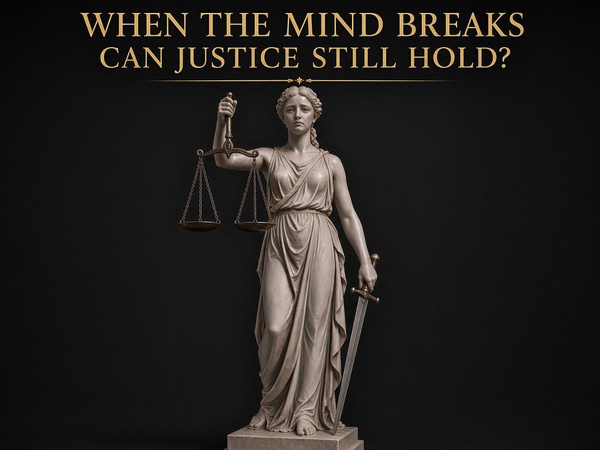
<p>WHEN THE MIND BREAKS: CAN JUSTICE STILL HOLD?</p><p><br/></p><p>There is something deeply uncomfortable about the Lindsay Clancy case because it forces us to hold two difficult truths at the same time.</p><p><br/></p><p>Three children are dead. And the woman accused of killing them may have been experiencing one of the most severe forms of mental illness known to occur after childbirth.</p><p><br/></p><p>It is easy to choose one truth and ignore the other. It is harder to ask what justice looks like when both are true.</p><p><br/></p><p>Postpartum depression is not simply a mother being sad or overwhelmed. The CDC estimates that about one in eight women with a recent live birth experience symptoms of postpartum depression. Postpartum psychosis is much rarer, occurring in roughly one to two women per 1,000 births, but it can involve confusion, delusions, hallucinations and a break from reality.</p><p><br/></p><p>That distinction matters.</p><p><br/></p><p>In Lindsay Clancy's case, her defence argued that she was suffering from postpartum psychosis when she killed her three children in 2023. Her first murder trial ended in a mistrial in September 2026 after the jury could not reach a unanimous verdict.</p><p><br/></p><p>But here is where I struggle with the idea of complete absolution.</p><p><br/></p><p>Mental illness can explain an action without necessarily erasing its consequences.</p><p><br/></p><p>The first people we should remember are Cora, Dawson and Callan. They were children. They could not understand what was happening, defend themselves or choose the circumstances in which they died. Their lives cannot become a footnote simply because the case has become a discussion about their mother's mental health.</p><p><br/></p><p>At the same time, justice should not pretend that a person suffering severe psychosis is automatically equivalent to someone who calmly understands reality, knows that an action is wrong and deliberately chooses to commit it.</p><p><br/></p><p>That is why I think we have to separate accountability from punishment.</p><p><br/></p><p>Criminal punishment is built around the idea of responsibility. We punish people because we believe they had the capacity to understand what they were doing and chose to do it anyway. But what happens when a person's mind is so severely disturbed that this capacity is genuinely absent?</p><p><br/></p><p>If someone is experiencing a psychotic episode and genuinely cannot distinguish reality from delusion, simply placing them in prison and saying "you killed someone, therefore you must be punished like anyone else" may satisfy our desire for retribution without necessarily producing justice.</p><p><br/></p><p>But complete freedom should not automatically be the answer either.</p><p><br/></p><p>If a person was genuinely incapable of understanding their actions because of severe psychosis, society still has a responsibility to protect other people and to ensure that the person receives appropriate psychiatric treatment. Legal accountability can therefore take a different form: secure psychiatric care, supervision, continued assessment and restrictions necessary to protect the public.</p><p><br/></p><p>That is not the same thing as saying the deaths do not matter.</p><p><br/></p><p>In fact, it may be possible to recognize the suffering of the offender without allowing that suffering to overshadow the victims.</p><p><br/></p><p>There is another uncomfortable question that this case raises: where was the healthcare system before the tragedy?</p><p><br/></p><p>We often wait until someone has reached a crisis before taking mental illness seriously. The CDC has documented gaps in postpartum mental-health screening, including women who reported that healthcare providers did not ask about depression during prenatal or postpartum visits.</p><p><br/></p><p>Prevention cannot guarantee that tragedies like this will never happen. But if postpartum psychosis can become so severe that a mother loses contact with reality, then identifying warning signs early is not a luxury. It is part of protecting both mothers and children.</p><p><br/></p><p>Justice after a tragedy is necessary. But justice before a tragedy, through proper healthcare and intervention, may be even more valuable.</p><p><br/></p><p>So, should severe postpartum psychosis completely absolve a parent of criminal responsibility?</p><p><br/></p><p>I do not think the answer should be an automatic yes.</p><p><br/></p><p>But neither should it be an automatic no.</p><p><br/></p><p>The law should ask the difficult question at the centre of criminal responsibility: what was this person's mental capacity at the exact moment the crime occurred?</p><p><br/></p><p>If overwhelming evidence shows that severe psychosis completely destroyed that capacity, then punishment should not simply be about making someone suffer because society is angry. It should be about treatment, public safety and accountability in a form appropriate to the person's condition.</p><p><br/></p><p>And if the evidence shows that the person understood reality and knew what they were doing, mental illness should not become a magic word that erases responsibility.</p><p><br/></p><p>Perhaps the most humane form of justice is not choosing between compassion and accountability.</p><p><br/></p><p>It is demanding both.</p><p><br/></p><p>We can say that Lindsay Clancy deserved mental-health care without forgetting that three children deserved protection.</p><p><br/></p><p>We can acknowledge that a broken mind may have contributed to an unthinkable act without pretending that the act had no victims.</p><p><br/></p><p>And we can believe that someone was seriously ill while still asking society's most difficult question:</p><p><br/></p><p>How do we deliver justice when the person who committed the crime may also have been a victim of the illness that helped cause it?</p><p><br/></p><p>There may be no comfortable answer.</p><p><br/></p><p>But perhaps justice was never supposed to be comfortable.</p><p><br/></p><p><br/></p><p><br/></p><p> Divinemiracle Chukwudi </p><p> 100 lvl mass communication </p><p> NNAMDI AZIKIWE UNIVERSITY, AWKA </p>



 39
39


Other insights from Divine Miracle













Contributor Points

Points-to-Coupons

Referral Earning

Insights for you.


THE COST OF ATTENTION.
What if we're asking the wrong question?The Olodo Uprising asks whether we're rewarding...
232 views
37 upvotes
38 comments


I hate tiktok
“I hate TikTok.”No, wait.Let me rephrase that.Not in that serious way o. 😂I mean it in ...
126 views
30 upvotes
30 comments


Two cents, what are you cooking?
All of una dey pretend like say una no see wetin TwoCents do recently. 😭Nobody is talki...
107 views
24 upvotes
36 comments

Olodo: The New Influence
Back in school, nobody wanted to be called an Olodo. It was the playground mark of fail...
192 views
31 upvotes
28 comments

December Still Owes Me
Friday.December 22nd, 2017.Three days to Christmas.Three days to her birthday.The world...
300 views
28 upvotes
29 comments


The Olodo Uprising: We Know What We’r...
Peller and Gehgeh are not authentic. They are not satirists. And they sure aren’t “keep...
208 views
27 upvotes
29 comments


My Two Cents on Twocents... The First...
It all started with one desire—a desire to be heard.A desire that leaned closer…and cho...
336 views
24 upvotes
26 comments

FairPlay: A Review
I never set out to be a film critic.Here, we mostly talk about…honestly, I’m not even s...
323 views
22 upvotes
19 comments


THE DEVIL WEARS BALENCIAGA.
The recent outrage on the global Paris-based brand , Balenciaga after releasing photo...
2216 views
19 upvotes
35 comments


THE MORNING RAINS
Something about morning rains that feels totally right and perfectly timed. I mean, I c...
105 views
18 upvotes
22 comments