Score |
234


Blú
 Intern @ Abuja Property Development Company
Intern @ Abuja Property Development Company



When the Mind Breaks, Who Answers for the Consequences?
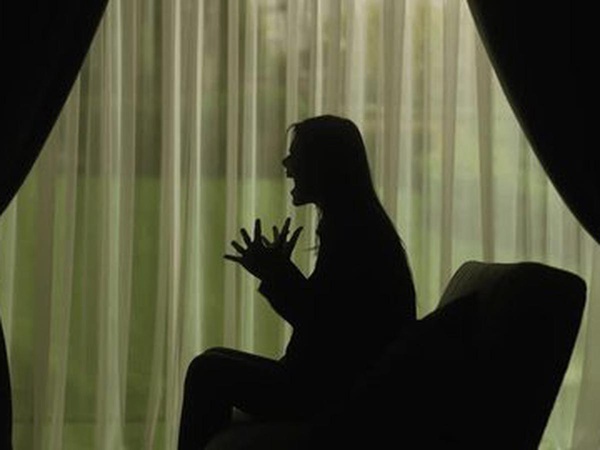
<p>Four lives were at the centre of this tragedy, but three of them never got the chance to grow up.</p><p>That is what makes the Lindsay Clancy case so difficult to discuss.</p><p>Postpartum depression and postpartum psychosis are real illnesses. They are not excuses invented to make mothers who commit terrible acts look sympathetic. Severe postpartum psychosis can distort a person's perception of reality so profoundly that they may no longer understand the world as it actually is. Ignoring that would be dangerous, especially when doing so could prevent us from recognizing and treating another mother before she reaches a crisis.<br/></p><p>But understanding what happened is not the same as excusing it.</p><p>Cora, Dawson and Callan did not choose to become part of a conversation about mental illness, motherhood or criminal responsibility. </p><p>They simply lost their lives.</p><p>And that is why I struggle with the idea that severe mental illness should completely erase accountability.</p><p>I don't believe compassion and accountability are opposites.</p><p>We can acknowledge that Lindsay Clancy was severely mentally ill. We can acknowledge that her illness may have profoundly affected her perception and judgment. We can acknowledge that there may have been opportunities for intervention and that society needs to take postpartum mental illness much more seriously. </p><p>For instance, her husband started working from home when he noticed she wasn’t well after their first child. He sought medical care for her. He was worried and probably even scared, especially after she said she wanted another child.</p><p>After all that, we can still say that something terrible happened and that someone must be accountable for it.</p><p>The harder question is what that accountability should look like.</p><p>Justice does not necessarily have to mean treating every mentally ill offender exactly like someone who commits the same act with a completely intact understanding of reality. If someone's mind was severely impaired, that matters. Treatment, psychiatric care, supervision and protection of society may be more appropriate components of accountability than punishment alone.</p><p>But removing all accountability risks creating another kind of injustice: allowing the suffering of the person who committed the act to completely overshadow the people who suffered because of it.</p><p>Mental illness can explain an action without making the consequences of said action disappear. Perhaps that is the uncomfortable middle ground we need to accept. We do not have to call someone evil to acknowledge the devastation she caused. We do not have to deny her illness to recognize her victims. And we do not have to choose between compassion for the mentally ill and justice for those they have harmed.</p><p>There is also a responsibility that extends beyond Lindsay Clancy.</p><p>If postpartum psychosis can become this severe, then we should be asking how many mothers are suffering silently, how many warning signs are being dismissed, and how many families do not know what they are looking at until it is too late.</p><p>The lesson cannot simply be that a mentally ill mother committed an unthinkable crime.</p><p>The lesson should also be that severe postpartum mental illness needs to be recognized, treated and taken seriously before tragedy occurs.</p><p>But prevention cannot require us to forget the victims.</p><p>The children deserve to remain at the centre of this conversation.</p><p>So perhaps the answer is not choosing between illness and accountability. Perhaps real justice requires us to hold both truths at once:</p><p>She may have been profoundly ill.</p><p>But in the end, her three children still died.</p><p>We can have compassion for the illness without losing sight of the harm. We can demand better mental-health intervention without removing responsibility. And we can seek justice without pretending that every mind, in every moment, functions the same way.</p><p>If there is no accountability, what would happen when more mothers do the same thing? Will children keep losing their lives because of postpartum depression? Of course not. </p><p>She admitted to the crimes, that’s a fact. The question is: was it a criminal act or not due to the fact she’s mentally ill? It is, even though she was not in the right state of mind, it is still a crime nonetheless. </p><p>On social media, some people blamed the husband and said he is framing her. So many theories have been mentioned regarding this case. From things that are somewhat true to things that aren’t even close to the truth. I even saw one tweet that blew my mind, it was a comparison to sexual assault.</p><p><img alt="" src="/media/inline_insight_image/IMG_7899.jpeg"/><br/></p><p><br/></p><p><br/></p><p>Obviously, they are both terrible things to do but if we go by that logic then it can be applied to everything else and this case would become a reference to such acts.</p><p><br/></p><p><img alt="" src="/media/inline_insight_image/IMG_7900.jpeg"/><br/></p><p><br/></p><p><br/></p><p>Being guilty of the crime doesn’t mean I don’t take her mental illness into account. It’s simply the fact of the matter. She can be sentenced to a mental institution instead of regular jail. </p><p>What she did was wrong, so I believe there should be some accountability, right frame of mind or not.</p><p>The uncomfortable truth is that sometimes justice has to make room for compassion without allowing compassion to erase accountability.</p><p><br/></p><p><br/></p>



 84
84


Other insights from Blú









Contributor Points

Points-to-Coupons

Referral Earning

Insights for you.



Silence: The things we don't say.🥺
I walked out of my house, shutting the door behind me, and moved to the terrace.I neede...
256 views
60 upvotes
64 comments
Suicide: The Permanent Solution.
“Did you regret it?”“You know…”I hesitated.“What happened?”A heavy sigh was the first r...
272 views
51 upvotes
54 comments

Suicide: The Nigerian perspective.
As we all know, this month, September is Suicide Prevention Month.Today, I'll be talkin...
171 views
46 upvotes
66 comments


2 a.m.
Maybe it's all the nights I spent not sleepingOr all the days I sat thinkingOf how I've...
274 views
52 upvotes
50 comments
Yours in the Empty
Losing a father is one thing,Losing a best friend is another.Losing the "head" is one t...
419 views
60 upvotes
44 comments


I’m Skinny, and So What?
What if I told you that I have cried more over my own arms than over any guy who has ev...
240 views
49 upvotes
51 comments


Shocking Generosity.
Dear Mr. Smith,Good afternoon, sir. I hope this letter meets you well.I write to profus...
139 views
46 upvotes
43 comments


After Alhaji
"Kai, yarinyar nan ta yi sa'a ƙwarai.""Wallahi. Alhaji Ibrahim da kansa zai aura ta.""T...
293 views
37 upvotes
44 comments


One step forward, Three steps back
I'm tired...But not for the reason you're thinking How much more must life take?How muc...
450 views
51 upvotes
41 comments