Score |
87


𝑫'𝒙𝑪𝑬𝑳𝑳𝑬𝑵𝑻 ™ ✍️🥇
 Content Writer @ University of Ilorin
Content Writer @ University of Ilorin



The Long Road from Sharpeville to Freedom.
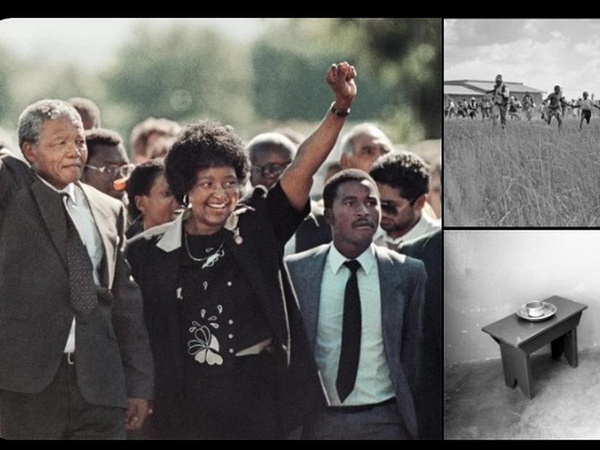
<h2><strong> AFRICA, UNCOVERED — EPISODE 3</strong></h2><h4>Before apartheid, before Nelson Mandela became a global symbol of freedom, South Africa already had a long and complex history.</h4><p><br/></p><h4>The San and Khoikhoi were among the region's earliest peoples. Over time, Bantu-speaking African societies, including the ancestors of today's Xhosa, Zulu, Sotho, and Tswana peoples, also developed across the region.</h4><h4><img alt="" src="/media/inline_insight_image/Screenshot_20261016-182003.jpg"/><br/><br/></h4><h4>In 1652, the Dutch East India Company established a settlement at the Cape to supply ships travelling between Europe and Asia. What began as a trading station gradually expanded into European settlement, bringing conflict over land, labour, and political control. </h4><h4><br/></h4><h4>Enslavement and colonial conquest changed the lives of the people who already lived there.</h4><h4><br/>In 1910, the Union of South Africa was established under British imperial rule, with political power reserved largely for the white minority. The 1913 Natives Land Act further restricted Black land ownership.</h4><h4><br/>Then came 1948. The National Party came to power and formally introduced apartheid, a system of racial segregation designed to preserve white minority rule. </h4><h4><br/></h4><h4>People were classified by race, Black South Africans faced restrictions on where they could live and work, and pass laws controlled their movement. Education and public facilities were also segregated.</h4><h4><br/>For millions of people, racial discrimination was not an abstract political idea. It shaped where they lived, how they worked, and what opportunities were available to them.<br/>But resistance continued.</h4><h4><br/></h4><h2><strong>Sharpeville: The day the police opened fire</strong></h2><p><img alt="" src="/media/inline_insight_image/Screenshot_20261016-182036.jpg"/><strong></strong></p><p>On 21 March 1960, thousands gathered near a police station in Sharpeville to protest against the pass laws. </p><h4><br/></h4><h4>The demonstration was organised as part of a campaign led by the Pan Africanist Congress (PAC), which called on Black South Africans to challenge the requirement to carry passbooks.</h4><h4><br/>Then police opened fire. Sixty-nine people were killed, and around 180 were injured. Many of those shot were fleeing the scene.</h4><h4><br/>The Sharpeville massacre shocked the world. The government declared a state of emergency and banned the African National Congress (ANC) and the PAC. </h4><h4><br/></h4><h4>Rather than ending resistance, the crackdown pushed the struggle into a more dangerous phase.</h4><h4><br/>For those fighting apartheid, the question was now how to continue when peaceful protest could be met with deadly force.</h4><h4><strong><br/></strong></h4><h2><strong>Nelson Mandela: From prisoner to president</strong></h2><p><img alt="" src="/media/inline_insight_image/Screenshot_20261016-182102.jpg"/></p><p>Nelson Rolihlahla Mandela was one of the people who would come to define that struggle.</p><h4><br/>Born in 1918, Mandela became involved in politics and helped establish the ANC Youth League in 1944. He campaigned against racial discrimination and became a leading figure in the resistance movement.</h4><h4><br/>After the ANC was banned in 1960, Mandela helped establish Umkhonto we Sizwe in 1961, which began a campaign of sabotage against government infrastructure.</h4><h4><br/>He was arrested in 1962 and, following the Rivonia Trial, sentenced to life imprisonment in 1964. He spent many of his years in prison on Robben Island.</h4><h4><br/>But Mandela was never the whole story. Oliver Tambo sustained the ANC's work in exile, Steve Biko helped shape the Black Consciousness Movement, and Winnie Madikizela-Mandela and countless other activists faced intimidation, detention, and violence.</h4><p><br/></p><h4> Students, workers, and community organisers also kept resistance alive.<br/>Mandela's imprisonment became an international symbol of apartheid's injustice. Campaigns demanding his release spread across the world, while opposition inside South Africa continued to grow.</h4><p><img alt="" src="/media/inline_insight_image/Screenshot_20261016-182117.jpg"/></p><h2><strong><br/>When the young people stood up</strong></h2><h4>In 1976, students in Soweto protested against the compulsory use of Afrikaans as a language of instruction in Black schools. Police opened fire, killing young protesters and triggering further resistance.</h4><h4><br/>The uprising showed that young people were not merely watching their country's history unfold. They were helping shape it, even at enormous personal cost.</h4><h4><br/>During the 1980s, protests, strikes, community organising, international pressure, and economic sanctions further challenged the apartheid government. </h4><h4><br/></h4><h4>The system was becoming increasingly difficult to sustain, and negotiations eventually began.</h4><h4><br/>In February 1990, the ANC and other banned organisations were legalised. On 11 February, Mandela walked free after 27 years in prison.</h4><h4><br/>His release was a historic moment, but it did not immediately end apartheid. South Africa still had to negotiate a new political future amid continuing tensions and violence.<strong><br/><br/></strong></h4><h4></h4><h2><strong>The election that changed South Africa</strong></h2><p><img alt="" src="/media/inline_insight_image/Screenshot_20261016-182144.jpg"/></p><p>On 27 April 1994, South Africans voted in the country's first national democratic election based on universal adult suffrage, regardless of race.</p><h4><br/>For many Black South Africans, it was their first opportunity to participate in choosing their national government on equal terms.</h4><h4><br/>The ANC won, and on 10 May 1994, Mandela became South Africa's first democratically elected president.</h4><h4><br/>The man who had spent 27 years behind bars was now leading the country whose government had imprisoned him.</h4><h4><br/>Mandela promoted reconciliation and helped guide the country through its transition to democracy. He served one term, leaving office in 1999. The Truth and Reconciliation Commission later investigated human rights violations committed during apartheid.</h4><h4><br/>Yet the end of apartheid did not erase generations of inequality. Unequal access to land, wealth, housing, education, and economic opportunity remained serious challenges.<strong><br/><br/></strong></h4><h4></h4><h2><strong>What freedom left us to think about</strong></h2><p><img src="/media/inline_insight_image/Screenshot_20261016-182246.jpg"/></p><p>South Africa's journey was never the achievement of one man alone. It was shaped by political movements, students, workers, families, community organisers, and countless people whose names may never appear in history books.</p><h4><br/>Sharpeville showed the violence used to defend apartheid. Mandela's imprisonment became a symbol of resistance. The 1994 election opened a new chapter in which South Africans could choose their leaders regardless of race.</h4><h4><br/>But political freedom does not automatically produce economic equality or national development. Building a fairer society requires continued work long after the historic celebrations have ended.</h4><h4><br/>That is what makes this story worth remembering. It reminds us that history is not shaped only by those who hold power but also by people who challenge the conditions they have been told to accept.</h4><h4><br/>South Africa's journey from apartheid to democracy was a remarkable achievement. Its unfinished challenges remind us that freedom is not the end of a nation's work.<br/><br/></h4>


 9
9


More in this series
More insights from 𝑫'𝒙𝑪𝑬𝑳𝑳𝑬𝑵𝑻 ™ ✍️🥇




Contributor Points
Points-to-Coupons

Referral Earning
Insights for you.

Igbo Kwenu!!!
Today, I refuse to be humble Not when I speak about my tribe...Cha Cha Cha Cha Cha,Igbo...
809 views
51 upvotes
45 comments

Confessions of a Nearly-Native
My name is Idara. I am Annang from Akwa Ibom. And I cannot speak my language.My mother ...
415 views
32 upvotes
37 comments


Cradle
Who sat and watched my infant head, When sleeping on my cradle bed, And tears of sweet ...
163 views
29 upvotes
31 comments

ÈMI NI ÌLÙ (I Am the Drum)
Mò fẹ́ kí ara mi gbọ́ mi.Before the world gives me a name,let my own soul remember mine.B...
200 views
24 upvotes
27 comments
Agbada and Other Silences
They said it with authority no one questioned.... “Àgbà kì í wà l’ọ́jà, kí orí ọmọ tuntu...
387 views
22 upvotes
29 comments

ÌLÚ MI, ILÉ MI
Modakeke Akoraye omo ogunteludo omo akinkanju loju ogun. Maybe because of you my father...
382 views
18 upvotes
25 comments





171 views
20 upvotes
19 comments