I used to imagine our wedding on quiet nights, when she fell asleep on my chest before I could finish whatever story she’d asked me to tell.
She’d always pretend she didn’t care about weddings, but she had opinions about everything—
white lilies, not roses;
an outdoor aisle, never a church;
no veil, she hated hiding her face.
“Just promise me you won’t cry,” she would say, tracing circles on my wrist.
“I won’t,” I would lie, even though she knew I would.
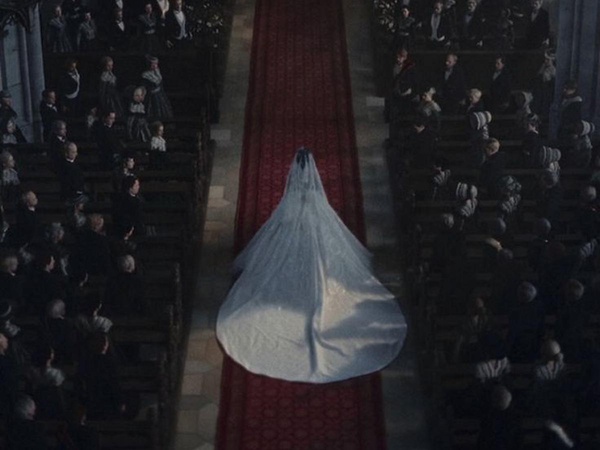
I imagined her walking toward me in sunlight, her dress brushing the ground, her smile sarcastic and soft in the same breath.
I imagined the music stopping because she’d forget when to walk.
I imagined her rolling her eyes at me for staring too hard.
I imagined a future that felt so close I could taste it.
Which is why my body went numb when the doors opened and they wheeled her toward me.
When I imagined her coming down the aisle, I never imagined her in a casket.
People like to talk during grief. They say a lot of dumb, useless things that don’t belong anywhere.
She’s in a better place.
Time heals all wounds.
You’ll move on eventually.
None of it mattered. Not of that was true.
At that moment, the room felt too bright, the flowers too loud, the air too thin. And I knew there would be no getting over this.
Someone touched my shoulder and said something about being strong, about how she wouldn’t want this, but the words dissolved before they reached me.
When they finally left me alone with her, the silence settled like dust.
I moved closer, slowly and careful, the way I always touched her when I was afraid of waking her.
I looked at her face. It was peaceful in a way she never was in life.
She had been restless, always planning, always laughing, always arguing about something small.
She wasn’t meant for stillness.
My hand hovered over hers. I couldn't bare to touch her. Touch felt like a boundary I wasn’t ready to cross.
I let out a breath I didn’t know I’d been holding, a breath that tasted like metal and memory.
I should have cried.
I wanted to cry.
But grief wasn’t what was choking me. It was something else.
I had imagined every version of our life.
But I had never imagined this one.
And now I was standing in the only version that was left of it.
Guilt sits differently in the body. It's lower and heavier and harder to swallow.
It's a slow, pulsing ache that doesn’t let you forget, even for a second.
My fingers brushed the edge of the casket, and the truth rose up again, quiet and merciless.
I had been the last person to see her alive.
The last person she spoke to.
The last person she trusted.
And the moment comes back to me whether I call it or not—
her voice cracking, her hands shaking, her saying she couldn’t do it anymore,
that she needed space,
that she needed time,
that she needed a life that wasn’t built around holding me together.
I remember how my chest tightened, how everything inside me went loud and panicked.
I remember the argument spilling into the night.
I remember reaching for her arm.
I remember her pulling away.
I remember the edge of the staircase.
I remember the sound, the sound of her tumbling, the loud crack at the end as she made it to the bottom.
I close my eyes now, standing over her, letting the weight settle.
A quiet truth, a truth no one else in this room will ever know.
They think she slipped.
They think she fell.
They think it was an accident.
And it will stay that way.
Because love can make you imagine a hundred futures, but guilt only ever leaves you with one.


 483