Score |
820


Ealo

 Freelancer @ Adekunle Ajasin University Akungba Akoko
Freelancer @ Adekunle Ajasin University Akungba Akoko



Are we punishing psychosis?: The Lindsay Clancy case.
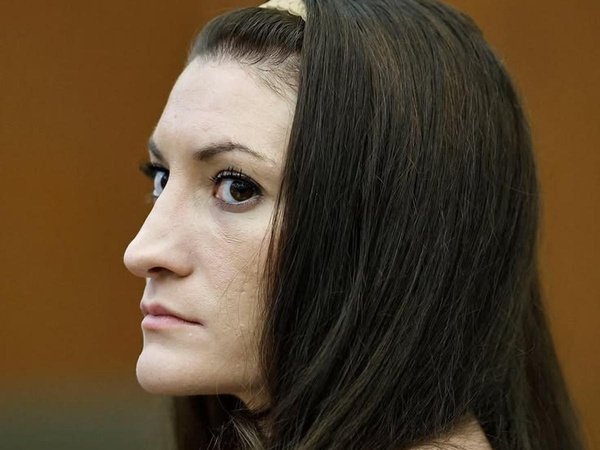
<p>Are We Punishing Psychosis?</p><p><br/></p><p>A person commits a crime under the influence of psychosis. Are we to let that person go because they are suffering from psychosis?</p><p><br/></p><p>What does justice look like?</p><p>These are the questions I've been pondering for days.</p><p><br/></p><p>Do I have answers?</p><p>Let's look at it critically together.</p><p><br/></p><p>We'll be looking at the Lindsay Clancy case.</p><p><br/></p><p>I'm sure you've heard lots of information and arguments about this case, but how about we look at it from a different lens?</p><p><br/></p><p>A little backstory</p><p>Lindsay Marie Clancy was born on August 11, 1990, and grew up in Wallingford, Connecticut. She attended Quinnipiac University, met Patrick Clancy in 2013, and married him in 2016. They settled in Duxbury, Massachusetts, where Lindsay worked as a labor and delivery nurse at Massachusetts General Hospital.</p><p><br/></p><p>They had three children: Cora, born in 2017; Dawson, born in 2019; and Callan, born in May 2022.</p><p><br/></p><p>Lindsay had experienced postpartum anxiety after her first two children, but after Callan's birth, her mental health deteriorated significantly.</p><p><br/></p><p>By September 2022, she was receiving psychiatric treatment for anxiety and depression. Over the following months, she experienced worsening anxiety, severe insomnia, intrusive thoughts and suicidal ideation. She saw multiple mental-health providers, visited emergency rooms, participated in a postpartum treatment program and was prescribed several medications.</p><p><br/></p><p>In December, she reported intrusive thoughts of wanting everything to be over, and her providers became increasingly concerned about her mental state. She also reported hallucinations and contacted suicide hotlines. On December 31, she returned to the emergency room because of persistent suicidal thoughts and voluntarily entered McLean Hospital the following day.</p><p><br/></p><p>She was discharged on January 5, 2023, after several days of treatment.</p><p><br/></p><p>On January 23, the day before the killings, her psychiatrist, Jennifer Tufts, testified that Lindsay appeared depressed and had to force herself to get out of bed, but she denied suicidal or homicidal thoughts and showed no signs of psychosis during that appointment.</p><p><br/></p><p>The next day, January 24, Lindsay killed her three children: five-year-old Cora, three-year-old Dawson and eight-month-old Callan.</p><p><br/></p><p>She then attempted suicide by jumping from a second-story window and survived with severe injuries, including paralysis from the waist down.</p><p><br/></p><p>And this is where the case becomes much more complicated.</p><p>Lindsay admitted to killing her children, but her defense argued that she was experiencing severe postpartum psychosis and therefore lacked criminal responsibility.</p><p><br/></p><p>Prosecutors argued that she deliberately planned the killings and understood what she was doing.</p><p>The jury ultimately could not reach a unanimous verdict, and on September 4, 2026, the judge declared a mistrial. There is currently no final verdict in the case.</p><p><br/></p><p>Now, what exactly does severe postpartum psychosis entail?</p><p>Postpartum psychosis is a psychiatric emergency. It can involve hallucinations, delusions, paranoia, confusion and a severe break from reality. It can also place the person at risk of harming themselves or their baby and requires urgent treatment.</p><p><br/></p><p>But here's the important part:</p><p>Having psychosis does not automatically mean a person is legally incapable of being held responsible for a crime.</p><p><br/></p><p>In Massachusetts, the legal question is whether a mental disease or defect caused the person to lack the substantial capacity to appreciate the wrongfulness of their conduct or to conform their conduct to the law. The prosecution bears the burden of proving criminal responsibility beyond a reasonable doubt.</p><p><br/></p><p>Now back to our initial question.</p><p><br/></p><p>Even if we accept that Lindsay Clancy was seriously mentally ill at the time, should that completely remove legal punishment for what happened?</p><p><br/></p><p>What exactly is justice?</p><p><br/></p><p>Let's look at it from both perspectives.</p><p>On one side, we could say she should not be criminally punished if her psychosis genuinely destroyed the capacities required for criminal responsibility. Instead, she could be placed in psychiatric treatment and remain subject to the legal processes governing people found not criminally responsible.</p><p><br/></p><p>On the other hand, we can ask whether justice requires criminal accountability for the deaths of three innocent children.</p><p><br/></p><p>What exactly is justice?</p><p><br/></p><p>Let's start by asking ourselves what justice means.</p><p>Justice is commonly understood as fairness and the fair administration of law.</p><p><br/></p><p>Pay attention to the word:</p><p>Fairness.</p><p><br/></p><p>Can we say everyone is treated fairly when three children are dead and there are no criminal consequences for the person who killed them?</p><p><br/></p><p>Is that justice?</p><p><br/></p><p><br/></p><p>But then, there's another question.</p><p>Can we call it justice if we punish someone for an act committed while a severe mental disease had deprived them of the capacity to understand that what they were doing was wrong or to control their conduct?</p><p>That's where this gets complicated.</p><p><br/></p><p><br/></p><p><br/></p><p>The deeper question is:</p><p><br/></p><p>Was she criminally responsible for what she did?</p><p>And that's why mental illness cannot simply be treated as a free pass to commit crimes.</p><p><br/></p><p>But it also cannot simply be ignored because the crime is horrific.</p><p><br/></p><p>Massachusetts law already recognizes this distinction.</p><p>If a defendant is found not criminally responsible, that does not simply mean they are released and nothing happens. A court can order hospitalization for evaluation, followed by possible commitment under the state's mental-health laws.</p><p><br/></p><p>If a person is found guilty of first-degree murder, Massachusetts law provides for life imprisonment without parole. Second-degree murder also carries a life sentence, but with parole eligibility after the applicable minimum term, generally 15 years.</p><p><br/></p><p>So perhaps the question isn't simply:</p><p><br/></p><p>“Should she be punished?”</p><p><br/></p><p><br/></p><p><br/></p><p>Perhaps the real question is:</p><p>“What kind of accountability is appropriate when a person's mind may have been severely impaired when the crime occurred?”</p><p><br/></p><p>Because justice has to consider the victims.</p><p>But it also has to consider responsibility.</p><p><br/></p><p>And those two things can collide.</p><p>Three children died.</p><p>therefore the victims' interests must remain part of the justice calculation even when the offender's mental state is profoundly impaired.</p><p><br/></p><p>Nothing about a mental illness diagnosis changes that.</p><p><br/></p><p><br/></p><p>Not simply whether Lindsay Clancy should be punished.</p><p><br/></p><p>But what we actually mean when we say someone is responsible for what they have done.</p><p><br/></p><p>Because if justice is supposed to be fair, perhaps fairness requires us to look at both sides of the tragedy:</p><p>the lives that were lost, and the mind of the person who took them.</p><p><br/></p><p>I know we can't dispute the fact that she suffered too</p><p>I sincerely sympathize with that but the way there is punishment for manslaughter </p><p><br/></p><p>Manslaughter is also unintentional</p><p>It could as well been left with a pat on the back but instead there's punishment for that one too</p><p><br/></p><p>So why then should this be also let go?</p><p>The children had right to life and that cannot be denied them without punishing the offender</p><p><br/></p><p>Compassion and justice can coexist</p><p>She should be punished for the murder of the children and still get treatment for psychosis</p><p>Treatment and accountability do not necessarily have to be mutually exclusive</p><p><br/></p><p><br/></p><p>Justice doesn't necessarily mean choosing between compassion and accountability.</p><p><br/></p><p> Justice is figuring out what accountability should look like when the person who committed the crime may not have fully understood the world they were in.</p><p>Because the children deserve justice.</p><p>And if Lindsay was truly psychotic, she deserved treatment.</p><p><img src="/media/inline_insight_image/1002959749.jpg"/></p>



 156
156


Other insights from Ealo













Contributor Points

Points-to-Coupons

Referral Earning

Insights for you.


The Root of Evil.🌚
I like money.But they said it's the root of evil. 🙂Sorry, get your facts straight.The l...
286 views
77 upvotes
87 comments

The Manipulation.
"Mom started looking at me differently from that day.I remember it like the back of my ...
289 views
75 upvotes
90 comments


The 3AM World.
My favourite time of every day is between 1 a.m. and 4a.m.That's when the world is the ...
254 views
67 upvotes
72 comments

Your Mess has a Personality.
I know you probably don't know this, but what I'm about to tell you might actually blow...
269 views
65 upvotes
71 comments

Drowning.
I can't breathe.I tried again.Nothing.My lungs burned.The water surrounded me, cold and...
257 views
61 upvotes
72 comments


Silence: The things we don't say.🥺
I walked out of my house, shutting the door behind me, and moved to the terrace.I neede...
254 views
60 upvotes
64 comments

Eden.
I came to this house very young, with one other.We were accepted so warmly.Everyone lov...
235 views
56 upvotes
66 comments

Vladimir Putin: The Man who stayed.
Putin is a man of interest.Not necessarily because he is easy to admire, but because it...
237 views
58 upvotes
62 comments