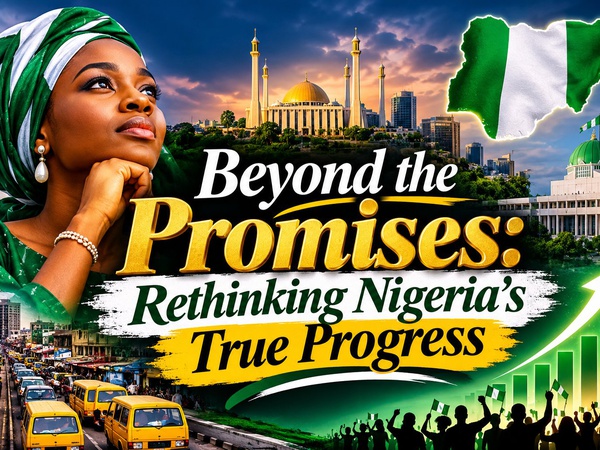
Sometimes, we measure national progress by the visible developments around us: newly constructed buildings, rehabilitated roads, newly introduced policies, technological advancements and the promises made by those in leadership. While these developments may indicate movement towards growth, they also invite a deeper reflection on what progress truly means. Beyond the impressive projects and political declarations, one fundamental question deserves our attention: How much better have the lives of ordinary Nigerians actually become?
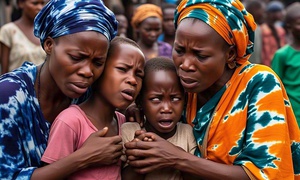
Nigeria is a country endowed with enormous human and natural resources, intellectual capacity, cultural diversity and countless opportunities. From agriculture and technology to education, entrepreneurship and the creative industry, the country possesses tremendous potential to achieve remarkable development. Yet, despite these advantages, millions of citizens continue to confront the difficulties of everyday survival. This raises an important concern about the relationship between Nigeria's enormous potential and the actual living conditions of its people.
Perhaps it is time to rethink how we define and measure national progress. Can a country genuinely celebrate development when a significant proportion of its population struggles to afford basic necessities, secure meaningful employment, access quality healthcare and live in a safe environment? What does economic growth mean to a family that can barely afford three meals a day? What does infrastructural development mean to a young graduate who has spent years searching for employment? And what does national prosperity mean to citizens who remain uncertain about their economic future?
These are not simply emotional questions; they are fundamental considerations in understanding the true meaning of development.
Progress should not be restricted to political speeches, economic statistics, government achievements or the number of projects commissioned. Rather, it should be reflected in the everyday experiences of citizens. It should translate into better opportunities, improved security, accessible education, quality healthcare, economic stability, personal freedom and the ability to live with dignity.
A nation should not be judged exclusively by how much infrastructure it builds or how much revenue its government generates, but also by how effectively these achievements improve the welfare of its people. After all, development should be a means of improving human lives, not merely an impressive display of physical and economic achievements.
Another important dimension of rethinking Nigeria's progress is the relationship between leadership, governance and accountability. Democracy goes beyond conducting elections and allowing individuals to occupy political offices. It requires transparency, responsibility, respect for the rule of law and a genuine commitment to public service.
Those entrusted with public authority must recognise that leadership is a responsibility, not an opportunity for personal enrichment or political domination. Citizens, on the other hand, must be able to question government decisions, demand accountability and participate meaningfully in issues affecting their collective future. Without these principles, the promises of democracy may remain disconnected from the expectations and aspirations of ordinary people.
Nevertheless, national development should not be viewed exclusively as the responsibility of political leaders. Although government has a constitutional and moral obligation to provide an enabling environment, strengthen institutions, protect citizens and deliver essential public services, ordinary Nigerians also have significant roles to play in nation-building.
Our attitudes towards public property, corruption, justice, tolerance, civic responsibility and national unity contribute to the kind of society we collectively create. We cannot continuously demand accountability from our leaders while encouraging dishonesty, celebrating corruption and disregarding the rules that sustain a functional society.
However, recognising citizens' responsibilities should never become an excuse for governmental failures. Government must fulfil its obligations, while citizens must contribute positively to the development of the country. Both responsibilities are important, although public institutions and political leaders must remain accountable for the authority entrusted to them.
Furthermore, rethinking Nigeria's progress requires us to examine the opportunities available to the younger generation. Are our educational institutions adequately preparing graduates for the realities of a changing world? Can young Nigerians build sustainable careers without relying on political connections? Are entrepreneurial opportunities accessible to people with genuine ideas and abilities? Can families afford essential services without constantly worrying about their financial survival?
These questions matter because the future of a nation depends significantly on the opportunities it creates for its people, particularly its younger population.
Nigeria has the potential to become a country where merit is rewarded, institutions function effectively, opportunities are accessible, justice is respected and citizens can pursue their ambitions without unnecessary obstacles. However, potential alone does not translate into meaningful development. It requires purposeful leadership, effective institutions, sound economic policies, responsible citizenship and a sustained commitment to the common good.
Ultimately, perhaps we need to move beyond the traditional understanding of national progress and begin evaluating development from a more human-centred perspective. The objective should not simply be to build a country that looks developed, but to create one in which its people genuinely experience the benefits of development.
After all, the true measure of a country's progress is not merely how much it builds, how much it earns or how many promises its leaders make, but how much better the lives of its people become.
Perhaps the question is no longer simply whether Nigeria is developing, but whether its development is meaningful, inclusive and genuinely reaching the people.
LET'S TALK!
If you had the opportunity to change ONE major thing about Nigeria today, what would it be, and why?
Would you prioritise leadership and accountability, education, security, unemployment, economic stability, electricity or something entirely different?
I'd genuinely love to read your perspectives in the comments. Let's have an honest, constructive and meaningful conversation about the country we all hope to see.
Nigeria's progress should not remain a collection of political promises; it should become a reality reflected in the everyday lives of its people. ❤️


 7