Don't Be an Illiterate. Differentiate Between a Misandrist and a Feminist.
Can we PLEASE stop confusing feminism with misandry? Because at this point, I'm beginning to wonder if some people genuinely don't know the difference or simply don't care to find out.
Apparently, the moment a woman speaks about sexism, calls out misogyny, demands equal opportunities or questions certain expectations placed on women, she's automatically labelled a man-hater.
Oh, she wants equal rights? She hates men.
She doesn't want to be financially dependent on a man? She's bitter.
She refuses to tolerate disrespect? She's arrogant.
She questions why women are expected to do the majority of domestic work? She's trying to compete with men.
And God forbid she criticizes a man's behaviour. Suddenly, feminism is the problem. But let's actually use our heads for a moment. Do you really know what Feminism is? Have you ever heard of the word misandry? Feminism and misandry are NOT the same thing.
Feminism advocates for women's equality and challenges the discrimination, oppression and systemic disadvantages women experience because of their gender.
Misandry, on the other hand, is prejudice, contempt or hostility towards men simply because they are men. One advocates against gender-based inequality. The other expresses hostility towards a gender.
How exactly did we manage to confuse the two? A woman demanding equal opportunities isn't expressing hatred towards men. A woman questioning why certain privileges are reserved for men isn't declaring war on the male population. And a woman who refuses to organise her entire existence around male approval isn't automatically a misandrist. Sometimes, she simply wants to live her life without being subjected to unnecessary restrictions.
For the fact that you are pissed because a woman as a feminist is advocating for equal rights means you're nothing but an oppressor who gains from the oppressed.
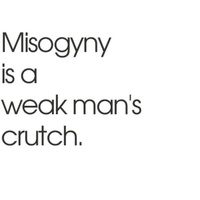
Now, let's address another rather interesting habit: treating misandry and misogyny as though they're interchangeable. They're not. Misandry is prejudice against men. Misogyny is prejudice, contempt or hostility towards women, often expressed through the policing, degradation and punishment of women who challenge gender expectations. Both are forms of gender-based prejudice, but pretending they operate identically is intellectually dishonest. Misogyny has a long-standing historical relationship with patriarchal institutions, laws, cultural practices and social structures that have restricted women's rights and autonomy.
It isn't merely about a woman being insulted by a man. It can influence who gets opportunities, who holds power, whose opinions are taken seriously, whose independence is encouraged and whose behaviour is constantly scrutinized. Misandry, meanwhile, does not have the same historical or institutional position in patriarchal societies. That doesn't mean prejudice against men is acceptable or that individual men cannot experience genuine discrimination or hostility. It means we cannot simply place both concepts on identical social footing and pretend context doesn't matter. Equal definitions do not automatically mean equal historical consequences or social power. And no, acknowledging this isn't an attempt to excuse hatred towards men. It's an attempt to have an actual conversation instead of throwing words around because they sound convenient.
Now, back to feminism. Can a feminist be a misandrist? Yes. Feminists are human beings, and identifying with a movement doesn't automatically make someone incapable of holding prejudiced views. But that doesn't make misandry a fundamental principle of feminism. In the same way that one person's terrible behaviour doesn't define an entire movement. And I think this is where some Nigerian conversations become particularly frustrating. We have women discussing unequal expectations in marriage, workplace discrimination, sexual harassment, financial dependence, domestic responsibilities and the general double standards that exist between men and women. Instead of engaging with the actual argument, someone inevitably comes along with: "Feminists just hate men." Really? Is that genuinely all you took away from the conversation? It's almost as though the moment a woman questions an arrangement that benefits her less, the discussion suddenly becomes about her attitude towards men rather than the arrangement itself. It's easier to call a woman bitter than to consider whether her criticism has merit. It's easier to accuse her of wanting to be a man than to examine why certain opportunities, responsibilities and freedoms are distributed differently. And let's be honest, sometimes the accusation is simply a convenient way to avoid addressing uncomfortable questions. Of course, not every argument made in the name of feminism is automatically correct. Some people are hypocritical, some arguments are poorly constructed, and some individuals genuinely use feminism as an excuse to express hostility towards men. But that is an entirely different conversation.
You cannot pick the most extreme person you've encountered, use them to define an entire ideology and then congratulate yourself for understanding it. That's not an argument. That's a refusal to think beyond your personal experience. Men can support feminism. They can challenge harmful gender stereotypes, advocate for women's rights and question the expectations placed on both genders.
And no, supporting women's equality doesn't mean men must hate themselves, surrender their rights or become enemies of their own gender. Equality isn't a competition. So, the next time a woman says she's a feminist, perhaps try understanding what the word actually means before rushing to inform her that she hates men. And the next time someone expresses genuine hatred towards men, stop automatically dressing it up as feminism.
Feminism is not misandry.
Misandry is not feminism.
And misogyny is not simply the female equivalent of a man having his feelings hurt. Words have meanings. Social structures have histories. And if we're going to discuss gender, we should at least have the intellectual capacity to distinguish between the concepts we're arguing about. Because respectfully, you cannot keep confusing ignorance with an opinion.


 14