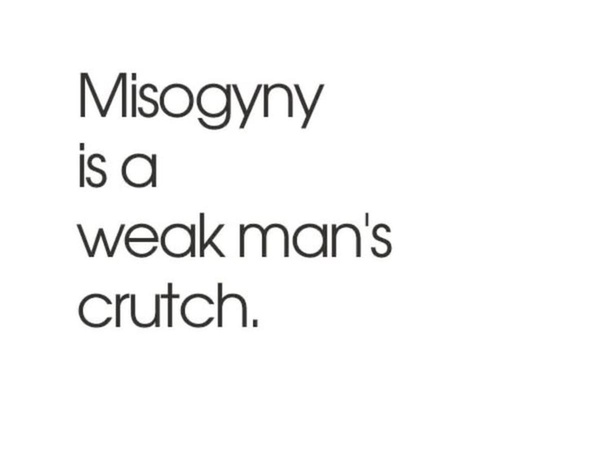
When Misogyny Wears a Cross: How Some Men Have Linked Christianity to the Subordination of Women
There's something rather interesting about the way some men use Christianity when discussing women.
Apparently, and I say apparently, a woman having an opinion is rebellion. Disagreeing with her husband is disrespect. Wanting independence is pride. Having ambitions outside marriage is becoming too worldly.
And somehow, all of this can be presented as biblical teaching.
Now, before anyone misunderstands where I'm coming from, this isn't an argument against Christianity, marriage, traditional values or even the belief that men and women can have different roles within a household. People are entitled to their religious convictions.
What I find concerning is how conveniently certain biblical teachings are interpreted when the subject is women's independence, authority or rights.
Some men have become so comfortable using religion to defend their attitudes towards women that it's sometimes difficult to tell where their faith ends and their personal prejudices begin.
And I think that's worth examining.
So, when exactly did Christianity become a convenient excuse for treating women as inferior?
Let's start with one of the most frequently quoted passages in discussions about marriage: Ephesians 5:22, which tells wives to submit to their husbands.
This verse is often brought up whenever the subject of marriage comes up, particularly by men who believe that being a husband automatically makes them the authority in every situation.
But something interesting happens when you read the surrounding passage.
Ephesians 5:25 instructs husbands to love their wives just as Christ loved the church and gave himself up for her.
The passage doesn't simply give men authority and leave them to do whatever they please. It places a serious responsibility on them, too.
Yet, in some conversations, the emphasis is almost exclusively on what women owe men.
Women are reminded to submit, obey, respect and accommodate. But how often are these same men reminded that they are expected to love, serve, respect and treat their wives with the same consideration they expect for themselves?
Why is submission discussed as though it's a woman's responsibility alone, while accountability somehow becomes optional for the man?
If a man wants to quote scripture to establish what his wife owes him, shouldn't he be equally interested in what that same scripture requires of him?
You cannot demand the privileges of a position while conveniently ignoring its responsibilities.
And this is where I think the problem becomes more apparent.
For some men, religion has become less about spiritual growth and more about establishing authority over women.
Consider how often women are discouraged from pursuing certain ambitions because they might become too independent.
A woman wants to build a career? She is reminded that her primary responsibility is supposed to be her home.
She wants to be financially independent? Suddenly, she's told that she's becoming difficult to control.
She disagrees with a man? She's accused of being disrespectful, rebellious or lacking the qualities of a godly woman.
She doesn't want to get married? People start questioning her priorities.
And if she does want marriage but expects to be treated as an equal partner, she's sometimes accused of having unrealistic expectations.
It's almost as though a woman's choices are acceptable only when they align with what someone else considers appropriate for her.
Of course, Christianity teaches values such as humility, love, patience and service. But these values aren't supposed to be selectively enforced against women.
Humility doesn't mean a woman must become voiceless.
Patience doesn't mean she must tolerate mistreatment.
Forgiveness doesn't mean she must remain in an unhealthy situation.
And submission should never be interpreted as permission for someone to control, intimidate or mistreat another person.
Yet, these distinctions are sometimes conveniently ignored.
Another issue is the way certain men interpret the story of Adam and Eve.
Eve's role in the fall of humanity has historically been used in some religious discussions to portray women as naturally deceptive, easily influenced or responsible for leading men into wrongdoing.
And while Christians have different interpretations of this story, it becomes problematic when one interpretation is used to suggest that women are inherently less trustworthy or morally weaker than men.
Think about the implications of that.
A woman makes a mistake, and it becomes evidence of women's supposed nature.
A man makes a mistake, and it's an individual failing.
Why do we sometimes apply collective blame to women while allowing men the privilege of being judged as individuals?
And then there's the issue of modesty.
I find it particularly interesting how conversations about modesty can sometimes become more concerned with policing women's bodies than discussing personal character.
Women are told how to dress, how much skin to show, how to behave around men and how to avoid becoming a source of temptation.
But where is the equivalent emphasis on men's responsibility to exercise self-control?
Why is a woman's clothing sometimes treated as a reflection of her morality, while a man's behaviour is treated as something she should have anticipated and prevented?
A woman should be able to dress modestly because that's her personal conviction, not because she must carry the responsibility for another person's inability to control their behaviour.
Modesty is not exclusively a female responsibility, and self-control certainly isn't a gender-specific virtue.
Now, I don't want to ignore the fact that Christianity has different denominations, traditions and interpretations. Not every Christian man believes women are inferior, and many Christian men actively advocate for women's education, leadership, independence and dignity.
There are also Christian women who genuinely believe in traditional marital roles and freely choose to live according to those convictions.
Their choices deserve respect.
The issue isn't that everyone must interpret scripture identically or abandon traditional beliefs.
The issue is what happens when someone's interpretation becomes a tool for restricting another person's humanity.
And this is particularly important in Nigeria, where religion plays a significant role in everyday life.
In many communities, religious authority carries considerable social influence. A statement from a pastor, church leader or respected religious figure can shape how people understand marriage, gender roles and family responsibilities.
This influence can be positive. Churches can provide support systems, encourage education, promote charitable work and help people develop a sense of community.
But religious influence also comes with responsibility.
When harmful attitudes are repeatedly presented as unquestionable religious principles, people may become afraid to challenge them.
A young woman might grow up believing that being a good Christian means never questioning a man.
A wife might be encouraged to endure unfair treatment because leaving or speaking up is supposedly evidence of insufficient faith.
A girl might be taught that her greatest achievement should be becoming someone's wife rather than developing her own abilities, interests and ambitions.
And when these ideas are reinforced often enough, they can become normalised.
The particularly concerning part is that some women eventually begin defending the same standards that restrict them, sometimes because they've been taught that questioning those standards means questioning God.
But is that really what faith is supposed to look like?
Shouldn't religious teachings encourage people to examine their character, recognize their shortcomings and treat others with dignity?
If a man's understanding of Christianity consistently results in him having more freedom, more authority and fewer responsibilities than the woman beside him, perhaps it's worth examining that interpretation.
Because you cannot claim to value the teachings of Christ while conveniently overlooking the love, humility, compassion and selflessness those teachings demand.
And perhaps we should ask a more uncomfortable question:
Are some men genuinely defending Christianity, or are they defending a version of Christianity that conveniently protects their authority?
I think it's an important distinction.
A woman's intelligence doesn't threaten her faith. Her ambitions don't automatically make her less feminine. Her ability to disagree doesn't make her rebellious, and her independence doesn't make her incapable of loving or respecting a husband.
A woman can be religious, modest, ambitious, intelligent, opinionated and independent at the same time. These qualities aren't mutually exclusive.
And men aren't somehow less masculine because they respect women as individuals rather than treating them as people who need to be managed.
At the end of the day, religion should not be a convenient disguise for prejudice.
If we are going to quote scripture, we should be willing to examine the entire message, not just the parts that give us an advantage.
Faith should challenge our character, not provide us with an excuse to avoid doing better.
I'd genuinely like to hear different perspectives on this.
Do you think some men have confused biblical leadership with male superiority? Do you think certain interpretations of scripture have contributed to misogyny in Christian communities? And where should we draw the line between respecting religious beliefs and challenging the harmful ways they're sometimes applied?
Let's have an actual conversation about it.


 27