Somewhere between the first flutter of movement and the first time you feel a proper kick, there is an appointment many mothers-to-be are tempted to skip. It's the anomaly scan, also called the anatomy scan or mid-pregnancy scan. For some, it feels like an expensive photo session. For others, it is something to fear: "What if they find something wrong?"
Here is the truth: this scan is one of the most valuable appointments in the whole of pregnancy, and the best reason to attend is the one that scares people most. Knowing early gives you options, and options save lives.
What Exactly Is an Anomaly Scan?
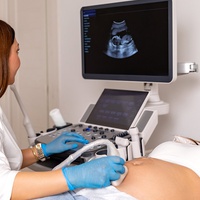
The anomaly scan is a detailed ultrasound that examines your baby from head to toe. It is typically performed between weeks 18 and 22 of gestation and aims mainly to assess fetal anatomy and detect any anomalies. It uses sound waves, not X-rays, so there is no ionising radiation. It is painless and considered safe for both mother and baby when performed by a trained professional. (nih)
During the scan, the sonographer works through a systematic checklist. They examine:
▪︎ The brain and skull, including the fluid-filled chambers and the cerebellum
▪︎ The spine, checking that the vertebrae and overlying skin are intact
▪︎ The face, including the lips and palate
▪︎ The heart, looking at its four chambers and the major vessels leaving it
▪︎ The abdomen, including the stomach, kidneys, bladder and abdominal wall
▪︎ The limbs, hands and feet
▪︎ The placenta, noting where it sits and how the cord is attached
▪︎ The amniotic fluid, since too much or too little can signal a problem
▪︎ Many parents also learn the baby's sex, but that is a bonus, not the purpose.
Why the Timing Matters
The 18 to 22 week window is not arbitrary. Several fetal systems, in particular the heart, spine, posterior fossa and face, often cannot be thoroughly assessed until 18 to 22 weeks. Before 18 weeks, many organs are simply too small to judge properly. Much later, there is less time to act on what is found. At this stage the baby is large enough to see clearly and still small enough to move around and show different angles.
If you skip this window, you lose the moment when imaging is at its most useful.
"But My Pregnancy Feels Fine"
This is the most common reason women give for skipping the scan, and it is exactly why the scan exists. Most structural abnormalities cause no symptoms for the mother at all. You cannot feel a heart defect or a spinal problem. Feeling well tells you about your own health, not the details of your baby's anatomy.
It also isn't only for "high-risk" women. One systematic review found that fetal anomalies occur in about 2 percent of pregnancies. Many of these babies are born to mothers with no known risk factors, no family history and no previous problems. Age, diabetes, a previous affected pregnancy or a family history can raise the risk, but low-risk mothers benefit too.
What a Scan Can Change
Imagine the scan shows a condition that needs attention. What happens next is where the real value lies.
Delivery in the right place. A baby with a heart defect, an abdominal wall defect or a diaphragm problem may need specialist care within minutes of birth. Knowing in advance means you can deliver at a hospital with neonatal intensive care and paediatric surgeons, instead of rushing between facilities with a newborn who is struggling.
Preparation of the medical team. Surgeons, neonatologists and anaesthetists can plan ahead. Conditions such as cleft lip and palate, club foot, and kidney blockages can be managed far better when the team is ready.
Further testing. An abnormal finding may lead to a specialist scan, a fetal heart assessment, or genetic testing, so you get a clearer picture rather than guessing.
Treatment before birth, in selected cases. Some conditions can be treated or monitored in the womb, in centres equipped to do so.
Time to think and prepare. If a serious condition is found, parents have time to speak with doctors, counsellors, family and faith leaders, and to make informed decisions according to their values and the law. Not knowing removes that time.
Equally important, most scans are normal. For these families, the scan brings deep relief. Research notes that a normal result often lifts anxiety and physical stress symptoms after the report.
What the Scan Can and Cannot Do
Honesty matters here. An anomaly scan is a screening tool, not a guarantee. It is very good at finding some problems and weaker at others. Neural tube defects, such as spina bifida, are among the most detectable, with a reported detection rate of about 98 percent, while detection of heart malformations was much lower, at around 38 percent in one large study. Detection depends on the baby's position, the mother's body build, the gestational age, the quality of the equipment and the skill of the operator. (reliasmedia)
Some conditions, such as certain genetic syndromes, hearing problems or subtle brain conditions, may not be visible on any scan and only appear after birth. A normal scan is reassuring but does not promise a perfect outcome. This is why antenatal care continues after the scan, including growth checks later in pregnancy where needed.
What If They Can't See Everything?
Sometimes the baby lies in an awkward position, or the sonographer cannot get a clear view of a structure. This is common and is not a sign of a problem. You may simply be asked to return in a week or two for another look. Walking around, having a short break, or being rescanned later often solves it. (pages)
Practical Tips for Mothers-to-Be
Book early. Ask your antenatal clinic about the right date for you, based on your dating scan or last menstrual period.
Choose a qualified operator. A trained sonographer, radiographer or obstetrician with experience in fetal anatomy makes a real difference.
Bring support. A partner, relative or friend can help you absorb what is said.
Ask questions. Ask what was checked, what was seen clearly and what was not.
Don't panic over a single word. If something is flagged, it often means "look again" or "get a specialist opinion," not "your baby has a serious problem."
Keep taking your antenatal care seriously. Folic acid before and early in pregnancy, good blood sugar control if you are diabetic, and avoiding unsafe medications all lower risks. The scan complements these steps and does not replace them.
The Bottom Line
Skipping the anomaly scan doesn't make a problem disappear. It only means you meet that problem unprepared, perhaps in a delivery room without the right team or equipment. Having the scan gives you information, time and choices, and for most women it delivers the best news of all: a healthy baby with everything where it should be.
If you are pregnant, ask your midwife or doctor about your anomaly scan this week. It is a short appointment that can make a very big difference.


 4