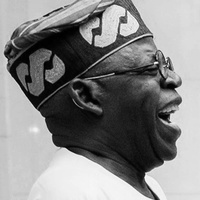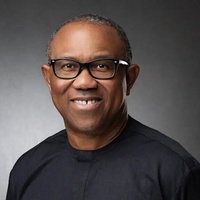
My father was the first person I ever heard criticise Governor Bola Tinubu.
He remarked that Tinubu “ruined Jakande’s progress in Lagos”. And that comment puzzled me at under-11 years.
You see, if you grew up in Lagos like me, you probably loved the governor. He was a “champion” of democracy and was rarely ever reported in the news negatively.
Now an adult, that love is lost. So, I have tried to understand what changed for me.
As one who applies psychology in my work, I am familiar with the common biases that children have about older people and those in authority:
Kids irrationally believe that adults are perfect beings, only to grow up and realize that it is not so.
Yet, I am sure that this does not explain why younger me liked Governor Tinubu…because I equally disliked President Olusegun Obasanjo.
I remember feeling that the man was the symbol of bad authority. I never heard anyone speak of him in a good light. He was tyrannical, incompetent, and corrupt.
Corruption is evil. Yet I remember the rumours of Governors Tinubu and Fashola’s corruption being excused by…
“Even if they steal money, they still worked.”
Hearing adults say this gave me the idea that corruption is an inevitable part of governance.
However, it is curious that this grace was not extended to Obasanjo.
If you’re thinking that we were being manipulated somehow, you may be right.
Say hello to the Nigerian traditional media. The tool for mass orientation.
This election season, my position as a non-participating, but keen observer of political conversations and dynamics over the years has proved helpful as I tried to process and understand how I arrived at my current political leanings.
You see, though I only started engaging in political conversations in 2014, I was not oblivious to the events that influenced the national mood.
I recall the the 2012 Occupy Nigeria protests, Buhari’s comments on Boko Haram, and the Sanusi Lamido Samusi debacle, etc.
However, being in the boarding house as a secondary school student until 2013 meant I had limited access to news, and to mates who were interested in politics.
Those events, however, informed my dislike for candidate Buhari and his APC. Hence, I rooted for President Jonathan. Yet, I would not vote because I only turned 18 after the elections.
Anyways, Buhari became my president, and I had to live with that. It was time to believe the best about him.
But imagine my dismay at his performance.
I believe that Buhari’s government has failed. And I think any non-party affiliated Nigerian will agree with me.
Yet, over the last 7 years, I've observed how news reports were constantly manipulated to downplay his failures in security, support his terribly designed economic policies, and excuse his nepotism.
The only problem was that this time around, they also had to attempt this decoration on social media in order to manage national outrage. And social media is a tougher terrain for that kind of business.
Let me explain:
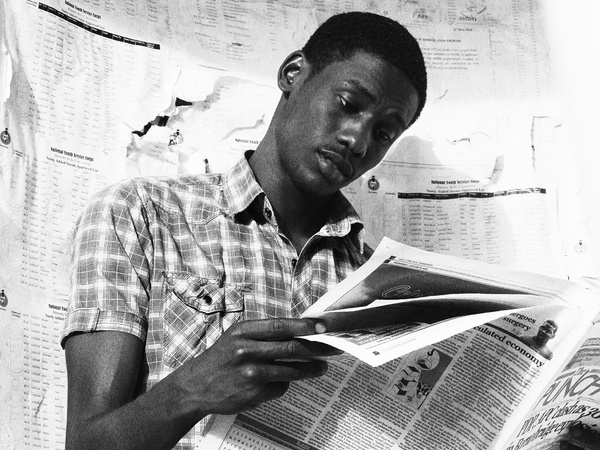
Before now, we got news from the TV, radio and newspapers. Which meant that breaking news only ever spread the next day, or hours later.
This gave those with the power to influence news ample time to kill or tone down any unpalatable report from being broadcast, or to limit its spread.
Today, we get news as they happen, with video or image evidence, via unofficial sources, on platforms like Twitter and Facebook. Sometimes even before the government agents get wind of them.
Hence the battle frontiers for dis-information are now broader and the resources required to control perception have exploded.
Now, we can compare news we saw on social media with the reports made on TV and newspaper reports, and can tell when mischief is afoot.
They’re still able to deceive many who are off social media. And this is not to say that social media is immune from information manipulation.
However, it is now harder to achieve results like before, because there is no monopoly of news sources, and anybody from anywhere can rain on the parade of propagandists with evidence-backed reports.
Too often we have seen government propaganda and narrative setting dismantled by eye-witnesses or field experts on social media. That was not possible before now.
For propaganda to thrive on social media, the government will need to censor the internet as China does.
The democratization of news sources has elevated the consciousness of the masses. And that is a good thing for democracy.
To tie this up…
As the economic capital of Nigeria, Lagos serves as the home of many of our biggest media houses.
This is why in every political regime, the Lagos state governor is more popular than all his peers, and second only to the President.
Hence, just like it is with entertainment, where any artiste whose music makes it in the Lagos market gains national acclaim.
It also happens that the popular sentiment in Lagos rapidly spreads across the rest of the country, both in the news and on social media.
For example, while EndSars protests started in Delta state, it didn’t take off or make the news until young people in Lagos took to the streets and refused to leave.
Now, it so happens that the Godfather of Lagos politics, Bola Tinubu, is the owner of 2 of Nigeria’s biggest media houses, The Nation Newspaper and TVC, and maintains influence in the Lagos TV, PM News, and other media groups.
And if you have monitored these media groups over the years, you can tell that they manipulate the news reports to project him and his associates in a good light.
Learning these helped me to disabuse my mind from blindly trusting whatever is reported in the traditional media.
Finally, as I read accounts of Tinubu’s acts over the last 30 years mostly on social media – which curiously never made it to traditional media – I am certain that my baby boy love for him was not based on merit but was the product of media orientation.
So was I also manipulated into disliking President Obasanjo?
NB: see the comments




 1646