Score |
557


Sewuese Adason
 I teach children English language. @ I am a teacher
I teach children English language. @ I am a teacher



JOLLOF THAT ALMOST DIDNT HAPPEN
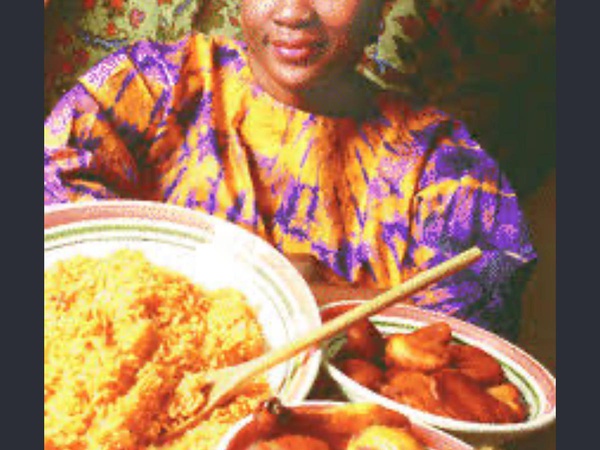
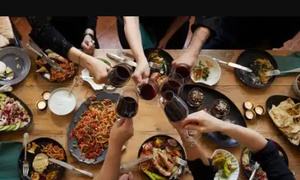
<p><br/></p><p>In the heart of Lagos, where the air always smelled of suya smoke and diesel, Chioma stood in her small kitchen in Surulere, staring at the pot like it had personally offended her. Today was her mother’s 60th birthday, and the whole extended family was coming. The plan was simple: her famous party jollof rice, the kind that made people fight over the bottom of the pot.</p><p>She had woken at 5 a.m. to beat the market rush. At Tejuosho, she bargained hard for the reddest tomatoes, the freshest thyme, and the exact type of long-grain rice her mother preferred. “Aunty, this one no get stone,” the seller promised, smiling with the confidence of someone who had already sold the same story to ten other women.</p><p>By 9 a.m., the kitchen was alive. Oil heated. Onions softened. Tomato stew began its long, patient simmer. Chioma’s younger brother ,eddy , wandered in wearing last night’s jersey, still smelling faintly of beer from watching the Super Eagles match.</p><p>“You sure this one go turn out?” he asked, peering into the pot.</p><p>“If you no leave my kitchen, it go turn out on your head,” she replied without looking up.</p><p>The first problem arrived with the generator. NEPA had taken light again, and the old Honda generator refused to <a class="tc-blue" href="https://start.Eddy" rel="noopener noreferrer" target="_blank">start.Eddy </a> kicked it. Chioma prayed. Their neighbour, Mama Bola, shouted from her balcony, “Pour small fuel for the side, no be only the top!” After twenty minutes of sweating and arguing, the generator coughed to life like an old man waking from a deep sleep.</p><p>Then the rice almost betrayed her. Halfway through cooking, the grains looked too soft. Panic. She opened the lid, stirred carefully, and whispered, “Please, for Mama’s sake.” The rice listened. By the time the stew had reduced to that deep, glossy red, the grains were separate and proud.</p><p>At 2 p.m., the house filled. Aunties in aso-oke and gele that could block the sun. Uncles arguing about politics and football at the same time. Cousins taking selfies and complaining about the heat. Chioma’s mother sat in the place of honour, smiling the quiet smile of a woman who had raised five children in Lagos and still found reasons to laugh.</p><p>When the jollof was finally served, silence fell for three full minutes—the highest compliment a Nigerian kitchen can receive. Plates were cleaned. Second helpings demanded. Someone declared it “the real Lagos party jollof,” which made Chioma’s chest tighten with pride.</p><p>Later, as the sun softened and the generator hummed steadily, her mother pulled her aside.</p><p>“You almost gave up when the generator refused,” she said quietly. “I was watching from the window.”</p><p>Chioma laughed. “I was ready to order from that expensive place on Instagram.”</p><p>Her mother shook her head. “No. You stayed. That is how we do it. Lagos will try you every day. The light will go. The traffic will lock. The rice will threaten to spoil. But you stay. You finish what you started.”</p><p>Chioma looked around the small sitting room—full of noise, argument, laughter, and the lingering scent of perfectly cooked jollof. For a moment, the chaos felt like home in the purest way.</p><p>As the last guests left and the night settled over Surulere, Chioma scraped the bottom of the pot—the prized, slightly burnt layer—and smiled. Tomorrow NEPA would take light again. The traffic would be worse. Someone would complain. But tonight, the rice had turned out. And that, in Lagos, was victory enough.</p><p><br/></p>


 115
115



Other insights from Sewuese Adason








Contributor Points

Points-to-Coupons

Referral Earning

Insights for you.

Who Wants Shawarma?
I bought a shawarma yesterday.Not because I was hungry.Well...I was.But somewhere betwe...
284 views
32 upvotes
39 comments

My Food and I
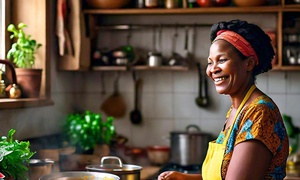
I used to wonder why it seemed like our ancestors lived longer than many do today. ...
869 views
14 upvotes
19 comments


Food is Overrated!
I can almost picture how you look when you read this statement: Utterly confused. Beca...
1472 views
16 upvotes
20 comments



Owned by the devil’s heir
Chapter Two: The Brothers of BlackwoodThe sound of the doors slamming shut echoed throu...
130 views
14 upvotes
14 comments

Owned by the devil’s heir
Chapter One: The InvitationThe rain began just before sunset.By the time Elena stepped ...
120 views
14 upvotes
13 comments
The last wrapper
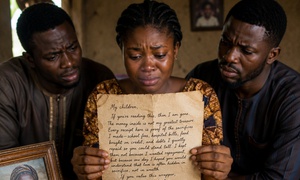
When Mama Eka died, the women of the village gathered to divide her belongings. There w...
118 views
13 upvotes
12 comments


Owned by devil’s heir
Chapter Three: The Devil’s HeirElena’s hand trembled as she reached for the doorknob.An...
123 views
13 upvotes
10 comments