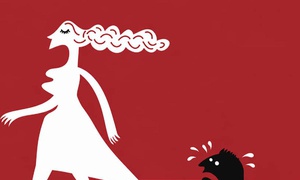
Poverty is often described as not having enough money. But I think poverty is much more complicated than an empty wallet or an empty stomach.
Sometimes, poverty is having a dream but no means to pursue it.
Sometimes, it is having talent but no opportunity to develop it. It is wanting to leave a situation that hurts you but having nowhere else to go. It is knowing what you want but constantly having to choose what you can afford.
That is the part of poverty people don't always see. A poor person may have choices in theory, but not in reality.
You may say, “Go back to school.” But what if there is no money for the fees?
You may say, “Leave that job.” But what if that job is the only thing paying the bills?
You may say, “Walk away from that relationship.” But what if walking away means returning to a home where there is nothing to eat?
You may say, “Follow your passion.” But what if your passion cannot provide your next meal?
Sometimes, poverty doesn't tell you what you must do. It simply removes enough alternatives until the decision makes itself.
And that is frightening.
Because when survival becomes the priority, dreams become negotiable.
A young person may want to study medicine but choose another course because it is cheaper. Someone may have the ability to start a business but spend the little money they have on feeding their family. Someone may want to move to another city, learn a skill, or pursue a different career, but responsibilities keep pulling them back.
Then people look at them and say, “You should have tried harder.”
But how hard can someone run when they are carrying responsibilities you cannot see?
This is why I believe poverty should not only be measured by what a person does not have.
We should also think about what poverty prevents them from becoming.
How many writers never wrote because they were too busy surviving?
How many entrepreneurs never started?
How many students never discovered how brilliant they could have been?
How many people remained in painful situations because they could not afford the consequences of leaving?
And how many dreams quietly died without anyone ever knowing they existed?
Perhaps the saddest part is that poverty can eventually change the way a person thinks.
You stop asking, “What do I want?”
You start asking, “What can I afford?”
You stop asking, “Where do I want to go?”
You start asking, “Where can I manage?”
You stop choosing based on possibility.
You begin choosing based on survival.
Because sometimes, what a person needs is not another lecture about working harder.
Sometimes, they need a door to open.
"I am tired of fighting circumstances I never chose."
"I am tired of having to be strong because I cannot afford to be vulnerable."
"I am tired of choosing between two things I should never have had to choose between."
"I have dreams too."
"I have choices too."
So if poverty could hear the people it has held back for years, perhaps they would not ask for riches.
Perhaps we would simply say:
“You have taken enough from us.
Our choices. Our opportunities. Our possibilities.
You have made survival our priority for too long.
LET US GO."


 98