Score |
768


Maq

 Writer
Writer



The Fool Who Wins
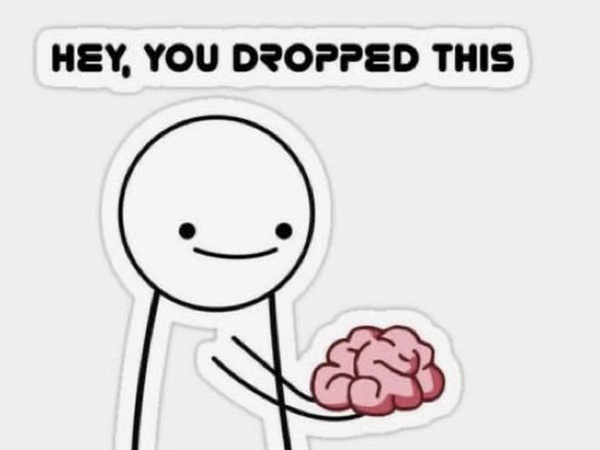
<p>olodo (ɔ̀.lɔ̀.dɔ̀.) noun • Yoruba (a past life)</p><p>A dullard. A slow learner. A person considered unintelligent or incapable of understanding simple ideas.</p><p>A boy who has read the same paragraph four times and still couldn't tell you what it was trying to say. A girl who watched the rest of her class move on without her because she couldn't make the passing grade. The child who has answered every question asked with the wrong answer.</p><p></p><p>olodo (ɔ̀.lɔ̀.dɔ̀.) noun • Yoruba (2026)</p><p>Definition under review. </p><p>A fool who wins? </p><p>A loud idiot? </p><p>An expert in nothing? </p><p>Depends on who you ask. </p><p></p><p>Apparently we've reached that stage of the internet where everyone is passionately arguing about ignorance while very few people can agree on what ignorance actually is. I open my phone, and someone is insisting we're rewarding olodos. Someone else is insisting we're finally celebrating authenticity. But somewhere in the middle of all that shouting, we've also started confusing attention with authority.</p><p></p><p>ignorance (ĭg′nər-əns) noun</p><p>The absence of knowledge.</p><p>Ideally, temporarily.</p><p></p><p>But am I ignorant because I never went to university?</p><p>Or because I had the opportunity to learn and chose not to?</p><p>Am I ignorant because life gave me fewer chances?</p><p>Or because I stopped looking for them?</p><p>Am I ignorant because I don't know?</p><p>Or because I have convinced myself there's nothing left to know?</p><p><br/></p><p>There are people who don't know.</p><p>And there are people who don't want to know.</p><p>Some people don't know because they haven't had the opportunity to learn yet. But they ask questions. They listen. They change their minds. They understand that someone else might know better.</p><p>Others don't know, but don't particularly care. They speak before they think. They defend what they haven't bothered to understand. They influence people without considering where they're leading them. They defend misinformation as fiercely as though it were knowledge, and treat curiosity as a weakness.</p><p>Those are not the same thing.</p><p>I understand the frustration, I really do. </p><p>It's difficult to watch people who seem less informed than you become wealthier, more successful or more influential than you.</p><p>It's tempting to call that ignorance.</p><p>Sometimes we are.</p><p>But sometimes we're simply watching a different kind of intelligence at work, like the ability to entertain, communicate and understand people. Those are skills too, even if they aren't taught in a classroom.</p><p>The entrepreneur who never finished secondary school may understand markets better than the graduate who graduated at the top of their class. The mechanic who cannot write a dissertation may diagnose an engine in minutes. The content creator who understands people can build an audience that marketing professors spend years trying to explain.</p><p>The tragedy isn't that people learn differently.</p><p>The tragedy is that we've begun to admire people who have stopped learning altogether.</p><p>We've become so obsessed with proving that school isn't everything that we're beginning to act as though learning is nothing.</p><p>We no longer reach for understanding first. We reach for convenience. We skim headlines instead of articles. We recycle opinions instead of forming some of our own. We let algorithms think for us, virality think for us, other people think for us. Somewhere along the way, not knowing stopped being embarrassing, and wanting to know did.</p><p>So are we rewarding ignorance or authenticity?</p><p>If by ignorance you mean the girl who watched her class move on without her, but who still asks questions, still listens, who learns, who changes her mind and builds an honest life out of whatever she was handed, then no. We are not rewarding ignorance.</p><p>But if by ignorance you mean the boy with eleven million followers who doesn't know, and has no interest in finding out, who refuses to question themselves while encouraging thousands of others not to either...</p><p>Then yes.</p><p>We are.</p><p>The internet can reward attention all it likes. That's what it was built to do.</p><p>The rest of us, however, should be far more careful about what we reward with influence.</p>



 170
170






Other insights from Maq








Contributor Points
Points-to-Coupons

Referral Earning
Insights for you.

All that I gave
Oh, hey there!It's me... again...You know, There's so much I want to saySo much I want ...
568 views
95 upvotes
95 comments




The Root of Evil.🌚
I like money.But they said it's the root of evil. 🙂Sorry, get your facts straight.The l...
287 views
77 upvotes
87 comments

The Manipulation.
"Mom started looking at me differently from that day.I remember it like the back of my ...
289 views
75 upvotes
90 comments




The 3AM World.
My favourite time of every day is between 1 a.m. and 4a.m.That's when the world is the ...
257 views
67 upvotes
72 comments

Drowning.
I can't breathe.I tried again.Nothing.My lungs burned.The water surrounded me, cold and...
260 views
61 upvotes
72 comments

Eden.
I came to this house very young, with one other.We were accepted so warmly.Everyone lov...
240 views
56 upvotes
67 comments