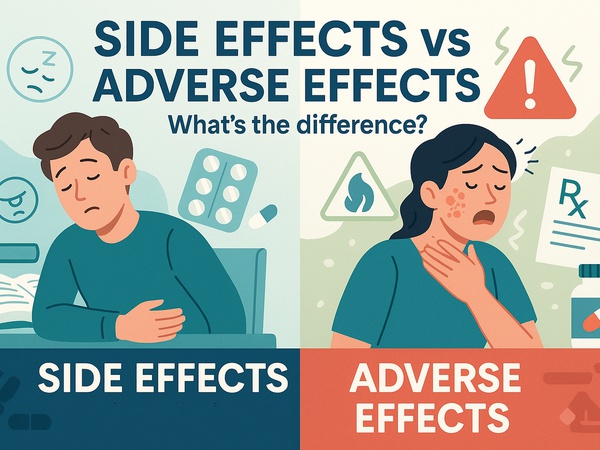
Medicines are meant to help us feel better, heal, or manage symptoms. But sometimes, they come with other effects we didn't plan for.
Some of these are expected and manageable, while others can be harmful and even dangerous. This is where the terms, side effects and adverse effects come in — and although people use them interchangeably, they’re not the same.
Let’s break it down clearly 👇👇👇
🔖What Are Side Effects?
Side effects are secondary effects of a drug that occur in addition to its intended purpose. They are:
- Expected
- Usually mild or tolerable
- May or may not affect treatment continuation
Most side effects happen because drugs affect more than just one target in the body. While the drug is doing its job in one area, it may also influence another system, causing an unintended effect.
✍️Example:
- Taking antihistamines for allergies can make you drowsy.
- Some antibiotics might cause nausea or diarrhea.
- A birth control pill may cause weight changes or mood swings.
These effects are known ahead of time and are often listed on the leaflet or explained by the healthcare provider.
In many cases, side effects go away over time, or the body adjusts to the drug. Sometimes, they’re even used positively. For example, some drugs that cause drowsiness are used at night to help with sleep.
🔖What Are Adverse Effects?
Adverse effects, also called adverse drug reactions (ADRs), are harmful, unexpected, and potentially serious reactions to a drug.
They are:
- Unwanted and dangerous
- Can occur even when the drug is used correctly
- Often require stopping the drug or medical intervention
These reactions are not always predictable, and some are rare. They can range from mild allergic rashes to severe complications, like organ damage or life-threatening anaphylaxis.
✍️Example:
- A person takes penicillin and develops a severe allergic reaction (swelling, breathing difficulty).
- A patient on a pain reliever like diclofenac develops gastric bleeding.
- Blood pressure medication causes an abnormally low blood pressure, leading to dizziness or fainting.
Unlike side effects, adverse effects are medically concerning and are taken seriously. They must be reported and monitored.
Understanding SIDE EFFECTS and ADVERSE EFFECTS helps you:
- Know what to watch out for when taking medication
- Avoid stopping medication unnecessarily
- Report reactions accurately to your healthcare provider
- Stay safe while getting the most benefit from your treatment
Sometimes people stop a medication due to mild side effects they could’ve managed. Other times, they ignore dangerous symptoms thinking it’s “normal.” That’s why knowing this difference matters. Your safety depends on it.
💬 What’s Your Experience?
Have you ever had a side effect from a drug? Or maybe a more serious reaction?
Let’s talk in the comments. Sharing experiences helps others stay aware and informed. 💬💊



 683