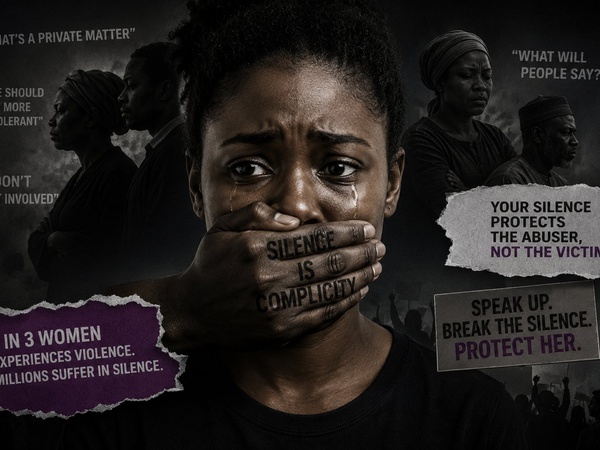
Imagine being hurt by someone who promised to protect you only to discover that the people you run to for protection are more concerned about who will hear your story than what happened to you.
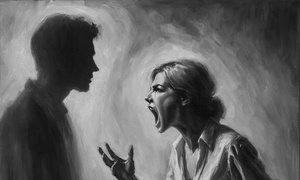
A woman screams behind closed doors, A neighbour hears her, A relative suspects something is wrong, Someone eventually says "Don't let the home fall apart" and just like that, the conversation shifts from the violence she suffers to the marriage she must preserve.
This is how violence against women survives. Not mostly through the actions of perpetrators, but through the attitudes, traditions that makes their action easier to excuse.
Tradition, in itself is not the enemy. Culture gives people identity and a sense of history. However, when cultural expectations become instruments for controlling, silencing and manipulating women, they must be questioned.
The argument that a woman must endure abuse to preserve her marriage is not a defence of culture, it is a defence of suffering. The story of the late Nigerian gospel singer, Osinachi Nwachukwu brings this argument painfully close to home. Her death in April 2022 drew national attention to allegations of prolonged domestic abuse within her marriage. Her story raises difficult questions about the expectations placed on women to preserve their marriages even when doing so comes at the expense of their safety and dignity. Marriage should never become a life sentence to violence.
We also live in a society where people can witness a woman's humiliation, record it on their phone and share it across social media. Yet, struggle to offer her assistance. We have become spectators of suffering. Sometimes, the crowd laughs, Sometimes it whispers, Sometimes, it looks away and sometimes, it asks the woman what she did to provoke the violence.
The experiences of Vera Uwaila popularly known as Uwa and Barakat Bello remain painful reminders of the vulnerability women face in society. Uwa, a university student was raped and assaulted inside a church in Benin city in 2020 and later died from her injuries. That same year, 18 year old Barakat Bello was raped and murdered in Ibadan. Their stories remind us that violence against women is not confined to marital relationship. It can occur in places where women should feel safe.
Perhaps, the most dangerous part of this cycle is the cover-up.
A family would rather protect its reputation than acknowledge the suffering of its daughter. A religious institution may encourage a woman to pray for an abusive husband without addressing the immediate danger she faces.
So, who should answer?
The perpetrators must answer for the violence committed but accountability must extend beyond the individual who raises a hand. Families must answer when they dismiss complaints. Communities must examine the beliefs that make abuse acceptable. Those with the power to protect must not escape responsibility when they deliberately choose to protect the wrong person.
Ultimately, eliminating violence against women requires more than condemning physical abuse. It requires questioning the traditions that excuse it, challenging the crowd that normalise it and confronting the system that conceals it because a woman should not have to choose between her safety and her family's reputation. She should not have to endure violence to prove her commitment to convince an entire community that her pain deserves to be taken seriously.
When violence is committed, one person may raise the hand, but when an entire society makes excuses for that hand, we must ask ourselves: who is really keeping the violence alive?



 17