There is something deeply troubling about a world where an African writer must explain why they can write well.
Imagine spending hours searching for the right words, rearranging sentences, polishing an argument and drawing from years of reading, only to have your work dismissed because it sounds too intelligent to be yours. Imagine that your vocabulary becomes evidence against you, your grammar becomes suspicious, and your ability to construct a beautiful sentence becomes grounds for interrogation.
At what point did intelligence become incriminating?
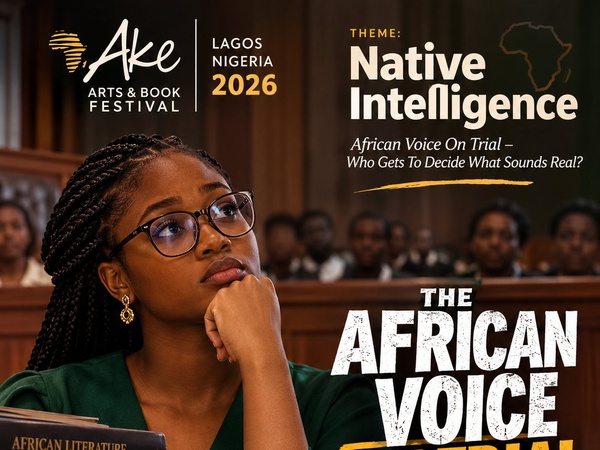
The growing suspicion surrounding African writers and artificial intelligence is not simply a conversation about technology. It is a conversation about perception, identity and the uncomfortable expectations that have followed African creativity for generations. I believe the African voice is being unfairly put on trial, not necessarily because every accusation of AI use is false, but because some of the standards used to identify artificial writing are rooted in stereotypes rather than evidence.
Long before ChatGPT became a familiar name, African writers were already defending their right to tell their stories differently. Chimamanda Ngozi Adichie once recounted how a professor questioned the authenticity of her novel because its characters were educated, middle-class Nigerians who drove cars. Apparently, they did not resemble the Africa he had imagined. Her experience reveals something important: sometimes, people do not reject an African story because it lacks truth; they reject it because it contradicts the truth they have already decided to believe.
Today, artificial intelligence has given that old prejudice a new vocabulary.
An African writer who uses sophisticated English may be suspected of using AI. One who writes with unusual fluency may be asked to prove their originality. Another who incorporates proverbs, unfamiliar expressions or the rhythms of indigenous languages may have their work labelled awkward, unprofessional or artificially generated. We have somehow created a situation where African writers are expected to sound African enough to be authentic, but not so different that their writing becomes questionable.
This is the contradiction we must confront.
What, then, is native intelligence?
To me, native intelligence is the knowledge that exists beyond formal institutions, imported standards and technological systems. It is the wisdom carried in our languages, the lessons preserved in oral traditions, the understanding communicated through proverbs and the creativity developed through everyday African experiences. It is the grandmother who explains an entire philosophy of life through one sentence. It is the market woman who understands negotiation without ever attending a business school. It is the child who learns the meaning of resilience by watching their parents navigate a difficult economy.
Native intelligence is not the absence of modern education. Neither is it the rejection of technology. It is the recognition that intelligence did not begin when machines learned to process information, and African knowledge did not become valuable only when someone documented it.
This understanding also challenges the idea that there is one universally recognisable African voice.
Africa is not a single language, culture or experience. It is a continent of thousands of languages, different histories and countless ways of expressing human experience. The voice of a Nigerian writer from Akwa Ibom may carry different linguistic influences from that of a Ghanaian, Kenyan or Ethiopian writer. Even within Nigeria, the experiences of an Igbo, Hausa, Yoruba, Tiv or Ibibio writer cannot be reduced to one literary identity.
Perhaps, then, the African voice is not one voice at all. Perhaps it is a chorus.
Pidgin, for instance, is not broken English waiting to be corrected. It is a language of connection, humour, resistance and cultural expression. Proverbs are not decorative additions to make writing appear African; they are vessels of collective memory and accumulated wisdom. Indigenous languages carry meanings that sometimes disappear when translated into English. They contain emotions, expressions and cultural references that cannot always be captured by conventional grammar.
When a writer brings these elements into their work, they are not necessarily trying to prove their African identity. They are simply expressing themselves through the linguistic resources available to them.
And that is precisely what authenticity should mean: the freedom to express an experience without having to satisfy somebody else's expectations of what that experience should sound like.
However, defending the African voice must not become an excuse for dishonesty.
Artificial intelligence has undeniably complicated the question of originality. Writers can now generate entire essays within minutes, reproduce arguments they have not independently considered and present machine-generated ideas as the products of personal research. This is a genuine concern, especially in literary communities where originality, creativity and individual expression are valued.
We cannot demand that our writing be protected from unfair accusations while refusing to hold ourselves accountable for intellectual dishonesty.
But there is a significant difference between identifying plagiarism or excessive dependence on AI and treating eloquence as proof of machine involvement. A sophisticated vocabulary is not a crime. Correct grammar is not a confession. A well-structured argument is not an admission of artificial assistance.
The responsibility of writing communities, therefore, is to develop better ways of protecting originality. Instead of judging submissions solely by how polished or familiar their language appears, communities can encourage writers to share drafts, discuss their creative processes, explain their arguments and demonstrate their understanding of the subjects they explore. Where necessary, transparent disclosure of AI assistance should also be encouraged.
Most importantly, originality assessments must be based on credible evidence rather than assumptions about how a particular group of people ought to write.
There is also a human cost to constantly having one's intelligence questioned. When a writer repeatedly hears that their words sound too good to be theirs, they may begin to second-guess their abilities. They may deliberately simplify their vocabulary, abandon expressions that come naturally to them or suppress the linguistic influences that make their writing distinctive. Eventually, the fear of being misunderstood can become greater than the desire to be understood.
I cannot claim to have personally experienced every form of suspicion described in this conversation. However, I find the possibility deeply unsettling. Imagine working tirelessly on a piece of writing, carefully choosing every word, only to discover that your greatest achievement has become the strongest argument against its originality. What should be a moment of pride becomes an opportunity to defend yourself. The problem, then, is not merely the accusation of using AI; it is the assumption that certain levels of intelligence, fluency and expression are somehow unnatural when they come from an African writer.
That is perhaps the most dangerous consequence of this trial.
We risk creating a generation of writers who edit their identities before they even begin editing their manuscripts. Writers who are more concerned with appearing authentic than with telling the truth. Writers who learn to make their intelligence less visible because brilliance has become suspicious.
I find that particularly unfortunate because writing should be an opportunity to expand the boundaries of how we are understood, not another space where we are forced to fit into predetermined identities.
So, what makes a voice truly yours?
It is not simply the words you use, the language you write in or the absence of technological assistance. It is the relationship between your thoughts, your experiences, your influences and the meaning you intend to communicate. It is your perspective, the questions you choose to ask, the conclusions you arrive at and the particular way you interpret the world.
A writer may use a dictionary, consult another person, learn from books or even use AI as a tool. None of these automatically erases their individuality. What matters is intellectual ownership: whether the writer understands, evaluates and genuinely stands behind the ideas presented in their work.
A machine may arrange words, imitate styles and produce grammatically impressive paragraphs. But the responsibility for what we say, what we believe and what we choose to communicate must remain human.
Perhaps the real question is not whether an African writer can sound intelligent without AI. It is why we still find that possibility difficult to accept.
The African voice does not need to be less sophisticated to become more authentic. It does not need to abandon its proverbs, dilute its vocabulary or apologise for its fluency. Neither should it be protected from legitimate scrutiny simply because it is African.
What it deserves is a fair hearing.
If this is a trial, let us examine the evidence. Let us question dishonesty, challenge plagiarism and hold writers accountable. But let us stop confusing cultural difference with artificial intelligence and stop treating brilliance as an imported commodity.
Africa has always had intelligence. It existed in our stories before they were printed, in our languages before they were translated and in our wisdom long before algorithms learned to imitate human expression.
The African voice is not on trial because it lacks originality. It is on trial because the world is still learning to recognise originality when it does not sound familiar.
And perhaps, before we ask African writers to prove that their voices are real, we should ask ourselves whether we have ever truly learned how to listen.


 10