Hope and I are Nigerians.
We should probably be tired of each other by now.
After all,
she keeps making promises
reality struggles to keep,
and I keep believing her.
It is a complicated companionship.
The kind forged in queues.
Fuel queues.
Cooking gas queues.
The long, winding queues
between expectation and manifestation.
The kind where you leave home at dawn
and return at dusk
with half your plans completed
and all your patience depleted.
That is where Hope and I met.
Not in comfort.
Not in certainty.
But in the waiting.
And perhaps that is the burden of hope;
she never arrives empty-handed,
yet she rarely arrives on time.
She tells stories about tomorrow
while today is still negotiating survival.
She speaks of harvests
to people standing in drought.
Whispers of breakthroughs
to hearts acquainted with breakdowns.
And somehow,
somehow,
she expects us to listen.
So we do.
Because Nigerians understand hope
better than most.
We have watched prices climb
like ambitious children
determined to outgrow every household budget.
We have learned the arithmetic of adjustment:
subtract convenience,
divide expectations,
stretch provisions,
multiply resilience.
We have stood at filling stations
watching fuel become liquid anxiety.
We have watched cooking gas rise
until ordinary meals
began to feel like special occasions.
We have watched salaries remain still
while expenses developed wings.
Yet every morning,
shops still open.
Markets still bustle.
Mothers still plan miracles
from ingredients that barely cooperate.
Fathers still leave home
armed with determination
and transportation fare.
Students still sit in classrooms
taking notes with one hand
and carrying dreams with the other.
Tell me,
if that is not hope,
what is?
But hope's burden is heavier still.
For she has walked through darker roads.
Roads where fear
travels faster than traffic.
Roads where parents
pray over phone calls
the way priests pray over altars.
She has sat beside communities
where banditry has turned sleep
into a cautious visitor.
She has listened to families
counting days,
counting prayers,
counting possibilities,
while loved ones remain missing.
Even now,
some children should be in classrooms,
some teachers should be teaching lessons,
yet forests have become unwilling hostels
for lives suspended between fear and faith.
And Hope,
very stubborn Hope,
still sits beside their families.
Still refuses to leave.
Still insists
that absence is not the same as ending.
That is her burden.
To remain
where certainty cannot.
To stand
where evidence refuses.
To bloom
where logic predicts withering.
There were days
I wanted to abandon her.
Days when headlines felt heavier than horizons.
Days when promises arrived polished
but fulfillment forgot the address.
Days when speeches sounded rehearsed,
and progress sounded postponed.
Days when tomorrow felt like a rumor
circulating without verification.
On those days,
Hope would simply smile.
Not the smile of ignorance.
Not the smile of denial.
But the smile of someone
who has survived enough winters
to recognize spring
even when the trees are still unconvinced.
And that,
that is the beauty of hope.
She is not blind.
She sees the cracks.
She counts the costs.
She reads the statistics.
She hears the stories.
She knows.
Yet she stays.
Hope learned to speak here.
Between "Up NEPA!"
and "They've taken light again."
Between candles performing overtime
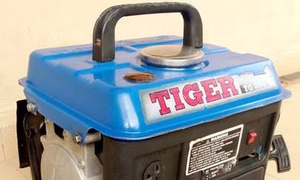
and generators coughing
through another reluctant evening.
She learned to speak
the language of resilience.
The dialect of persistence.
The accent of endurance.
She learned that survival
is sometimes its own kind of victory.
And Nigeria,
oh Nigeria!
some call you a giant.
Others call you potential.
Hope calls you unfinished.
And somehow,
unfinished things
are her favorite things to love.
Because hope is not interested
in what a thing is.
She is fascinated
by what it can become.
She sees bridges
inside blueprints.
Forests
inside seeds.
Songs
inside silence.
Nations
inside struggles.
She sees a Nigeria
where opportunities are not hunted
like rare animals.
A Nigeria
where education is not interrupted by uncertainty.
A Nigeria
where hard work and honest labor
do not feel like separate conversations.
A Nigeria
where safety is not a privilege,
but a promise.
And every day,
she invites us
to help build it.
Not tomorrow.
Today.
Brick by brick.
Choice by choice.
Voice by voice.
For hope is not a spectator.
She is a builder.
A mender.
A planter.
A quiet architect
drawing tomorrow's blueprint
on today's rough paper.
So yes,
hope is a burden.
She asks us to continue
when quitting appears reasonable.
To trust
when evidence is negotiating.
To build
while the bricks are still breaking.
To sing
while the throat is still shaking.
To believe
while reality is still debating.
That is heavy.
That is hard.
That is hope.
But perhaps that is also her beauty.
That after every disappointment
determined to rename the future,
after every setback
determined to silence possibility,
after every promise
that arrived dressed for an occasion
but failed to stay for the work,
Hope still arrives.
Dusty from the journey.
Steady as sunrise.
Carrying another tomorrow
in her weathered suitcase.
And every morning,
Nigeria opens the door.
Every morning,
millions of us lift that suitcase.
Every morning,
despite everything,
we carry hope forward.
Until one quiet day,
we realize
that while we thought
we were carrying hope,
hope
has been carrying us too.


 255