Score |
187


𝑫'𝒙𝑪𝑬𝑳𝑳𝑬𝑵𝑻 ™ ✍️🥇
 Content Writer @ University of Ilorin
Content Writer @ University of Ilorin



The Faces Without Names: The Ancient Nigerian Sculptures That Still Hold Their Secrets.
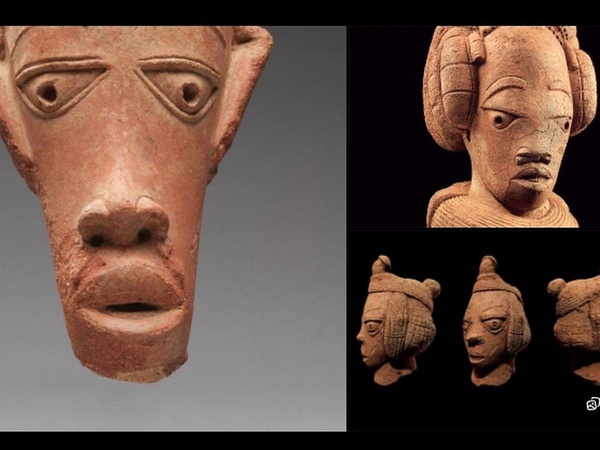
<h3><strong>AFRICA, UNCOVERED · EPISODE 2</strong></h3><p>Have you ever looked at an object and wondered about the person who made it, especially when that person lived more than 2,000 years ago?</p><p><br/></p><p>In Nigeria, archaeologists have discovered ancient clay sculptures depicting human faces and figures. Some have carefully shaped eyes, detailed hairstyles, and features that make you wonder what kind of society produced them.</p><p><br/></p><p>They are known as the Nok terracottas, named after Nok, a place in present-day Kaduna State.</p><p><br/></p><p>But here is what makes these sculptures fascinating: we can study the faces, examine the materials, and learn about the people who created them, yet many details about their lives remain unknown.</p><p><br/></p><p>So, who were these people?</p><p><img alt="" src="/media/inline_insight_image/Screenshot_20261015-203246.jpg"/></p><h2> <strong>The discovery</strong></h2><p>The Nok sculptures came to wider attention through discoveries associated with tin mining in central Nigeria during the twentieth century.</p><p><br/></p><p>What researchers encountered was an artistic tradition that had existed thousands of years ago, long before Nigeria became the country we know today.</p><p><br/></p><p>The sculptures were made from terracotta — clay shaped and fired until it became ceramic.</p><p><br/></p><p>Some depict human heads, while others show full figures and animals. Their features reveal considerable skill and attention to detail.</p><p><br/></p><p>When you look at some of these faces, it is difficult not to wonder what the artists were trying to communicate.</p><p><br/></p><p>Were they representing particular people? Were the sculptures connected to religious beliefs or burial practices? What did these images mean to the communities that created them?</p><p><br/></p><p>Researchers have investigated these questions, but there is no single explanation that accounts for every sculpture.</p><p><strong><br/></strong></p><h2><strong> A society beyond the sculptures</strong></h2><p>The Nok people were more than artists.</p><p>Archaeological evidence suggests that their communities practised farming, made pottery, and worked with iron during the first millennium BCE.</p><p><br/></p><p>Their society existed long before written records became available for reconstructing much of its history. Researchers therefore rely on archaeological evidence — including tools, pottery, settlement remains, and scientific dating — to understand how they lived.</p><p><br/></p><p>And this is where the story becomes even more interesting.</p><p><br/></p><p>We have evidence of what these people made and some of the activities they carried out. But we do not have a complete account of what they called themselves, what language they spoke, or exactly what every sculpture meant to them.</p><p><br/></p><p>The objects have survived. Much of the explanation behind them has not.</p><p><br/></p><h2> <strong>What happened to the Nok people?</strong></h2><p>This is one of the difficult questions in the story.</p><p>The distinctive Nok archaeological tradition eventually declined, but we cannot simply conclude that everyone associated with it disappeared.</p><p><br/></p><p>People may change their ways of life over generations. Artistic traditions can end, settlements can change, and communities can interact with others.</p><p><br/></p><p>However, the available evidence does not provide a complete account of what happened to every Nok community.</p><p><br/></p><p>We should also be careful about claims that the Nok people directly founded later African civilisations. Such connections require evidence; they cannot be established simply because one culture existed before another.</p><p><br/></p><p>Sometimes, the honest historical answer is that researchers have established certain facts but are still investigating the rest.</p><h2><img alt="" src="/media/inline_insight_image/Screenshot_20261015-203500.jpg"/><br/><strong>The faces that remain</strong></h2><p>What I find remarkable about the Nok terracottas is that their creators left behind something that would outlive them by thousands of years.</p><p><br/></p><p>We may never know the names of the artists who shaped these faces. We may never recover the exact meaning behind every figure.</p><p><br/></p><p>Yet their work gives us evidence of a sophisticated artistic tradition in ancient Nigeria.</p><p><br/></p><p>It also reminds us that African history did not begin when outsiders started documenting the continent. People were creating, farming, developing technologies, and building communities long before modern borders existed.</p><p><br/></p><p>For me, the Nok story is a reminder that history is not only about what we know. It is also about asking the right questions when the evidence is incomplete.</p><p><br/></p><p>The faces have survived. The people behind them are still waiting to be better understood.</p><p><br/></p>


 23
23


More in this series
More insights from 𝑫'𝒙𝑪𝑬𝑳𝑳𝑬𝑵𝑻 ™ ✍️🥇







Contributor Points

Points-to-Coupons

Referral Earning
Insights for you.

Igbo Kwenu!!!
Today, I refuse to be humble Not when I speak about my tribe...Cha Cha Cha Cha Cha,Igbo...
809 views
51 upvotes
45 comments

Confessions of a Nearly-Native
My name is Idara. I am Annang from Akwa Ibom. And I cannot speak my language.My mother ...
415 views
32 upvotes
37 comments

Cradle
Who sat and watched my infant head, When sleeping on my cradle bed, And tears of sweet ...
163 views
29 upvotes
31 comments

ÈMI NI ÌLÙ (I Am the Drum)
Mò fẹ́ kí ara mi gbọ́ mi.Before the world gives me a name,let my own soul remember mine.B...
200 views
24 upvotes
27 comments
Agbada and Other Silences
They said it with authority no one questioned.... “Àgbà kì í wà l’ọ́jà, kí orí ọmọ tuntu...
387 views
22 upvotes
29 comments

ÌLÚ MI, ILÉ MI
Modakeke Akoraye omo ogunteludo omo akinkanju loju ogun. Maybe because of you my father...
382 views
18 upvotes
25 comments






171 views
20 upvotes
19 comments