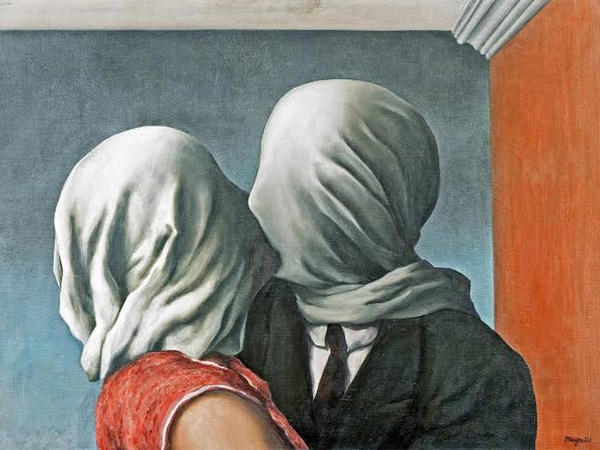
The lovers by René Magritte.
Chisom has been married to Emeka for six years. one night, Emeka decides to try something new , something he's been curious about, something that makes Chisom quietly uncomfortable but not loudly opposed. She doesn't say no. She says "okay, if that's what you want."
Emeka hears consent. Chisom gave it technically. Nobody did anything wrong by most legal or even ethical standards.
There is a quiet assumption people make about marriage—that love somehow removes the need for limits. That once two people say “I do,” the boundaries that once existed begin to fade, replaced by trust, by unity, by the idea that two have become one.
But the truth is… even in oneness, there are still two hearts. Two minds. Two thresholds for comfort. And sometimes, those thresholds do not align.
We often say that mutual consent is enough. That as long as both partners agree, then anything that happens between them is acceptable. But human emotions are rarely that simple.
Because not every “yes” is the same.
Some “yeses” are full - spoken with confidence, curiosity, and genuine desire.
But others are just hesitant.
A person can say “yes” and still feel unsure.
They can agree outwardly while something within them pulls back.
And in relationships "especially in marriage" that difference matters more than we like to admit.
Because intimacy is not just physical. It is emotional. Psychological and deeply human.
When one partner consents without feeling safe enough to refuse, something begins to change. Not in a way that can be easily pointed out or labeled as wrong—but in a way that slowly changes how they feel about themselves, and about the person they share their life with.
So the question is no longer simply whether consent exists.
The question becomes: what kind of consent?
Is it free?
Is it enthusiastic?
Is it rooted in comfort, or shaped by pressures?
Marriage does not erase individuality. It does not grant unlimited access to another person’s boundaries, body, or emotional space. If anything, it demands a deeper level of care, a greater awareness, a stronger commitment to understanding.
Limits, then, are not restrictions placed on love.
They are protections for it.
They ensure that both partners are not just participating, but present. Not just agreeing, but genuinely at ease.
Because in the end, the strongest relationships are not built on what is permitted…but on what is respected.



 278