Score |
421


Moonchild

 Student @ Gombe State University
Student @ Gombe State University



THE PLACEBO EFFECT
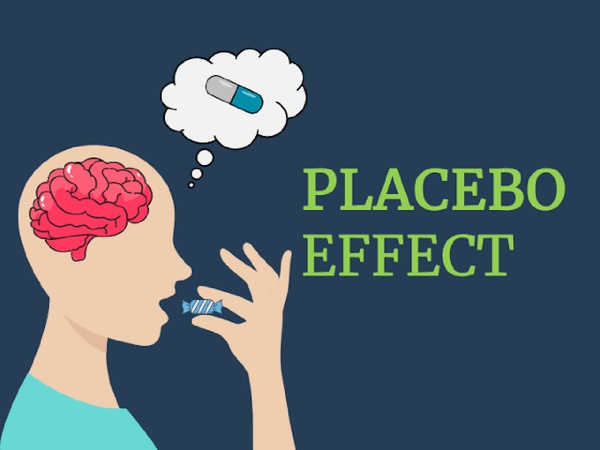
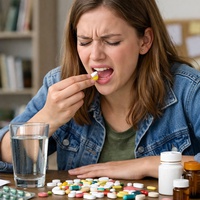
<p>A few weeks ago, during one of our health Psychology lectures, we talked about something I had heard of before but had never really stopped to give much thought to: the placebo effect.</p><p>A placebo is a substance or treatment that does not contain an active pharmaceutical ingredient intended to produce a particular therapeutic effect. Yet sometimes, people who receive a placebo report feeling better or experiencing changes in their symptoms.</p><p>The interesting part is that the change can happen because of what the person expects the treatment to do. Perhaps, simply because the person trusts the prescriber a lot,or because they just have this belief the treatment will work.</p><p>So in simple terms, the placebo effect is a physical or mental improvement in a person's condition after they receive a fake, inactive treatment, caused entirely by their expectation that the treatment will work.</p><p>I found that very fascinating.</p><p>Then recently I came across an article that made the whole idea even more interesting.</p><p>A 26-year-old man was participating in a clinical trial for a new antidepressant. He had been given the capsules, but because the study was blinded, he did not know whether the capsules contained any active ingredient or a placebo. He was simply told they were antidepressants.</p><p>After an argument with his girlfriend, in an attempt to take his own life,he impulsively took all 29 capsules he had left because he believed they contained the antidepressant and that he had taken a potentially fatal overdose.</p><p>He soon became frightened by what he had done and was rushed to the emergency department. He was drowsy, pale, sweating and tremulous, with a blood pressure of 80/40 mmHg (which is extremely low)and a heart rate of 110 beats per minute. He needed intravenous fluids for his low blood pressure.</p><p>After proper examinations, the doctors discovered something completely unexpected.</p><p>The capsules were placebos.</p><p>There was no active antidepressant in them.</p><p>What he swallowed were just blank inert capsules, containing no active pharmaceutical ingredient.</p><p>Once he was told that the capsules were inert, his symptoms rapidly improved. The case was later described in the medical literature as an example of the nocebo effect, where negative expectations can contribute to real symptoms after someone takes an otherwise inactive substance. This is the negative expectation counterpart of the placebo effect.</p><p>And that made me think beyond healthcare.</p><p>If what we expect from something can influence how we experience it, what happens when the thing we have expectations about is not a drug, but ourselves?</p><p>Think about the student who looks at a difficult course and decides, before studying, that they are simply not good at it. I believe when we were all in secondary school,at one point or the other, our maths teachers have probably told us the reason we don't pass maths is because we believe it's difficult (I loved maths a lot sha 😹).</p><p>Or think of the person who sees an opportunity and immediately thinks, “I am not qualified enough,” so they never apply.</p><p>Or someone who fails once and quietly turns that failure into a prediction: “I knew I could never do it.”</p><p>Sometimes, we make decisions about our abilities before we have actually tested them.</p><p>This does not mean that believing something will make it happen. Life isn't that fair. Circumstances and resources matter. Sometimes we can give something our best effort and still not get the outcome we wanted.</p><p>But what we believe about our abilities can affect what we do next.</p><p>If I believe I cannot learn something, I may approach it with less effort, avoid asking questions, give up too easily,or interpret every difficulty as proof that I was right.</p><p>If I believe I can learn it, I may be more willing to try, practice, ask for help, apply again, or keep going even after the multiple falls.</p><p>The question is "what do you believe?"</p><p>Behavior follows belief. If you have not able to change your behavior to match your dreams,then you need to go back and examine your belief. Because once your behavior doesn't match your dreams,then you do not believe.</p><p>When somebody believe, everything changes.</p><p>And believe me, behaviour changes the outcome.</p><p>That is why the placebo effect stayed with me after that health Psychology class. It reminded me that our expectations are not always as insignificant as they seem.</p><p>So I started wondering:</p><p>What if we gave ourselves the benefit of a different expectation?</p><p>What if, instead of immediately deciding, “I cannot do this,” we started with, “I do not know how to do this yet,but I'm willing to give it a try”?</p><p>What if we applied for the opportunity before deciding that we were not good enough?</p><p>What if we tried one more time before turning a previous failure into a permanent conclusion about ourselves?</p><p>Maybe the question is not always, “Can I do this?”</p><p>But:</p><p>What would I do differently if I believed I could?</p><p>Change your behavior to match your belief system.</p>


 73
73


Other insights from Moonchild










Contributor Points

Points-to-Coupons

Referral Earning

Insights for you.

All that I gave
Oh, hey there!It's me... again...You know, There's so much I want to saySo much I want ...
561 views
94 upvotes
94 comments



The Root of Evil.🌚
I like money.But they said it's the root of evil. 🙂Sorry, get your facts straight.The l...
285 views
77 upvotes
87 comments
The Manipulation.
"Mom started looking at me differently from that day.I remember it like the back of my ...
289 views
75 upvotes
90 comments



The 3AM World.
My favourite time of every day is between 1 a.m. and 4a.m.That's when the world is the ...
253 views
67 upvotes
72 comments

Drowning.
I can't breathe.I tried again.Nothing.My lungs burned.The water surrounded me, cold and...
254 views
61 upvotes
72 comments

Eden.
I came to this house very young, with one other.We were accepted so warmly.Everyone lov...
233 views
56 upvotes
66 comments