Score |
414


Ruthdaprotagonist
 Executive Assistant | CRM Specialist | AI Automation | Customer Support/Success Specialist @ Freelancer
Executive Assistant | CRM Specialist | AI Automation | Customer Support/Success Specialist @ Freelancer



THREE LIVES, TWO TRUTHS
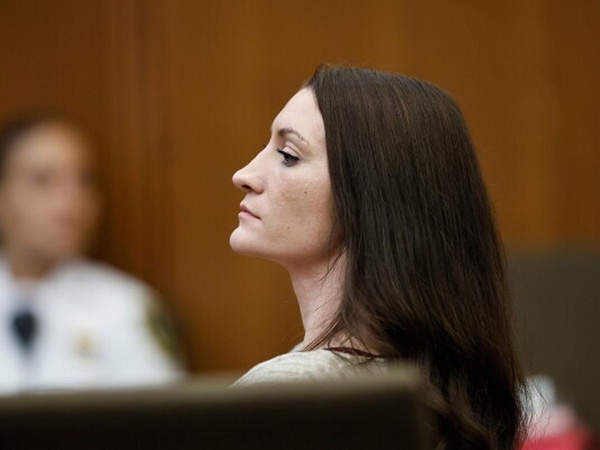
<p>Before deciding what Lindsay Clancy deserves, I think we need to understand what happened.</p><p>On January 24, 2023, in Duxbury, Massachusetts, three children died.</p><p>Cora was five.</p><p>Dawson was three.</p><p>Callan was eight months old.</p><p>Their mother, Lindsay Clancy, strangled them with exercise bands and then attempted to take her own life by jumping from a second-story window. She survived but suffered severe injuries.</p><p>She has not denied killing her children.</p><p>The disagreement has always been about something much harder:</p><p>What was happening inside her mind when she did it?</p><p>That question is important because Lindsay had been struggling with serious mental-health problems after giving birth. Her defense argued that she was suffering from postpartum psychosis and that the illness had destroyed her ability to understand the wrongfulness of what she was doing or control her actions.</p><p>And postpartum psychosis is not simply another word for being sad after childbirth.</p><p>It can involve hallucinations, delusions, severe confusion, and a distorted sense of reality. A person can look completely normal to everyone around them while their understanding of reality is falling apart.</p><p>That is what makes this case uncomfortable.</p><p>Because it is very easy to look at the result and think, How could a mother do this?</p><p>It is much harder to ask:</p><p>What if, at that moment, she was not experiencing the world the way we were?</p><p>But there is another uncomfortable truth.</p><p>Three children still died.</p><p>And I don't think either truth should be allowed to erase the other.</p><p>Lindsay's mental illness matters.</p><p>So do Cora, Dawson, and Callan.</p><p>Her suffering matters.</p><p>So do their lives.</p><p>The healthcare system and the people around her also deserve scrutiny. If someone is deteriorating mentally after childbirth, seeking help, receiving treatment, and still getting worse, we should be asking whether the warning signs were recognized early enough and whether the care she received was adequate.</p><p>But finding failures in the system does not automatically answer the question of criminal responsibility.</p><p>And this is where I think the conversation gets confused.</p><p>Having a mental illness is not the same thing as legally being incapable of responsibility.</p><p>Massachusetts law asks a much narrower question: whether a mental disease or defect left the person without substantial capacity to appreciate the wrongfulness of their conduct or to conform their conduct to the law.</p><p>That distinction matters.</p><p>The question isn't simply:</p><p>"Was Lindsay mentally ill?"</p><p>The evidence suggests she was struggling severely.</p><p>The question is:</p><p>"What did that illness do to her mind at the exact moment her children died?"</p><p>And honestly, I don't think an outsider can answer that by looking at one piece of evidence.</p><p>Not the fact that she was a mother.</p><p>Not the fact that she was a nurse.</p><p>Not the fact that she sought treatment.</p><p>Not even the fact that she carried out a series of actions before the killings.</p><p>Psychosis can make behaviour look irrational from the outside while seeming completely rational to the person experiencing it.</p><p>At the same time, deliberate-looking actions cannot simply be ignored because a diagnosis exists.</p><p>That is why I understand why reasonable people reached completely different conclusions during the trial.</p><p>The jury couldn't agree either. After weeks of testimony, the first trial ended in a mistrial when the 12 jurors could not reach a unanimous decision.</p><p>And maybe that tells us something important.</p><p>This isn't a simple battle between people who care about mental illness and people who care about justice.</p><p>Both sides care about justice.</p><p>They're disagreeing about what justice requires when the person who caused unimaginable harm may have been severely mentally ill.</p><p>Personally, I don't think compassion should mean pretending nothing happened.</p><p>But I also don't think justice should mean pretending mental illness had no role simply because the outcome was horrific.</p><p>There is a difference between explaining an act and excusing it.</p><p>There is also a difference between accountability and revenge.</p><p>If someone is found to have been genuinely incapable of understanding the wrongfulness of their actions because of severe psychosis, what does punishment actually accomplish?</p><p>Would locking that person in an ordinary prison cell make society safer?</p><p>Would psychiatric treatment and secure confinement sometimes make more sense?</p><p>And if the person is still dangerous, does "not criminally responsible" have to mean "free"?</p><p>These are questions worth asking because the purpose of justice shouldn't be to make us feel satisfied.</p><p>It should be to protect people, recognize victims, establish responsibility where responsibility exists, and respond appropriately to the circumstances surrounding the crime.</p><p>But there is one thing I don't want us to lose while discussing all of this.</p><p>Cora wasn't a symptom.</p><p>Dawson wasn't evidence.</p><p>Callan wasn't part of a legal argument.</p><p>They were three children who should still be alive.</p><p>So I don't want a conversation where remembering their mother’s illness requires forgetting them.</p><p>And I don't want a conversation where remembering them requires pretending mental illness is irrelevant.</p><p>Two things can be true at once.</p><p>A mother can be profoundly unwell.</p><p>And three children can be profoundly wronged.</p><p>For me, that is where the real question begins.</p><p>Not "Was Lindsay mad?"</p><p>Not "Was she a monster?"</p><p>But:</p><p>When illness changes someone's understanding of reality, how do we decide where compassion ends, where responsibility begins, and what justice should look like in between?</p><p><br/></p><p><br/></p>



 78
78


Other insights from Ruthdaprotagonist












Contributor Points

Points-to-Coupons

Referral Earning

Insights for you.



Silence: The things we don't say.🥺
I walked out of my house, shutting the door behind me, and moved to the terrace.I neede...
254 views
60 upvotes
64 comments
Suicide: The Permanent Solution.
“Did you regret it?”“You know…”I hesitated.“What happened?”A heavy sigh was the first r...
269 views
51 upvotes
54 comments

Suicide: The Nigerian perspective.
As we all know, this month, September is Suicide Prevention Month.Today, I'll be talkin...
168 views
46 upvotes
66 comments


2 a.m.
Maybe it's all the nights I spent not sleepingOr all the days I sat thinkingOf how I've...
270 views
52 upvotes
50 comments

Yours in the Empty
Losing a father is one thing,Losing a best friend is another.Losing the "head" is one t...
418 views
60 upvotes
44 comments


I’m Skinny, and So What?
What if I told you that I have cried more over my own arms than over any guy who has ev...
237 views
49 upvotes
51 comments


Shocking Generosity.
Dear Mr. Smith,Good afternoon, sir. I hope this letter meets you well.I write to profus...
137 views
46 upvotes
43 comments


After Alhaji
"Kai, yarinyar nan ta yi sa'a ƙwarai.""Wallahi. Alhaji Ibrahim da kansa zai aura ta.""T...
292 views
37 upvotes
44 comments


One step forward, Three steps back
I'm tired...But not for the reason you're thinking How much more must life take?How muc...
448 views
51 upvotes
41 comments