Score |
83






Who Exactly Are We Staying For?
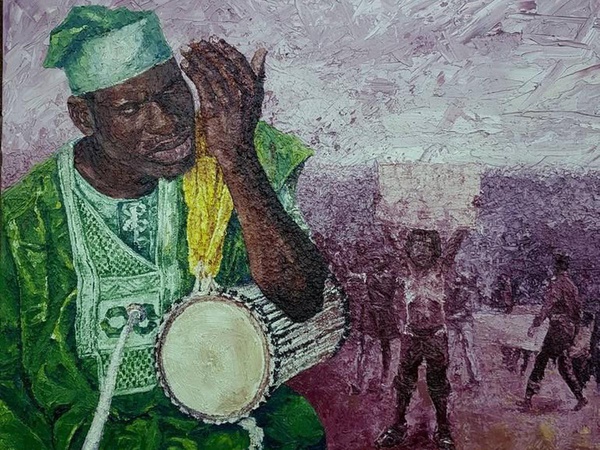
<p>I don’t think there is anything Nigerians discuss with the casualness with which we discuss leaving the country. You can tell someone you are looking for a job and, before they ask what kind of job you want, they are already asking if you have considered Canada. You can mention that you are thinking about a master’s degree and somehow, within minutes, you are discussing scholarships in the United Kingdom. Even saying “I am tired” has acquired a second meaning. At times it means exactly what it says. Most times it means, “I really need to get out of this country”</p><p>We have made leaving so ordinary that I sometimes wonder when it stopped being a major life decision and became something people discuss as casually as their next career move.</p><p>There are people who have never been outside Nigeria but can tell you which countries are easier to immigrate to. People compare salaries in pounds and naira for fun. We know the exchange rate without checking. We know someone whose brother is in Toronto, someone’s cousin is in Manchester, someone’s former classmate is in Melbourne. There is always information. There is always a WhatsApp group. There is always someone who knows someone who has done it before. Even the people who are not actively planning to leave usually know what they would need to do if they suddenly decided to.<br/></p><p>And I certainly understand why.<br/></p><p>It is difficult to convince a young person that they should stay and help build a country when the life they want seems to exist somewhere else. It is even more difficult when the things they are asking for are not particularly extravagant. They want electricity that works. They want public transport that does not feel like a daily negotiation. They want to go to a hospital and trust that they will be treated properly. They want to graduate from university and find a job that pays them enough to live, not simply enough to remain technically employed.</p><p>They want to make plans without first having to make contingency plans for Nigeria.</p><p>There is something almost funny about the language we have developed around all of this. We call it japa, which somehow makes the whole thing sound lighter than it is. A country can have a serious problem with losing some of its youngest and most educated people, and somehow the word we use to describe leaving is a four-letter Yoruba word that means, quite literally, to escape.</p><p>“Japa.”</p><p>People are leaving families, friendships, relationships, familiar streets, food they will spend years complaining about missing, and the particular ease that comes with knowing how things work because you grew up around them. Even when Nigeria frustrates us, it is still home. There is a difference between wanting to leave somewhere you hate and wanting to leave somewhere you know intimately but no longer believe can give you the life you want.</p><p>Every time young Nigerians talk about leaving, someone asks who will stay and build Nigeria.</p><p>I have always found that question slightly unfair.</p><p>Not because Nigeria does not need people who will build it. Of course it does. We need doctors and engineers and teachers and writers and entrepreneurs and people who are willing to enter public service and actually do the work. We need people who will make things better. There is no point pretending otherwise.</p><p>But why does the responsibility to build Nigeria so often arrive at the doorstep of the individual Nigerian who is already trying to build a life?</p><p>There is something fascinating about telling a twenty-something-year-old that they should remain in a country where they cannot find the opportunities they want because somebody needs to stay and create those opportunities for everyone else. At some point, you have to admit that this is asking a person to postpone their own life in the hope that their sacrifice will improve a system they did not create.</p><p>And I don’t know if that is what patriotism is supposed to mean.</p><p>We seem to have developed a very particular understanding of loving Nigeria. You are expected to tolerate things you would never tolerate elsewhere because you are Nigerian. You should be grateful that you have electricity for a few hours. You should find a way around the terrible road. You should endure the long queue. You should accept that your salary has not kept up with the cost of living. You should adjust.</p><p>We are very good at adjusting. We are especially good at that.</p><p>I think about this whenever people talk about Nigerian resilience as though it is one of our national treasures. We are resilient because we have had to be. We know how to find another route when the road is bad. We know how to charge everything when there is light because we have no idea when it will come again. We know how to turn inconvenience into a joke because there is only so much complaining one person can do before they need to laugh and continue with their day.</p><p>At some point, though, I wonder if we have become so proud of our ability to adjust that we have stopped asking why we have to keep adjusting.</p><p>There is a point at which resilience stops being something admirable and becomes something else entirely. And yet, I don’t think it is completely unreasonable to feel something when you look around and realise how many young Nigerians are making plans that do not include this country.</p><p>I have never understood why leaving has to mean abandoning. A person can love Nigeria and still want to leave it. People leave places all the time. They leave their parents’ houses, their hometowns, universities, jobs and relationships. They move because they want something different, because they have outgrown where they are, or simply because there is something they want that they cannot find where they currently live. We rarely ask what they owe those places before they go. But when it is Nigeria, suddenly there is an obligation attached.</p><p>Stay and build.</p><p>Stay and contribute.</p><p>Stay because if everybody leaves, who will fix the country?</p><p>I understand the fear behind the question. I share some of it. I don’t want to live in a country where the most common advice given to an ambitious young person is to leave. I don’t want Nigeria to become a place people are proud to come from but increasingly unwilling to live in.</p><p>But I also don’t think the answer is to make young Nigerians feel guilty for wanting more.</p><p>Perhaps the more uncomfortable question is why leaving has become such an attractive solution in the first place.</p><p>Because Nigeria is not losing people simply because Nigerians suddenly became less patriotic. People leave because there are things they want, and increasingly, they believe those things are easier to get elsewhere.</p><p>And perhaps Nigerians have spent too much time asking what they owe their country without asking what their country owes them.</p><p>I don’t think Nigeria owes me a perfect life. I definitely know better than to expect that and no country can genuinely promise that. I don’t expect every road to be smooth or every government to get everything right. But I think a country should make it possible for its citizens to imagine a future in which staying is not a punishment.</p><p>I want to be able to leave Nigeria because I want to see the world, not because I am desperate to escape my own country. I want to be able to come back without feeling as though I have returned to a place I outgrew. I want someone to tell me they are staying because they want to, not because they couldn’t afford to leave.</p><p>This is the kind of patriotism I understand. </p><p>Not the kind that asks how much suffering I am willing to tolerate for Nigeria, but one that makes me wonder what Nigeria could look like if staying were a choice people could make without having to defend it.</p>



 47
47


Other insights from Tomilola Adejumo







Contributor Points

Points-to-Coupons

Referral Earning

Insights for you.


All that I gave
Oh, hey there!It's me... again...You know, There's so much I want to saySo much I want ...
583 views
97 upvotes
95 comments




The Root of Evil.🌚
I like money.But they said it's the root of evil. 🙂Sorry, get your facts straight.The l...
302 views
78 upvotes
88 comments

The Manipulation.
"Mom started looking at me differently from that day.I remember it like the back of my ...
301 views
75 upvotes
91 comments




The 3AM World.
My favourite time of every day is between 1 a.m. and 4a.m.That's when the world is the ...
270 views
67 upvotes
72 comments

Drowning.
I can't breathe.I tried again.Nothing.My lungs burned.The water surrounded me, cold and...
281 views
61 upvotes
72 comments

Eden.
I came to this house very young, with one other.We were accepted so warmly.Everyone lov...
266 views
59 upvotes
71 comments