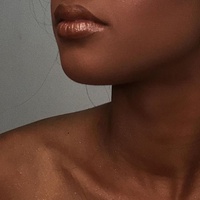
WHO TAUGHT YOU TO HATE THE COLOUR OF YOUR SKIN?
Who taught you that your skin needed to be lighter to be beautiful?
Who made you believe that your natural hair was something to be tamed, hidden or gotten rid of?
Who convinced you that European features were the standard of beauty, while yours were something to work around?
And more importantly, when did you start believing them?
In Nigeria, colourism is so normalized that we sometimes forget to question it.
A lighter-skinned woman is praised for her complexion. Darker-skinned women are given unsolicited advice about bleaching.
Children grow up hearing comments about how dark they've become, as though their skin colour were some unfortunate development.
But it's not.
We have skin-lightening products marketed as beauty essentials. We have people describing darker complexions as unattractive while insisting they have absolutely nothing against dark-skinned people.
But where did all this come from?
THE COLONIAL LEGACY
We cannot discuss the relationship between Africans and their appearance without acknowledging colonialism.
Colonial systems frequently associated European identity with civilisation, authority, education and social status, while African identities, traditions and physical features were often portrayed as inferior.
This wasn't simply about controlling territories. It also involved influencing how people perceived themselves and their cultures.
When the people governing you consistently present their appearance, language, religion and customs as superior to yours, those ideas can eventually become internalized
.
Even after colonial administrations disappeared, some of the hierarchies and preferences they reinforced continued through institutions, education, entertainment and social expectations.
And that's part of the problem. Colonialism didn't have to remain physically present for some of its ideas to survive.
THE HAIR WE WERE TAUGHT TO HIDE
Let's talk about African hair.
Why is natural African hair still considered unprofessional in certain environments? Why have people had to defend wearing their natural hair to school or work?
Our hair has cultural, historical and personal significance. Different African communities have used hairstyles to communicate identity, social position, marital status, age and cultural belonging.
Yet, for generations, African hair textures and hairstyles have been labelled unkempt, distracting or inappropriate.
Meanwhile, straight hair and hairstyles associated with European beauty standards have often been treated as the more acceptable alternative.
Of course, there's absolutely nothing wrong with relaxing your hair, wearing wigs, braids or choosing whatever hairstyle you like.
The problem begins when one texture is treated as inherently more presentable than another.
Personal preference should be a choice, not a response to discrimination.
WHEN OUR CULTURE BECOMES SOMEONE ELSE'S HISTORY
Here's another thing worth thinking about.
How is it that some of our traditional practices are dismissed as primitive, demonic or uncivilized when practiced by Africans, yet become fascinating historical artefacts when displayed in foreign museums?
African sculptures, masks, traditional clothing, jewellery and religious objects have immense historical and cultural significance.
They tell stories about our ancestors, societies, beliefs, creativity and ways of life.
Yet, African cultural heritage has frequently been devalued, appropriated or separated from the communities that produced it.
Consider the Benin Bronzes, for instance. These are historical artworks looted during the 1897 British invasion of Benin City, many of which ended up in European museums.
Their value didn't suddenly appear when they entered foreign collections. They had value before they were taken.
And that's the point.
Why do we sometimes need external recognition before we're willing to appreciate what belongs to us?
THE PRIVILEGE OF BEING LIGHTER
Colourism isn't simply about who people find attractive. It can influence how people are perceived and treated.
In some societies, lighter skin is associated with beauty, wealth, desirability and even social status.
This can affect dating preferences, entertainment, advertising and everyday interactions.
Even within African families, children can grow up hearing comparisons about their complexions. Some are praised for being lighter, while others are told they're too dark.
And let's not pretend these comments are harmless.
Children learn what society values long before they understand why those values exist.
It also explains why skin bleaching remains a concern. When people repeatedly receive the message that lighter skin is more desirable, some begin to see their natural complexion as something that needs correcting.
There's also the issue of proximity to whiteness. Mixed-race and lighter-skinned people can sometimes receive preferential treatment because of features society has learned to associate with particular beauty standards.
This doesn't mean every lighter-skinned or mixed-race person has an easy life, nor does it mean they are responsible for colourism.
It means we need to question a society that distributes desirability and privilege according to how closely someone resembles an imposed ideal.
Do you know something?
I've always loved the deep rich melanin that provides people with a deep skin tone.
I've always adored and praised it.
But for some reason almost all of them hated their skin tone.
I used to think that way too.
I don't posses a melanin heavy skin. I'm light skinned, or should say caramel. But,
I thought I was ugly
That if my hair grew long, straighter and towards the earth rather than having volume, being coily and reaching the sky.
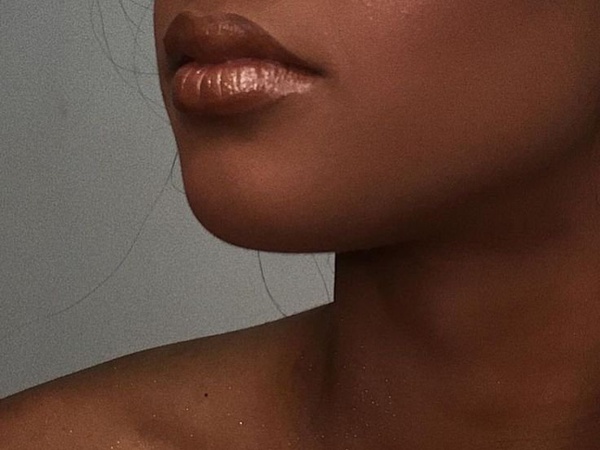
That if my lips weren't so plump.
That if my lips, palms and the soles of my feet weren't differently shaded.
That if my skin was just a shade lighter, then I'd be beautiful.
I soon grew to realize the beauty in me.
The beauty that was shrouded by racism.
The beauty that was hidden from colonialism and the rubbish they brought to us.
The beauty that was covered by their jealous.
I mean just imagine, who in their right mind would hate an entire race of people to the point of enslaving, killing, torturing them, just because of their skin color.
SO, WHY DO WE STILL DO IT?
Because these standards have become normal.
They are reinforced by our families, entertainment industries, advertisements, schools, workplaces and even our everyday conversations.
Sometimes, we reproduce the very prejudices that once disadvantaged us without recognizing where they came from.
We criticize African names but admire foreign ones.
We'll hate a name like Chiagozie but adore one as stupid as Reneai.
We dismiss traditional practices but celebrate similar practices when presented as exotic foreign culture. We tell dark-skinned children to avoid the sun, praise lighter complexions and then wonder why they grow up insecure about their appearance.
And perhaps the most unfortunate part is that some of us genuinely don't recognize the contradiction.
I'm not suggesting that everything foreign is bad or that Africans must reject other cultures to appreciate their own.
There's nothing wrong with appreciating different cultures, adopting different styles or finding beauty in different features.
But appreciation should never require self-rejection.
We can admire someone else's culture without treating ours as inferior.
We can appreciate different complexions without creating a hierarchy of beauty.
We can embrace different hairstyles without making natural African hair a problem to solve.
SO, WHO TAUGHT YOU?
Maybe it was colonial history. Maybe it was your environment, your family, the media or years of subtle comments you barely noticed.
Perhaps you cannot even identify when it started.
But we should be able to question what we've inherited.
Our skin colour isn't a mistake. Our hair isn't a problem. Our cultural heritage isn't something that needs foreign approval to become valuable.
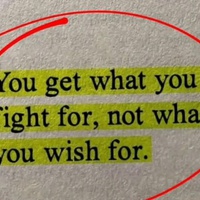
And being African shouldn't mean having to negotiate or fight or deny your own identity to be considered beautiful, intelligent, respectable or worthy.
We cannot undo every historical injustice, but we can stop reproducing the attitudes that keep them alive.
So, I'll ask again:
Who taught you to hate the colour of your skin, and why are you still defending the lesson?


 28