I choose to not speak.
But here I am, dying silently.
I judge my thoughts right before I even bring them to life.
My mind races between different hurts and the pain of not having someone to disclose to.
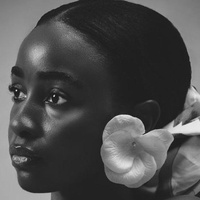
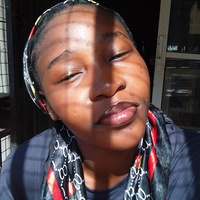
My hair is well laid with gel. And my edge's curved in corners with an edge control.
A flower clip and a ribbon is placed side by side on each end of my hair.
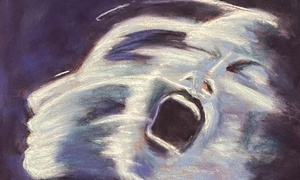
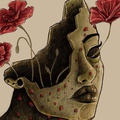
But my head is on fire. The flower clip on my hair do not represent the reality going on currently in my head.
I want to set up a camera and speak about how my brain has refused to cooperate with me.
And how lately, my mental health has been choosing between continuing a life I didn't ask for or ending it.
I live in a society that asks you to speak up,
but later uses it to criticise you.
It is worse when you come from an African home.
Because according to some assistant Jesus,
why should a child of God be depressed?
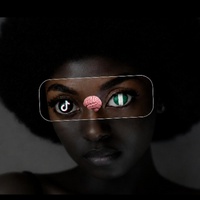
For the fear of digital footprints,
shall I die in emotional silence?
Every time I say I struggle,
they challenge the idea that mental health difficulty is a sign of weakness.
Mummy Kamsi on our street even told my mother that I am possessed.
That I have refused to take responsibility.
Hence, I am weak.
But how do I explain that I am not performing?
How do I speak up when they mistake vulnerability for performance?
"SPEAK UP." "SPEAK UP." "SPEAK UP."
What about the cost that comes with it?
You forgot to address how the internet doesn't easily forget.
And speaking up could cost me my trust and feelings.
Because what if I speak up
and end up being diagnosed with another spiritual psychosis?
Or I become the useless child who has decided to steal her parents' peace?
Or the attention seeker for likes and validation?
My vulnerable story can be screenshotted,
mocked, misunderstood,
or used to define someone long after they have healed.
I am not saying you shouldn't speak up.
Because last week, Adaeze on TikTok spoke up and got sympathy and DMs from strangers, encouraging her and giving her reasons to keep living.
The Bleeding Pen on Substack wrote about her last mental crisis and almost attempted suicide. Today, she is free. Hundreds of people found a reason to keep going from her post.
Kemi, the YouTuber, spoke about how she almost ended it, but felt better after she sought help.
People's stories can give someone else the courage to seek help, start a conversation, or simply realise that they are not alone.
In that sense, lived experiences can do what statistics sometimes cannot. They make an invisible struggle human.
Although, there is a cost, a danger that comes with turning pain into content. The pressure for engagement can make people feel that they must constantly expose their wounds to be heard.
This is why the goal should not be to make everyone speak publicly.
The goal should be to create a society where people have the freedom to choose.
Vulnerability is not performance.
And disclosure is not an obligation.



 129