Score |
216


Izel✨
 Student || Essayist || Storyteller || Poet @ Federal University of Lafia
Student || Essayist || Storyteller || Poet @ Federal University of Lafia



WRITE IT DOWN!
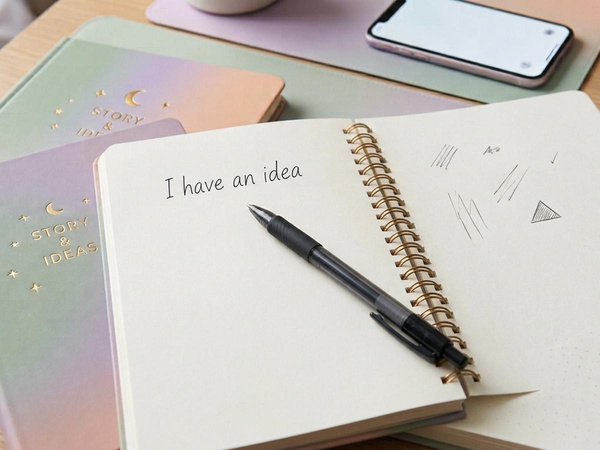
<p>I have learnt never to neglect an idea simply because it arrives in an ordinary form. Sometimes, inspiration comes as a sentence, a collection of words, a simple thought, a fragment of imagination, or just by observing something someone else is doing.</p><p>You must not see it in your dream before it becomes something that deserves your attention</p><p>I have come to understand that some of the things we eventually create begin as thoughts we can barely explain. When we first scribble them onto a piece of paper, they might look like nonsense. The words may seem disconnected and the thoughts may appear incomplete. But with time, patience, and a willingness to explore them, those seemingly meaningless ideas may begin to make sense.</p><p>What if the idea you are about to dismiss is the very one that needs your attention the most?</p><p>This is why I have my beautiful journal and I take it almost everywhere just in case.</p><p>Write things down!</p><p>Write down what you feel, what you imagine, and what catches your attention. Document the things that fascinate you, the questions that refuse to leave your mind, and the little details that others might overlook. Do not despise your thoughts simply because you cannot see their value.</p><p>Permit yourself to create without wanting it to be so perfect from your first attempt.</p><p>Just know that an observation that seems insignificant can become the foundation of something extraordinary.</p><p>Consider painting, for instance.</p><p>Imagine the first person who ever thought of applying colours to a surface to create an image. Before painting became a recognised form of art, someone had to explore the possibility of seeing the world through colours, shapes, and lines. Someone had to go beyond looking at their surroundings and begin to look for unusual ways to capture what they saw.</p><p>Maybe the images were nothing like the magnificent works displayed in galleries today. We do not know what exactly that person's first attempt looked like, but we can appreciate the idea behind it.</p><p>Someone had to transform an idea into an action, and that action is now a part of the long history of artistry.</p><p>Now, look at what painting has become.</p><p>Think of a portrait that captures not only a person's face but also the emotions reflected in their eyes. Imagine a painting that makes you feel the warmth of a setting sun or the loneliness of an abandoned road, all of these communicates what words struggle to express. It communicates across differences in language and culture. It can preserve memories, evoke emotions, and make people to see the world differently.</p><p>And to think that it all began with an idea.</p><p>This also applies to every other field.</p><p><br/></p><p>So, why should you treat your own ideas as though they must prove their worth before you give them a chance?</p><p>The sentence you scribbled in the middle of the night could become the opening line of a compelling story. Maybe an observation you made about human behaviour could become an insightful essay.</p><p><br/></p><p>Quite okay, not every thought will become a masterpiece, and not every inspiration will lead to a breakthrough. Some ideas will lose their appeal as you explore them. Others will need time and work before they begin to take shape. That is part of the creative process.</p><p>Therefore, scribble on a notebook. Use your phone, Record your thoughts before you forget them and return to them later.</p><p>Most importantly, do not confuse the roughness of an idea with the absence of potential.</p><p>So, the next time a thought crosses your mind, do not dismiss it simply because it seems small, strange, or incomplete.</p><p><br/></p><p>Write it down!!!!!!!</p><p>I cannot stress it enough. </p><p>Give it time. Work on it.</p><p><br/></p><p>Never underestimate the power of an idea. Your next breakthrough might not come as a grand revelation. It might begin as a sentence you almost forgot or a thought you nearly dismissed.</p>


 18
18


Other insights from Izel✨




Contributor Points
Points-to-Coupons

Referral Earning

Insights for you.

Day 2: September 10th
A tiny disclaimer before we begin: I was actually supposed to post this last night, but...
116 views
20 upvotes
20 comments


The cost of misandry
We are living through a quiet but corrosive crisis—one that rarely makes headlines, ye...
439 views
12 upvotes
14 comments

Mary
Long hallwayLow lightLate afternoonHolding its breathToo tightMachines murmuredMonitors...
331 views
22 upvotes
17 comments
The Only One Who Stayed
Oh Mummy, my Mummy-o,My champion with the tickly toes and the super-strong hug,I’m twen...
299 views
20 upvotes
17 comments

I WILL LOVE AGAIN
I have loved with an unfinished heart, Mistaking my hunger for another's art, Now I mus...
33 views
19 upvotes
17 comments
The shape of her absence
Tuesday afternoon arrived with heat heavy enough to slow the streets. The sun clung stu...
348 views
15 upvotes
14 comments

The Last Light I Carry
with every heartbeat i have lefti will defend your every breathcarve shelter out of the...
338 views
7 upvotes
11 comments
The Aftertaste
It always starts the same way—that slow, nauseating twist in my gut,like my body knows ...
405 views
14 upvotes
13 comments

A Lifetime Spent Bleeding Quietly
Love does not arrive gently.It takes.It learns the shape of my chestand leaves its teet...
389 views
13 upvotes
13 comments
At the school gate
Morning motionMetal gateMuted stepsWe were alwaysRunning lateSame streetSilent staresI ...
325 views
14 upvotes
14 comments