Score |
171


Goodluck Onyeka
 tailor @ lagos, nigeria



YOUR CLOSEST FRIEND CAN BE YOUR ENEMY
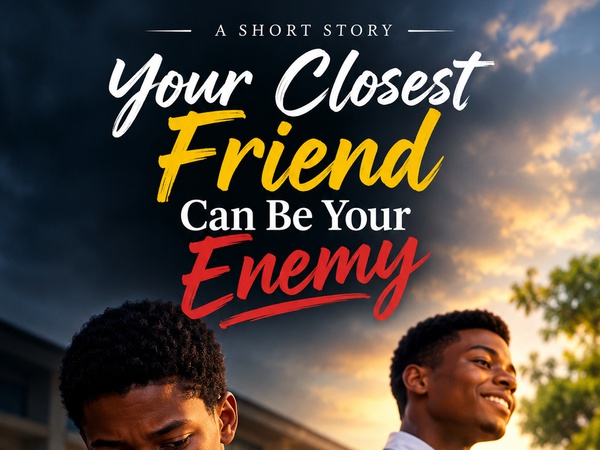
<p>Friendship is often portrayed as the ultimate sanctuary—a bond of choice that provides comfort, laughter, and unconditional support. It is built on the pillars of trust, mutual respect, and shared history. We are taught to believe that our closest friends are our strongest allies, the people who will stand by us through the darkest valleys of life. However, the reality of human nature is far more intricate and, at times, darker. The paradox of the "intimate enemy" suggests that the person we hold closest to our hearts can, under certain conditions, become our most formidable adversary. This transformation is not merely a trope of drama; it is rooted in the vulnerabilities, expectations, and psychological complexities inherent in deep emotional bonds.</p><p><br/></p><p>At the heart of any close friendship lies the concept of radical vulnerability. When you invite someone into your inner circle, you provide them with a map of your soul. A closest friend knows your deepest secrets, your childhood traumas, your private insecurities, and your loftiest dreams. This intimate knowledge is what makes the bond beautiful, but it also provides a potential enemy with a precise arsenal. Unlike a stranger or a casual acquaintance, a close friend knows exactly where to strike to cause the most significant damage. If trust is breached, that "insider information" can be weaponized. Betrayal by a close friend causes a specific type of "betrayal trauma" that shatters one’s sense of reality and security, often leaving deeper scars than any external conflict ever could.</p><p><br/></p><p>One of the most common catalysts for this transformation is the silent creep of jealousy. While we like to believe we celebrate our friends' successes, the "social comparison theory" suggests that we often measure our own worth against those closest to us. When a friend achieves a milestone—be it a promotion, a romantic relationship, or a personal triumph—it can inadvertently act as a mirror, reflecting the other person’s perceived failures. This envy can turn a once-supportive ally into a "frenemy." This individual may remain close to you to keep tabs on your progress, while subtly undermining your confidence, spreading "concerns" that are actually veiled rumors, or offering backhanded compliments. Because they are your "best friend," their criticisms carry more weight, making their quiet sabotage incredibly effective and emotionally draining.</p><p><br/></p><p>Furthermore, the proximity of a close friend often leads to the "narcissism of small differences." In many cases, we choose friends because they are similar to us. However, as individuals grow and evolve, these similarities can become points of friction. If one person changes their values or lifestyle, it can feel like a personal rejection or a threat to the other. When two people are so closely entwined, the boundaries between their identities can blur. This enmeshment can lead to intense resentment if one friend feels smothered or if the other feels abandoned. When the "we" of a friendship becomes stifling, the resulting breakout can be explosive, turning years of shared affection into a bitter rivalry.</p><p><br/></p><p>Hidden agendas and the "utilitarian friendship" also play a role in this dynamic. Not every bond is formed out of pure altruism. Some individuals seek out proximity to successful or influential people for personal gain, wearing the mask of a loyal friend while waiting for an opportunity to exploit the relationship. This predatory dynamic is perhaps the most Machiavellian form of the friend-turned-enemy. By the time the victim realizes the friendship was a transaction, the damage—whether financial, social, or emotional—has already been done. This type of betrayal is particularly difficult to process because it forces the victim to re-evaluate every shared memory as a potential lie.</p><p><br/></p><p>The emotional fallout of such a transition is profound. When an enemy is a stranger, we can dismiss their hostility as a reflection of their character. When the enemy is a former confidant, we often turn that hostility inward, questioning our own judgment and worthiness. The grief associated with losing a best friend to animosity is akin to a death, yet it lacks the closure of a funeral. It can lead to a long-term "trust deficit," where the individual becomes hyper-vigilant and cynical, struggling to form new bonds for fear of a repeat performance.</p><p><br/></p><p>However, recognizing the possibility of a friend becoming an enemy is not a plea for cynicism; it is a call for emotional intelligence. To navigate these waters, one must cultivate healthy boundaries. True friendship requires a balance between intimacy and independence. It is essential to pay attention to red flags—such as a friend who thrives on your failures or one who consistently violates your privacy—before the bond becomes toxic. Open communication is the only antidote to the misunderstandings that often serve as the seeds of enmity. By addressing grievances early, friends can prevent the buildup of the "slow-burn" resentment that eventually leads to a catastrophic break.</p><p><br/></p><p>In conclusion, the idea that your closest friend can be your enemy is a sobering reflection of the fragility of human connections. Friendship is a powerful, life-enhancing force, but it is not immune to the darker impulses of the human psyche, such as envy, greed, or the simple friction of two lives growing in different directions. By understanding that proximity creates both the greatest love and the greatest potential for hurt, we can approach our relationships with a blend of warmth and wisdom. We must cherish those who prove their loyalty over time, while remaining aware that the person standing closest to us has the power to either lift us up or pull us down. Choosing our inner circle is not just a social act; it is a vital act of self-preservation.</p>


 20


Other insights from Goodluck Onyeka












Contributor Points

Points-to-Coupons

Referral Earning

Insights for you.


Let's Forikori
Honestly, I have been hearing "Olodo Uprising" for the longest time, and I think it's h...
239 views
36 upvotes
30 comments


My journey:From the Gates of UniAbuja...
The dust of Gwagwalada hung in the air, a familiar yet distinct scent that marked the b...
456 views
27 upvotes
39 comments

HOW PETTY THEY CAN BE
I've always enjoyed Spotify and other streaming services, I mean if nothing I get to co...
708 views
35 upvotes
25 comments

I won guys
I won English guys. I had done all the typing and guess what I lost it. Don't worry I'm...
144 views
24 upvotes
25 comments


The Final Stretch
Burning Candles, Sweaty Eyes and a Packed Brain. 😭A packed brain that has refused to ac...
79 views
26 upvotes
28 comments


LIFE OF A FUTURE DIPLOMAT (I GUESS) T...
Okay, hi.My name is Nomshu, but most people here know me as Grace, and I’m a student of...
418 views
25 upvotes
88 comments


A WORD IS ENOUGH FOR THE WISE
There is something extremely powerful about words, they hold power most never pay atten...
2334 views
17 upvotes
21 comments

I am Olodo
Insult me however you like, but don't think you are insulting me when you call me **Olo...
159 views
19 upvotes
22 comments

School is a scam
The concept of education has been debated for centuries, and its true meaning has been ...
768 views
19 upvotes
23 comments

The Bridge to Adulthood
I remember when I was in secondary school, my classmates and I had great dreams and pla...
1349 views
17 upvotes
22 comments

































