3 Vases, 3 Souls
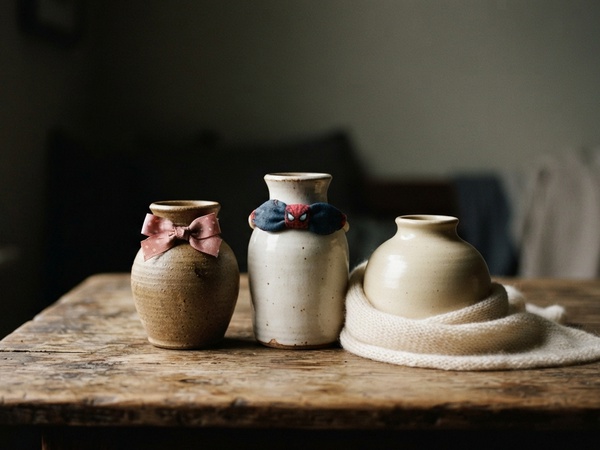
Someone said we should picture those three children as vases.
I thought about it.
I looked at my own child. Really looked.
I tried to picture her as a vase.
At first I failed.
And then I tried again.
What if she was just a vase?
I pictured it.
But all I saw was the most precious vase ever. One which, if it broke, I'd never forgive myself.
I couldn't even imagine myself being the one to break my precious vase.
And then I thought about Lindsay.
Their mother.
The woman who carried those three children. The woman whose body became their first home. The woman whose voice they knew before they knew the world.
Their mother was the one holding the vases.
And she broke them.
I keep coming back to that.
Not because I don't know what happened. I know what happened.
Three children. Cora, Dawson and Callan.
Five years old.
Three years old.
Eight months old.
Three little lives that had barely begun.
And their mother broke them.
I don't know what to do with that sentence.
Maybe that's why the vase made sense to me.
Because a vase doesn't have to do anything to deserve being protected.
It doesn't have to be useful.
It doesn't have to be successful.
It doesn't have to make you proud.
You protect it because it is yours to protect.
And a child is even more fragile than that.
A child comes into the world completely trusting you.
They don't know about danger.
They don't know about cruelty.
They don't know that the person carrying them could ever be the person they need protection from.
They just know your face.
Your voice.
Your smell.
Your hands.
They reach for you because they believe your hands are safe.
And that is the part that keeps breaking my heart.
Imagine being eight months old and the entire universe is still just a few people.
Imagine being three and believing your mother can fix almost anything.
Imagine being five and still having so much life ahead of you that you haven't even begun to understand what "the rest of your life" means.
And then imagine that the person you trusted most becomes the end of it.
I looked at my daughter again.
She was probably doing something ridiculous.
Children are always doing something ridiculous.
Maybe she was asking for food she had just refused five minutes earlier. Maybe she was making a mess. Maybe she was irritating me.
And I thought:
What if she were a vase?
I think I'd spend every waking moment terrified of breaking her.
I'd hold her carefully.
I'd move her away from the edge of the table.
I'd panic if somebody picked her up carelessly.
I'd tell everyone to be careful.
I'd probably become completely unreasonable about it.
Because she is precious.
Not because she's perfect
Not because she has earned it.
Because she is my child.
And then I think about those three little vases.
They had names.
They had favourite things.
Cora loved princesses and taking care of people.
Dawson loved trucks and Paw Patrol.
Callan was just a happy baby.
They had little personalities that were still unfolding.
There were things about them that nobody had discovered yet.
Cora hadn't become a teenager.
Dawson hadn't become a man.
Callan hadn't even learned how to become himself.
There were birthdays that never happened.
Christmases that never came.
First days of school.
First crushes.
Bad haircuts.
Graduations.
Arguments.
First jobs.
First apartments.
Weddings, maybe.
Children of their own, maybe.
Ordinary Tuesdays.
That is the part I find unbearable.
Not only that three children died.
But that three entire futures disappeared with them.
Three stories stopped in the middle.
And their mother was the person who stopped them.
I know there is a trial.
I know there are questions about mental illness and postpartum psychosis and criminal responsibility.
I know there are things about the human mind that we do not understand.
Maybe that is why this case is so difficult to look at.
Because there are two unbearable truths sitting beside each other.
There were three children who deserved to live.
And there was a mother whose mind, according to the defence, had become profoundly unwell.
Understanding one does not make the other disappear.
The children are still dead.
Their mother still killed them.
And somewhere underneath all the arguments about responsibility, medication, illness, intention and law are three little people who never got to grow up.
Three vases.
And the person who was supposed to protect them was the one who broke them.
I don't know how a mother survives being the person who broke her own vases.
I don't know how anyone looks at the pieces afterwards.
I don't know what forgiveness would even mean in a place like that.
I just know that I looked at my daughter tonight and felt an almost frightening gratitude that she was there.
Alive.
Annoying me.
Needing me.
Making noise.
Being three-dimensional and completely, gloriously alive.
And suddenly the ordinary things felt sacred.
The mess.
The tantrums.
The sleepless nights.
The little voice calling for me.
All of it.
Because motherhood is strange.
You spend so much of it exhausted by the thing you would destroy yourself to protect.
And maybe that's what those three vases taught me.
That the things we complain about can be the very things we'd give anything to have back.
So I looked at my own vase.
My precious, imperfect, living little vase.
And I held her.
A little longer than usual.
Three vases.
Three souls.
Three children who should still be here.
And a mother left behind with three lives she can never put back together.


 131