Score |
550


Abasienyene Offiong
 Student @ University of Uyo
Student @ University of Uyo



Blood group + Rhesus factor + ectopic pregnancy. What exactly is the connection? Let’s break it down.
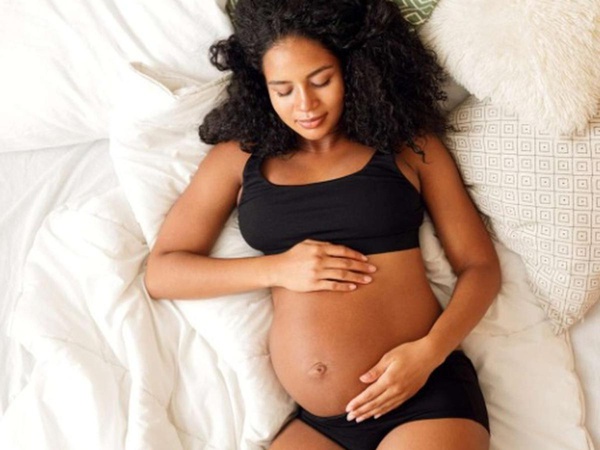
<p>Someone asked in my last post if people with negative-negative or positive-positive blood groups can get married, and also asked what ectopic pregnancy means.</p><p>The comment was getting too long, so I decided to make a post about it. 😂</p><p>First of all, <strong>YES, people with negative-negative blood groups can get married, and people with positive-positive blood groups can get married.</strong></p><p>In fact, your <strong>blood group does not determine whether you can marry someone.</strong></p><p>Blood group and genotype are also two different things. When we talk about compatibility before marriage, <strong>genotype</strong> is the one that needs particular attention because some combinations can increase the risk of having a child with sickle cell disease.</p><p>With blood group, the concern we sometimes have during pregnancy is the <strong>Rhesus (Rh) factor</strong>.</p><p>For example, if a woman is <strong>Rh-negative</strong> and her husband is <strong>Rh-positive</strong>, their baby may be Rh-positive because the baby can inherit the Rh-positive factor from the father.</p><p>This does NOT mean they cannot marry or have children.</p><p>The concern is that if an Rh-negative mother is exposed to Rh-positive fetal blood, her immune system can become sensitised and produce antibodies against Rh-positive blood cells. This is why Rh status is monitored during pregnancy and why <strong>anti-D immunoglobulin may be given when indicated</strong> to prevent sensitisation.</p><p>Now, what about <strong>ectopic pregnancy?</strong></p><p>An ectopic pregnancy is when a fertilised egg implants and starts developing <strong>outside the uterus (womb)</strong> instead of inside it. Most ectopic pregnancies occur in the fallopian tube.</p><p>And this is where I want to make an important clarification:</p><p><strong>Rhesus incompatibility does NOT cause ectopic pregnancy.</strong></p><p>An Rh-negative woman does not have an ectopic pregnancy simply because her husband is Rh-positive.</p><p>The connection between Rh factor and ectopic pregnancy is actually about <strong>Rh sensitisation</strong>, not about causing the ectopic pregnancy.</p><p>If an Rh-negative woman has an ectopic pregnancy and the pregnancy is Rh-positive, fetal blood may potentially enter her bloodstream. This can expose her to the Rh(D) antigen and, in some circumstances, lead to sensitisation.</p><p>That is why doctors consider a woman's Rh status when managing an ectopic pregnancy and decide whether anti-D prophylaxis is appropriate based on the circumstances. Current guidelines do not recommend anti-D in every early ectopic pregnancy; for example, NICE currently recommends it for RhD-negative women undergoing a <strong>surgical procedure</strong> for ectopic pregnancy, while recommendations differ for non-surgical/very early management.</p><p>So, in simple terms:</p><p><strong>Rh-negative + Rh-positive does not cause ectopic pregnancy.</strong></p><p><strong>Ectopic pregnancy does not mean the couple's blood groups are incompatible.</strong></p><p>The two issues are separate, but Rh status can become important in the <strong>management of an ectopic pregnancy</strong> because of the possibility of Rh sensitisation.</p><p>So please don't let blood group compatibility scare you away from marriage. ❤️</p><p>
</p><p>Know your <strong>blood group. Know your genotype. Understand what they mean. And most importantly, get proper medical advice during pregnancy.</strong></p><p><strong>Go for Antinatal when you are pregnant!!!!!!!!!!!!!!</strong></p>


 100
100





Other insights from Abasienyene Offiong











Contributor Points

Points-to-Coupons

Referral Earning

Insights for you.


Health is wealth.
Health Is WealthSome days ago, we lost a friend in the space I’m building.A very young ...
131 views
41 upvotes
46 comments


Self-love or Self-sabotage
When we say "I love myself just the way I am," are we truly embracing ourselves, or are...
524 views
25 upvotes
26 comments

I Wish I Had 20/20 Vision
Sometimes I catch myself wishing I had perfect vision. Just plain, natural 20/20. No g...
495 views
27 upvotes
26 comments


THE ART OF FAT LOSS(An Insight)
📍How serious is the issue of obesity?Well, The World Obesity Atlas 2022, published by t...
406 views
22 upvotes
26 comments

Monkeypox new old virus 🦠 - In shorts
First discovered in 1974 in Democratic republic of Congo in West Africa, Nowadays in 22...
1069 views
22 upvotes
21 comments


Edible Rasengan
This is a story of terrorism. Just the other day, I got hit by a bomb. And survived. Ye...
282 views
18 upvotes
21 comments

Surgeons' endurance during operations...
**How Long Can Doctors Stand During a Single Operation?**
When we think of the life ...
1961 views
13 upvotes
21 comments



My Health⚕️My Country
I believe in Nigeria.It is because I do, that I am very much hopeful for times when qua...
497 views
10 upvotes
12 comments

The Vital Role of Draining Infected W...
In the medical field, draining infected wounds is a critical procedure with profound im...
1051 views
16 upvotes
18 comments

If I had known....
In the middle of 2024, someone very dear to me got diagnosed with multiple myeloma and ...
661 views
13 upvotes
14 comments