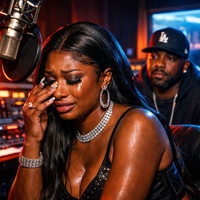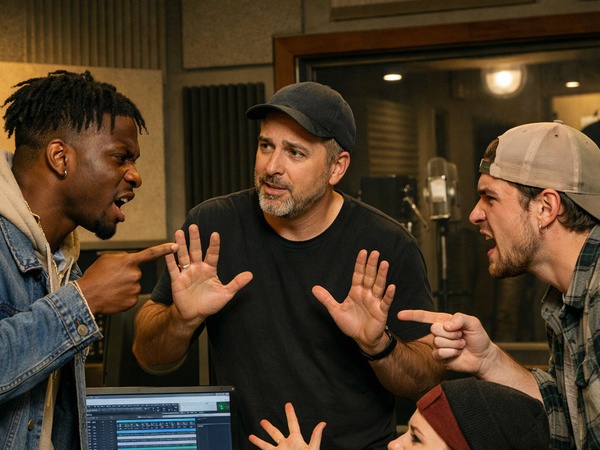
“your friend who was vibing with you in the studio during recording is a co-composer and legal co-owner of that song”
That line will always trigger people, but the law behind it is more precise than emotions.
Let’s break it down properly.
Not all “vibing” counts
In music, there are two different rights artists keep mixing up.
1. Master Rights (Sound Recording)
This is the final recorded version of the song.
Owned by the label or whoever funded the recording
Covers streaming, distribution, licencing
Controlled by the executive producer or investor
2. Composition Rights (Publishing)
This refers to the underlying musical work. It includes:
Lyrics
Melody
Harmony and chord progressions
Rhythm and musical structure
Musical elements created through instruments or the human body, like producer beats, guitar, saxophone, talking drum, hand clapping, or even mouth whistling, as long as they contribute to the musical expression of the work
Where your friend becomes a co-creator
Under the Copyright Act 2022, a musical work is protected once there is original expression fixed in a tangible form.
The law also recognizes joint authorship, where:
two or more people contribute creatively, and
their contributions form one inseparable work
This is why you naturally see it between producer and artist, but it is not limited to them. It can extend to anyone who adds a tangible creative element to the song.
So if your friend in the studio:
suggests a lyric that makes the final version
contributes to the melody
adds a beat pattern, chord progression, or musical idea that is retained
That is no longer “vibing”. That is creative contribution.
At that point, your friend qualifies as a co-composer and is entitled to composition (publishing) rights.
But here is the part people ignore
Ownership is tied to what survives in the final version.
If your friend:
suggested something that was removed during mixing or mastering
played an idea that was later replaced
created a beat element that did not make the final production
Then legally, it does not count.
No final use, no authorship claim.
So yes, five people can be in the studio vibing, but only the ones whose actual creative input remains in the final record have rights.
Music is collaborative, but ownership is not about presence.
It is about who contributed original expression that made the final cut.
Now think about this:
If multiple people contributed lyrics, melody, and beats in one session, but nobody discussed splits… who really owns the song?


 165