He Dropped His Phone. Then His Wife Noticed His Face.
“Are you okay?”
He tried to answer, but his words suddenly sounded strange.
His wife looked at him.
“Say that again.”
He tried.
This time, she noticed something else.
One side of his face was drooping.
“Smile for me.”
He smiled.
Only one side of his face moved properly.
“Raise both hands.”
He tried.
One arm went up.
The other barely moved.
She immediately knew something was wrong.
He could be having a stroke.
And this is where knowing what to do can make a difference.
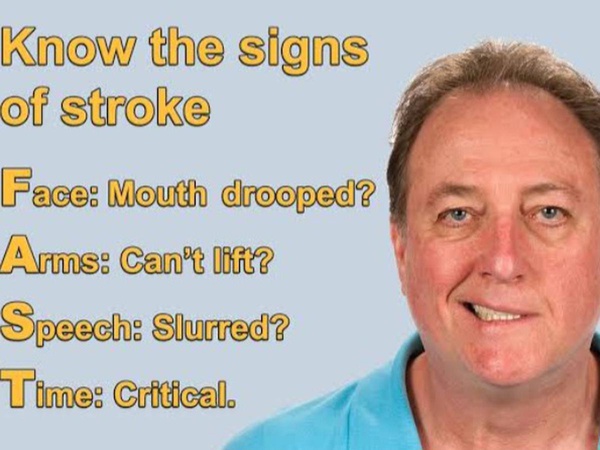
Remember F.A.S.T.
F — Face: Ask the person to smile. Is one side of the face drooping?
A — Arms: Ask them to raise both arms. Is one arm weak or drifting down?
S — Speech: Ask them to repeat a simple sentence. Is their speech slurred, confused or difficult to understand?
T — Time: If you notice any of these signs, get emergency medical help immediately.
Don't wait to see if it will disappear.
Don't tell them to sleep.
Don't assume it's because they haven't eaten.
Time matters in stroke.
A stroke happens when blood flow to part of the brain is interrupted or when there is bleeding in the brain. Without enough oxygen, brain cells can become damaged.
Other sudden warning signs can include:
• Numbness or weakness, especially on one side of the body
• Sudden confusion or difficulty understanding
• Sudden trouble seeing
• Sudden dizziness or difficulty walking
• A sudden, severe headache with no obvious cause
What should you do while waiting for help?
Keep the person safe and calm.
Note the exact time the symptoms started, or the last time they were known to be completely well.
Don't give them food, water or medication by mouth. A stroke can affect swallowing and cause choking.
And please don't give aspirin just because you suspect a stroke. Some strokes are caused by bleeding, and aspirin can make bleeding worse.
If the person becomes unconscious and isn't breathing normally, start CPR and follow emergency instructions.
And here's something else people need to know:
Even if the symptoms disappear after a few minutes, don't ignore them.
It could be a transient ischemic attack (TIA), which can be a warning sign of a future stroke and still requires urgent medical assessment.
You don't have to diagnose a stroke yourself.
You just have to recognize the warning signs and act quickly.
Because when it comes to stroke:
Don't wait. Don't guess. Get help.
Sometimes, knowing what to do in the first few minutes can be more important than knowing the medical name of what is happening.
This post is for health education and does not replace professional medical care.


 117