Score |
53


Writewithoma
 Fiction Author || Autofiction writer || Freelance writer || Content Creator @ National open university of Nigeria
Fiction Author || Autofiction writer || Freelance writer || Content Creator @ National open university of Nigeria



FOURTEEN : THE BEGINNING OF THE END
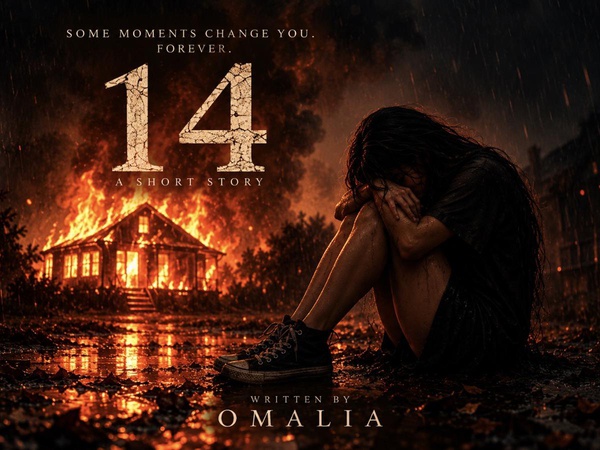
<p><br/></p><p><br/></p><p>It all started when I turned fourteen.</p><p><br/></p><p>It was supposed to be a peaceful time in my life. I never imagined that so much could go wrong. Even now, when I look back, I ask myself the same questions. Was I fortunate to have survived everything I faced? Was I ready for any of it?</p><p><br/></p><p>No one could answer me. Not even the voices in my head.</p><p><br/></p><p>I was only a child, yet I was forced to carry things I could barely understand. Sometimes, I still struggle to put those experiences into words. Why me? Was I ever allowed to be a child? Did I even get the chance?</p><p><br/></p><p>Fourteen. Fourteen!</p><p><br/></p><p>I no longer wanted to live in the past. I had to keep moving. I told myself that I was in a better place, that I had made a better place, that someday I would be in one.</p><p><br/></p><p>But if you want to understand how my fourteen became the beginning of the end, stay with me.</p><p><br/></p><p>Back then, everyone called me a child.</p><p><br/></p><p>I was a child. At least, that was what they always said. Whenever I noticed something wrong or asked questions about things I did not understand, I was told not to worry. Those were adult problems. I was too young to bother myself with them.</p><p><br/></p><p>So I listened.</p><p><br/></p><p>I observed the whispers, the silent conversations and the changes that nobody wanted to explain. Something was wrong, but I was expected to remain the child everyone insisted I was.</p><p><br/></p><p>Until life decided otherwise.</p><p><br/></p><p>A few weeks before my fourteenth birthday, my father lost his job.</p><p><br/></p><p>He assured me that he would find another one. He even promised to make my birthday beautiful. My mother told me not to worry because it was an adult problem, and little children like me were not supposed to carry such burdens.</p><p><br/></p><p>So I did what I knew best.</p><p><br/></p><p>I prayed.</p><p><br/></p><p>I prayed for my parents, for our home and for things to get better. I was not a perfect child, but I tried to be obedient. My schoolwork was not always excellent, yet my parents believed I could do better. They were proud of me, or at least, they used to be.</p><p><br/></p><p>Then my mother’s shop burned down.</p><p><br/></p><p>She tried to save her goods, the business she had worked so hard to build and the little security we still had after my father’s job loss. She refused to leave because that shop was more than a business. It was our means of survival.</p><p><br/></p><p>But the fire did not care.</p><p><br/></p><p>She inhaled smoke and suffered terrible burns. People struggled to get her away from the flames, but by the time she agreed to go to the hospital, it was too late.</p><p><br/></p><p>My mother died.</p><p><br/></p><p>And just like that, the woman who had promised to make everything okay was gone.</p><p><br/></p><p>I had celebrated my fourteenth birthday shortly before the fire. There had been cake, drinks, beautiful dresses and photographs I still kept. In those pictures, my parents were smiling.</p><p><br/></p><p>Sometimes I looked at those photographs and wondered whether they knew.</p><p><br/></p><p>Whether they knew that those smiles would become memories I would spend the rest of my life trying to hold on to.</p><p><br/></p><p>That was my first loss.</p><p><br/></p><p>My fourteen.</p><p><br/></p><p>When I returned from school, I did not know my mother was dead. My father had arrived home earlier than usual. Something was wrong; I could see it in his face.</p><p><br/></p><p>He asked about school. He asked how I was doing. He tried to make conversation, but I knew him too well to believe that everything was fine.</p><p><br/></p><p>“Daddy, what is it?”</p><p><br/></p><p>He struggled to speak.</p><p><br/></p><p>“My child, I don’t know how to tell you this.”</p><p><br/></p><p>I interrupted him.</p><p><br/></p><p>“If you people don’t start telling me things, how will you ever tell me? When will you tell me? How?”</p><p><br/></p><p>Then I asked whether my mother was staying late at her shop.</p><p><br/></p><p>My father told me that the shop had burned down. That we had lost everything.</p><p><br/></p><p>I asked if my mother was okay.</p><p><br/></p><p>He looked at me, and his tears answered before his mouth could.</p><p><br/></p><p>My father cried.</p><p><br/></p><p>I had never seen him cry like that. His silent tears became loud sobs, and I understood what he could not bring himself to say.</p><p><br/></p><p>My mother was gone.</p><p><br/></p><p>For weeks after her burial, we tried to return to something resembling normal life. But nothing was normal. My father buried himself in job hunting and whatever else could keep him occupied. I returned to school, carrying a grief I did not know how to explain.</p><p><br/></p><p>I was fourteen, but I felt as though life expected me to become an adult overnight.</p><p><br/></p><p>Then the school started calling.</p><p><br/></p><p>They needed my father to come in. They had sent messages, made calls and issued invitations, but he had not responded. They warned that I might not be allowed to continue attending if he refused to come.</p><p><br/></p><p>I was already struggling with the stares, the whispers and the pitying looks from people who knew what had happened to my family.</p><p><br/></p><p>“Her father lost his job. Her mother’s shop burned down, and now her mother is dead.”</p><p><br/></p><p>My life had become a story people told about me.</p><p><br/></p><p>I nearly walked into a moving vehicle one day, lost in thoughts I could barely control. People rushed to help and scolded me, unaware of the weight I was carrying.</p><p><br/></p><p>I returned home, greeted my father and passed on the school’s message.</p><p><br/></p><p>“Stop going,” he said. “Don’t go again because I’m not going.”</p><p><br/></p><p>I stared at him.</p><p><br/></p><p>“Daddy, what did you say?”</p><p><br/></p><p>He raised his voice.</p><p><br/></p><p>“Are you deaf? I said don’t go again. Or do you have money for me to take there?”</p><p><br/></p><p>I kept quiet. I apologised. I thanked him, even though I did not understand what I had done wrong.</p><p><br/></p><p>Then I went to my room.</p><p><br/></p><p>I wanted to cry, but I could not. My eyes were full, yet the tears refused to fall. I could not remember the last time I had cried properly.</p><p><br/></p><p>Was this what fourteen was supposed to feel like?</p><p><br/></p><p>Was I being punished for something? Was this karma? Had I done something so terrible that I deserved to lose everything?</p><p><br/></p><p>I had questions, but no answers.</p><p><br/></p><p>Days became weeks, and weeks became months. I stopped going to school. Eventually, I decided to teach myself with the books I had and whatever knowledge I could gather.</p><p><br/></p><p>My father and I barely spoke. Our conversations became short exchanges about food, water and household chores.</p><p><br/></p><p>That was all.</p><p><br/></p><p>One morning, however, something changed.</p><p><br/></p><p>My father seemed happier. He spoke to me, and we talked for longer than we had in months. We ate together. We laughed. We remembered the silly things I used to do as a child, especially whenever my mother served me food I did not like.</p><p><br/></p><p>Back then, I could complain.</p><p><br/></p><p>“Mummy, I don’t want it!”</p><p><br/></p><p>And my father would defend me.</p><p><br/></p><p>“Don’t force her now. She’s just a child.”</p><p><br/></p><p>But those days were gone. Now I ate whatever was available because our supplies were running out. There was no longer anyone to restock the house the way my mother used to.</p><p><br/></p><p>That morning, we laughed about it.</p><p><br/></p><p>For the first time in a long while, I felt close to my father again. I did not ask what had made him so happy. I was afraid that asking questions might ruin the moment.</p><p><br/></p><p>When he was ready to leave, he hugged me.</p><p><br/></p><p>He told me he would be back.</p><p><br/></p><p>I watched him walk away, carrying the hope that perhaps things were finally getting better.</p><p><br/></p><p>He never returned.</p><p><br/></p><p>Later that day, I heard shouting outside. People were crying. Someone banged on the door, calling my name repeatedly.</p><p><br/></p><p>When I finally opened it, I pushed through the crowd.</p><p><br/></p><p>Then I saw him.</p><p><br/></p><p>My father lay on the ground, motionless. His clothes were torn, his shoes displaced, and blood surrounded him.</p><p><br/></p><p>He had a smile on his face.</p><p><br/></p><p>At least, that was how I remembered it. Perhaps my mind was trying to make sense of something it could not bear to accept.</p><p><br/></p><p>My father was dead.</p><p><br/></p><p>My mother had gone first. Now my father was gone too.</p><p><br/></p><p>Both my parents had left me behind.</p><p><br/></p><p>I stood there, unable to understand whether I was breathing or simply existing. My thoughts became darker than I had ever imagined possible.</p><p><br/></p><p>Should I end it too?</p><p><br/></p><p>Would that mean I could be with them again?</p><p><br/></p><p>Then another thought came.</p><p><br/></p><p>I was only fourteen.</p><p><br/></p><p>I ran inside, locked the door and went to my room. I lay down, unable to process what had happened. I did not know when I fell asleep or how long I stayed there.</p><p><br/></p><p>When I woke, I went downstairs and entered the kitchen.</p><p><br/></p><p>I prepared breakfast.</p><p><br/></p><p>For myself.</p><p><br/></p><p>For my mother.</p><p><br/></p><p>For my father.</p><p><br/></p><p>I placed their portions on the dining table, sat down and stared at their empty seats.</p><p><br/></p><p>Then I ate.</p><p><br/></p><p>It was difficult, but I ate. I kept looking at the plates I had prepared for them. I ate everything in front of me, wishing I could somehow consume the emptiness too.</p><p><br/></p><p>There was nothing left on my plate.</p><p><br/></p><p>Nothing left to do.</p><p><br/></p><p>Nothing left to say.</p><p><br/></p><p>It felt like my last supper.</p><p><br/></p><p>All I could remember was my father’s hug, his smile and my mother’s laughter. The memories played repeatedly in my mind, carrying me through different stages of my life: the happy moments, the distance, the hollow silences and the forced laughter.</p><p><br/></p><p>Then I found myself outside in the pouring rain.</p><p><br/></p><p>I wandered aimlessly through the storm, barely aware of the people calling my name. I heard voices telling me to stop, to hold on, to open my eyes.</p><p><br/></p><p>But what was I supposed to hold on to?</p><p><br/></p><p>My parents were gone. The life I had known was gone. I could not hold on to fourteen, and I could not bring myself to understand how I was supposed to carry on without them.</p><p><br/></p><p>Everything became blurry.</p><p><br/></p><p>Then dark.</p><p><br/></p><p>The story ends there, with a fourteen-year-old girl whose grief had grown too heavy for her to explain and whose pain had gone unseen for far too long.</p><p><br/></p><p>But her silence should not be mistaken for a lack of suffering. And her death should never be mistaken for proof that there was no other way.</p><p><br/></p><p>Because somewhere between the losses, the unanswered questions and the people who assumed she was too young to understand, there were moments when someone could have listened. Someone could have noticed. Someone could have asked what she needed instead of assuming she was fine.</p><p><br/></p><p>Perhaps that is the part of her story we should carry with us.</p><p><br/></p><p>Not simply that she died, but that she was a child who needed help long before the world realised how much she was hurting.</p><p><br/></p><p>REAL VOICES, REAL CHANGE</p><p><br/></p><p>Sharing a lived experience can be an act of courage. It can challenge stigma, help people recognise suffering they might otherwise overlook, and remind those struggling that they are not alone. When people speak openly about grief, depression and suicidal thoughts, they can create room for conversations that shame and silence have kept hidden.</p><p><br/></p><p>But sharing these stories also carries risks.</p><p><br/></p><p>On social media, pain can become entertainment. A person’s suffering can be reduced to a headline, a trending post or a collection of reactions. Readers may consume a tragic story, express temporary sympathy and move on without questioning the attitudes that made the person’s suffering easier to ignore.</p><p><br/></p><p>That is the difference between awareness and change.</p><p><br/></p><p>Awareness asks people to notice. Change asks them to respond.</p><p><br/></p><p>It asks families to listen when children have questions. It asks schools to recognise when a student is struggling. It asks communities to stop treating mental health difficulties as weakness or something to be ashamed of. Most importantly, it asks us to understand that a person does not have to reach a breaking point before their pain deserves attention.</p><p><br/></p><p>There is also a responsibility in telling another person’s story.</p><p><br/></p><p>A lived experience does not become ours simply because someone trusts us enough to share it. Consent matters. Privacy matters. The person behind the story deserves dignity, and their suffering should never be used merely to attract attention. Even when a story is shared with good intentions, we must consider whether the person has agreed to its publication and whether identifying details could expose them to harm.</p><p><br/></p><p>That responsibility does not mean painful stories should remain hidden. It means they should be told with care.</p><p><br/></p><p>Fourteen is a fictionalised story based on someone’s lived experience. Some details have been changed to protect their privacy. I share it because I believe stories can open conversations that silence often prevents. But I also recognise that telling a story is not enough. If we want real change, we must be willing to listen, challenge stigma, offer support and take people’s pain seriously.</p><p><br/></p><p>It is courage, and it is content. Both can be true. The difference lies in why a story is shared, how it is shared and whether the dignity and consent of the person behind it are respected.</p><p><br/></p><p>When a story is shared to be heard, it can become an act of courage.</p><p><br/></p><p>When it is shared only to be watched, it risks becoming content.</p><p><br/></p><p>I carried this story for the first reason.</p><p><br/></p><p>Because real voices deserve more than an audience. They deserve to be heard, understood and met with action.</p><p><br/></p><p>Real voices. Real change.</p><p><br/></p><p><br/></p><p><br/></p><p><br/></p><p><br/></p><p><br/></p><p><br/></p><p>Author’s Note</p><p><br/></p><p>Fourteen is a fictionalised story based on someone’s lived experience and was originally published on Wattpad. Some details have been changed to protect the privacy of the person whose experience inspired it. This piece reflects on grief, silence, mental health, and the responsibility that comes with telling another person’s story.</p>
Competition entry
|
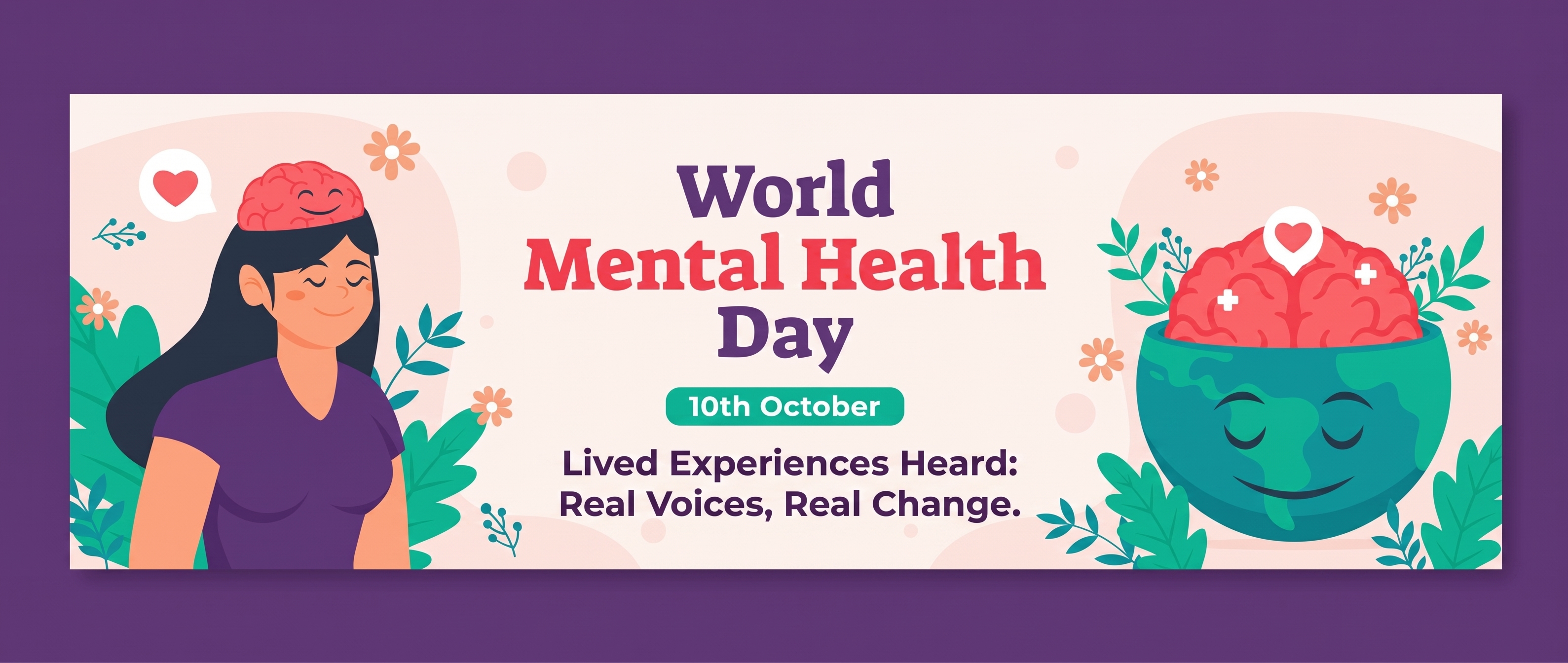
WORLD MENTAL HEALTH DAY: REAL VOICES, REAL CHANGE - SHOULD WE SHARE OUR STORIES?


 53
53


Other insights from Writewithoma











Contributor Points

Points-to-Coupons

Referral Earning

Insights for you.


Silence: The things we don't say.🥺
I walked out of my house, shutting the door behind me, and moved to the terrace.I neede...
254 views
60 upvotes
64 comments
Suicide: The Permanent Solution.
“Did you regret it?”“You know…”I hesitated.“What happened?”A heavy sigh was the first r...
269 views
51 upvotes
54 comments
Suicide: The Nigerian perspective.
As we all know, this month, September is Suicide Prevention Month.Today, I'll be talkin...
167 views
46 upvotes
66 comments

2 a.m.
Maybe it's all the nights I spent not sleepingOr all the days I sat thinkingOf how I've...
270 views
52 upvotes
50 comments
Yours in the Empty
Losing a father is one thing,Losing a best friend is another.Losing the "head" is one t...
418 views
60 upvotes
44 comments

I’m Skinny, and So What?
What if I told you that I have cried more over my own arms than over any guy who has ev...
237 views
49 upvotes
51 comments


Shocking Generosity.
Dear Mr. Smith,Good afternoon, sir. I hope this letter meets you well.I write to profus...
136 views
46 upvotes
43 comments

After Alhaji
"Kai, yarinyar nan ta yi sa'a ƙwarai.""Wallahi. Alhaji Ibrahim da kansa zai aura ta.""T...
292 views
37 upvotes
44 comments


One step forward, Three steps back
I'm tired...But not for the reason you're thinking How much more must life take?How muc...
448 views
51 upvotes
41 comments