Score |
137


𝑫'𝒙𝑪𝑬𝑳𝑳𝑬𝑵𝑻 ™ ✍️🥇
 Content Writer @ University of Ilorin
Content Writer @ University of Ilorin



The Strange Rivers of Human Connection.
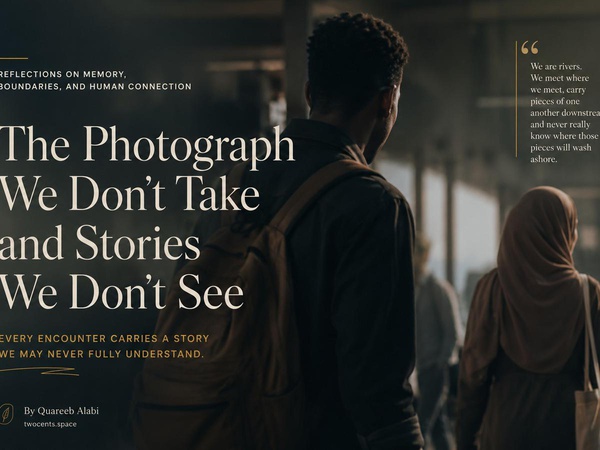
<blockquote>Sometimes, when we ask for a picture, we are not asking for a picture at all. We are asking time to give us something back.</blockquote><p><em style="color: inherit; font-size: 18px; background-color: transparent;"><strong>[intro..]</strong></em></p><p>This is about my old secondary-school classmate. We had not spoken in years. I barely remembered our last conversation—only the classroom, the mathematics competition we shared, and the quiet familiarity of growing up together.</p><p>Then school ended and scattered us.</p><p>Different universities. </p><p>Different lives.</p><p><br/></p><p><strong><em>[the reunion]</em></strong></p><p>About two months ago, I found her again on Facebook.</p><p>Her full name was there.</p><p>No photograph.</p><p><br/></p><p>I stared at the name, trying to connect it.</p><blockquote><em><strong>Is this really her?</strong></em></blockquote><p>I was certain.</p><p>I messaged her.</p><p>We talked, exchanged greetings, caught up on life, and eventually moved to WhatsApp.</p><p>At a point, I asked for her picture. She said she didn't have one.</p><p><br/></p><p>I understood. Some people are private. Some avoid cameras. Some simply prefer to exist without documenting themselves.</p><p><br/></p><p>I even encouraged her to take pictures for herself, not for social media, not for anyone else, but for the person she would become years later. <strong style="background-color: transparent; color: inherit; font-size: 18px;"><em>[maybe in future]</em></strong></p><p><strong><br/></strong></p><h2><strong>Wishes Are Enough.</strong></h2><p>Today was her birthday.</p><p>I wished her, prayed for her, teased her, and asked:</p><p><br/></p><blockquote><strong> “What are you giving me today?”</strong></blockquote><p><br/></p><p>She replied.</p><p><br/></p><blockquote>“You are the one to give me something.”</blockquote><p><br/></p><p>I asked for her AZA.</p><p>She sent it.</p><p>Then, jokingly, I asked again for her picture for posting.</p><p>Something changed.</p><p><br/></p><p>She told me not to send anything anymore and immediately deleted the account details.</p><blockquote><strong>“Wishes are enough. She said”</strong></blockquote><p>I kept replaying the moment.</p><p><br/></p><p>What did she hear that I didn’t intend to say? </p><p><br/></p><p>Maybe she connected the money to the photograph or simply did not want to share her picture. </p><p>Maybe I had stepped across a boundary without realising it, or her faith and personal convictions made her more cautious about it, or being asked by a man from her past made the request feel entirely different from how innocent it seemed in my own mind. </p><p><br/></p><p>I cannot know; maybe I do not need to.</p><p>That is where the lesson begins. We are often too quick to explain other people's reactions through our own intentions.</p><p><br/></p><p>Sometimes, silence belongs to a story we were never part of.</p><p>And we have to be humble enough to let some stories remain unfinished.</p><p><strong><br/></strong></p><h2><strong>The People Who Remember Us</strong></h2><p>I have never been someone who takes pictures just to be seen. </p><p>I value privacy, even while knowing that visibility can sometimes open doors. </p><p>As I wrote before in <strong>[“Between Privacy and Visibility”] <a class="tc-blue external-link external-link external-link external-link external-link external-link external-link" href="https://twocents.space/insight/between-privacy-and-visibility-the-cost-of-silence-in-a-connected-world-5220/" rel="noopener noreferrer" target="_blank">twocents.space/insight/between-privac... </a></strong> </p><p>I have learned that you can protect your private life without disappearing from the world.</p><p>So, perhaps I understood her more than I first realised.</p><p>There is dignity in remaining unseen. But there is also something beautiful about being remembered. And I meet people everywhere—offline and online, through conferences, schools, organisations, and projects.</p><p>And strangely, I have become used to being remembered by people I don't remember.</p><p><br/></p><p>Someone will walk up:</p><blockquote> “Quareeb!”</blockquote><p><br/></p><p>Or:</p><p><br/></p><blockquote>“Emini_Excellent!”</blockquote><p><br/></p><p>Then:</p><p><br/></p><blockquote>"Don't you remember me?”</blockquote><p><br/></p><p>I search through the rooms of my memory.</p><p>Sometimes I remember.</p><p>Sometimes I don't.</p><p>I ask for their name again. Where did we meet?</p><p>Because I know what it feels like from the other side.</p><p><br/></p><p>Someone remembers you.</p><p>You don't remember them.</p><p>It can feel like rejection. Pride. Arrogance.</p><p>As if the moment mattered to one person and meant nothing to the other.</p><p>But memory does not work according to fairness.</p><p><br/></p><p>A person can remember a five-minute conversation for years, while the other person has completely forgotten it.</p><p>Memory is private territory.</p><p><strong><br/></strong></p><h2><strong>When Memory Arrives Late</strong></h2><p><span style="background-color: transparent;">Last week, I met Zainab, my classmate. As we walked towards each other, I almost passed her until she called my name:</span></p><blockquote><strong>"Quareeb, how are you?”</strong></blockquote><p>For a moment, she looked like a stranger.</p><p>Then, as we spoke, my memory caught up.</p><p><br/></p><p>Wait… This is Zainab na. </p><p><br/></p><p>I felt terrible. I had almost ignored her, and in that moment, I understood how easily an innocent oversight can look like arrogance from the other side.</p><p><br/></p><p>I was grateful she called my name. Had she walked away, she might have believed I saw her and deliberately ignored her.</p><p>The truth was simpler:</p><blockquote>I just didn't recognise her quickly enough.</blockquote><p>And in that small encounter, I found myself on the other side of a feeling I had once experienced myself.</p><p><br/></p><h2><strong>The photograph I didn't have, too.</strong></h2><p>Last week, after our final paper as undergraduates, people were posting their sign-out pictures.</p><p>Sashes.</p><p>Smiles.</p><p>Celebrations.</p><p><br/></p><p>I was somewhere else. I had been sick through parts of my final exams. I missed two papers. I was moving between the clinic and school, trying to obtain the report I needed to sit for them.</p><p><br/></p><p>I was not thinking about pictures.</p><p>I was thinking about survival.</p><p>My only question was:</p><p><br/></p><blockquote><strong>Will I even graduate with these people?</strong></blockquote><p>So there were no pictures.</p><p>And still, people asked:</p><p><br/></p><blockquote><strong>“Where are your sign-out pictures?”<br/>“You didn't post anything.”<br/></strong></blockquote><p>It is strange how easily we mistake documentation for reality. As if what was not photographed did not happen.</p><p><br/></p><p>But behind every photograph is a story we cannot see. Some are shared in celebration or to preserve a memory; others remain unseen because life is too heavy, too private, or too complicated for a caption.</p><p><br/></p><h4><strong>A photograph shows us a moment. It rarely shows us the cost of reaching it.</strong></h4><p><strong><br/></strong></p><h2><strong>We Are Rivers.</strong></h2><p>Someone who doesn't greet you may simply not recognise you; someone who declines a photograph may simply be protecting a boundary; and someone who doesn't post their graduation may be carrying a struggle you know nothing about.</p><p>This brings me back to my philosophy I keep returning to:</p><blockquote><strong>I think human beings are like rivers.</strong></blockquote><p>We keep moving, crossing paths for seconds or sometimes years. A classmate you knew at fifteen may become the person you need at thirty; someone you meet for five minutes may become a lifelong collaborator; someone whose name you almost forgot may one day open a door for you.</p><p><strong>We rarely know what a moment is becoming while we are living it, and perhaps that is why moments deserve gentleness.</strong></p><p><br/></p><p>A photograph may one day become a friendship, a job, a collaboration, a reunion, a second chance, or even love. We cannot know. </p><p>Memory has a strange way of hiding possibilities inside ordinary moments.</p><p><br/></p><p>So I am learning to ask differently. When I ask for a photograph, I should remember that I am asking for something that belongs to another person. </p><p>When someone says no, I should respect it without demanding an explanation. </p><p>When someone forgets me, I should not turn it into an insult. And when someone remembers me, I should be grateful.</p><p><strong><br/></strong></p><h3><strong>Recognition is a gift, not a debt.</strong></h3><p>Perhaps that is what we are sometimes asking for when we ask for a picture: not possession or access, but a small anchor against time.</p><p><br/></p><p>Growing older is learning that people owe us nothing (their pictures, memories, or recognition). Whatever they freely give us—a greeting, a conversation, a picture, or even a simple <strong>“No”</strong>—should be received with respect.</p><p><strong style="background-color: transparent;"><br/></strong></p><p><span style="background-color: transparent;"></span></p><p>At the end, we are just rivers meeting where we meet, carrying pieces of one another downstream, never knowing where they will wash ashore.</p><p><br/></p><p>I would love to hear from you in the comments 👇👇</p><p>"Has someone ever remembered you at a moment when you couldn't remember them? What did it feel like from your side?"</p>


The Strange Rivers of Human Connection.
By
 𝑫'𝒙𝑪𝑬𝑳𝑳𝑬𝑵𝑻 ™ ✍️🥇
𝑫'𝒙𝑪𝑬𝑳𝑳𝑬𝑵𝑻 ™ ✍️🥇
0:00 /
0:00


 117
117


Other insights from 𝑫'𝒙𝑪𝑬𝑳𝑳𝑬𝑵𝑻 ™ ✍️🥇









Contributor Points

Points-to-Coupons

Referral Earning
Insights for you.

The death of death.
Death begins its silent journey towards us from the moment we begin to live.It has neve...
198 views
55 upvotes
47 comments


IS HEAVEN AND HELL REAL?
I woke up this morning, possessed by my favorite Spirit, the spirit of wonranwonran.Sti...
202 views
38 upvotes
47 comments
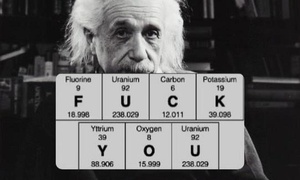

FUCK YOU: The Periodic Table of Petty
Albert Einstein spent his life proving that the universe obeys laws. The internet has s...
302 views
34 upvotes
35 comments

Who’s Running This?
I was reading a book about Python the other day. I know basically nothing about coding,...
139 views
28 upvotes
39 comments

KEEP WALKING
Failure is not the end of the world, yet we have been taught to treat it like it is. Fr...
222 views
29 upvotes
31 comments

YOU ALL ARE MONSTERS
You All Are Monsters.Yes. I'm talking to you, oh and of course, me too.Why are you shoc...
371 views
26 upvotes
30 comments

Why We Romanticize Pain in Art
We say pain is poetic. We call heartbreak art. We write sadness into songs, paint it on...
773 views
25 upvotes
23 comments

Eren Yeagar and Freedom's cage
Warning: this article contains spoilers for Attack on TitanWhat becomes of the humanity...
2570 views
22 upvotes
14 comments

The Mirror Statement
The Day Mirrors Went on StrikeOne Monday morning, the world woke up to a strange announ...
188 views
18 upvotes
20 comments
A ghost called my future
Author’s Note: This piece explores the friction between the exhaustion of the present ...
359 views
17 upvotes
19 comments