Score |
127


𝑫'𝒙𝑪𝑬𝑳𝑳𝑬𝑵𝑻 ™ ✍️🥇
 Content Writer @ University of Ilorin



The Manuscripts They Tried to Destroy.
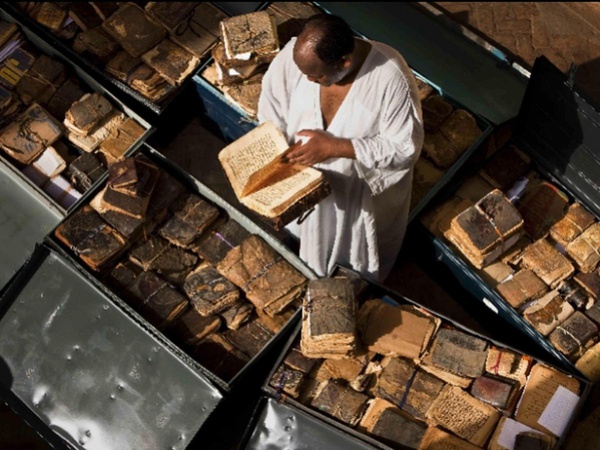
<h3><strong>AFRICA, UNCOVERED · EPISODE 5</strong></h3><p>Have you ever wondered what happens when a city is forced to choose between protecting its people and protecting the knowledge passed down by generations before them?</p><p><br/></p><p>In 2012, people in Timbuktu, Mali, faced a frightening version of that question.</p><p><br/></p><p>But the story I want to tell you is not just about a city under threat. It is about the people who risked so much to protect something that could easily have been lost forever: thousands of handwritten manuscripts containing centuries of African scholarship.</p><p><br/></p><p>And the remarkable thing is that many of these documents survived because ordinary people refused to let their history disappear.</p><p><img alt="" src="/media/inline_insight_image/Screenshot_20261016-063508.jpg"/></p><h2><strong> A city that had been collecting knowledge for centuries</strong></h2><p>Today, when some people hear the name Timbuktu, they think of a distant place in the desert.</p><p><br/></p><p>But Timbuktu was once a major centre of trade, learning, and scholarship in West Africa. For centuries, scholars travelled there, books were copied by hand, and families preserved manuscripts across generations.</p><p><br/></p><p>These were not only religious texts. The collections included writings on mathematics, astronomy, medicine, law, history, poetry, and other subjects.</p><p><br/></p><p>Think about that for a moment.</p><p>Long before the internet, long before printing became widespread in the region, scholars and families were preserving written knowledge by copying, collecting, and passing manuscripts from one generation to another.</p><p><br/></p><p>Some documents became part of private family libraries. They were not simply old papers sitting on shelves. They carried the intellectual work of people who had lived centuries earlier.</p><p>And then, in 2012, that heritage faced a serious threat.</p><p><br/></p><h2><strong>When the danger arrived</strong></h2><p>In April 2012, armed rebel groups took control of Timbuktu amid a wider conflict in Mali. The occupation put the city's cultural heritage at risk. Historic religious sites were attacked, and people feared what could happen to the manuscripts.</p><p><br/></p><p>One of the people who understood the danger was Abdel Kader Haidara, a Malian manuscript collector and librarian who worked with local manuscript owners.</p><p><br/></p><p>The collections were spread across public institutions and private family libraries. Protecting them required more than locking a door and hoping for the best.</p><p><br/></p><p>The manuscripts had to be moved. Haidara and others helped organise a secret operation to transfer the documents out of Timbuktu to Bamako, Mali's capital, hundreds of kilometres away.</p><p><br/></p><p>The work was complicated. The manuscripts had to be packed, transported, and moved without drawing unwanted attention.</p><p><br/></p><p>Metal trunks and ordinary vehicles became part of the effort. Some documents were moved in stages, with local people helping to get them away from danger.</p><p><br/></p><p>This was not one dramatic rescue carried out in a single night. It was a difficult operation that unfolded over months, relying on coordination, trust, and the determination of people who understood what was at stake.</p><p><img alt="" src="/media/inline_insight_image/Screenshot_20261016-063700.jpg"/></p><h2><strong>What were they trying to save?</strong></h2><p>Imagine opening one of those manuscripts today. You might find carefully written Arabic text, detailed calculations, or discussions of subjects that people studied generations ago.</p><p><br/></p><p>Some manuscripts preserve evidence of intellectual debates and scholarly traditions in West Africa. Others offer researchers a window into the everyday concerns and ideas of earlier societies.</p><p><br/></p><p>These documents matter because written history is not only produced by kings, wars, and political leaders. It also survives in the work of scholars, teachers, physicians, poets, merchants, and families.</p><p><br/></p><p>Without these records, parts of that intellectual history would be much harder to recover. The rescue was largely successful, although not everything survived. </p><p><br/></p><p>In January 2013, as armed fighters retreated from the city, the Ahmed Baba Institute suffered a fire that destroyed thousands of manuscripts that had remained there.</p><p><br/></p><p>Still, the majority of the collections had already been moved to safety. The people who organised the evacuation had helped prevent a much greater loss.</p><p><img alt="" src="/media/inline_insight_image/Screenshot_20261016-064023.jpg"/><strong></strong></p><h2><strong>The rescue was not the end</strong></h2><p>There is something important we should not overlook.</p><p>Saving a manuscript does not mean its preservation is complete. Paper can deteriorate. Ink can fade. Humidity, heat, insects, and poor storage can damage documents that have survived for hundreds of years.</p><p><br/></p><p>After the evacuation, researchers and preservation organisations raised concerns about the conditions in which the manuscripts were being stored in Bamako. Further work was needed to conserve, catalogue, and digitise them.</p><p>The challenge had changed, but it had not disappeared.</p><p><br/></p><p>First, the manuscripts needed to survive the conflict. Then, they needed to survive time.</p><p>That is why preservation requires long-term commitment, not just a dramatic rescue when danger arrives.</p><p><img src="/media/inline_insight_image/Screenshot_20261016-063816.jpg"/><strong></strong></p><h2><strong>What this story means to me.</strong></h2><p>What stays with me about Timbuktu is the fact that people understood the value of something they could not easily replace.</p><p><br/></p><p>The manuscripts were vulnerable because they were physical objects. They could be burned, damaged, scattered, or lost. But the knowledge they contained was part of a much larger story about African scholarship and the people who preserved it.</p><p><br/></p><p>We often talk about protecting history as though it is only the responsibility of museums, governments, or academics.</p><p><br/></p><p>The story of Timbuktu shows that local communities and families can also be central to protecting a society's memory.</p><p><br/></p><p>It makes me wonder how many other African records remain in private collections, family homes, archives, and libraries, waiting to be properly documented and preserved.</p><p><br/></p><p>How much could we learn if more of these records were protected and made accessible to researchers and future generations?</p><p><br/></p><p>We may never know everything that was lost throughout history. But the Timbuktu rescue reminds us that we do not have to accept every loss as inevitable.</p><p><br/></p><p>Sometimes, history survives because people decide that what came before them is worth protecting.</p><p><br/></p><p>The manuscripts were written by people who lived centuries ago. They survived because people living today refused to let their work disappear.</p><p><strong><br/></strong></p><p><sub><strong>Note: This account is based on published research and reporting. The rescue involved many local people and manuscript owners; it should not be understood as the work of one person alone.</strong></sub></p>


 29


More in this series
More insights from 𝑫'𝒙𝑪𝑬𝑳𝑳𝑬𝑵𝑻 ™ ✍️🥇






Contributor Points

Points-to-Coupons

Referral Earning

Insights for you.


Igbo Kwenu!!!
Today, I refuse to be humble Not when I speak about my tribe...Cha Cha Cha Cha Cha,Igbo...
818 views
51 upvotes
45 comments


Confessions of a Nearly-Native
My name is Idara. I am Annang from Akwa Ibom. And I cannot speak my language.My mother ...
430 views
32 upvotes
37 comments


Cradle
Who sat and watched my infant head, When sleeping on my cradle bed, And tears of sweet ...
181 views
29 upvotes
31 comments

ÈMI NI ÌLÙ (I Am the Drum)
Mò fẹ́ kí ara mi gbọ́ mi.Before the world gives me a name,let my own soul remember mine.B...
219 views
24 upvotes
27 comments
Agbada and Other Silences
They said it with authority no one questioned.... “Àgbà kì í wà l’ọ́jà, kí orí ọmọ tuntu...
400 views
22 upvotes
29 comments

ÌLÚ MI, ILÉ MI
Modakeke Akoraye omo ogunteludo omo akinkanju loju ogun. Maybe because of you my father...
392 views
18 upvotes
25 comments







190 views
20 upvotes
19 comments
































