Three children are dead.
A mother killed them.
There is no gentler way to say it.
And when a mother kills her own children, our first instinct is understandable she must pay.
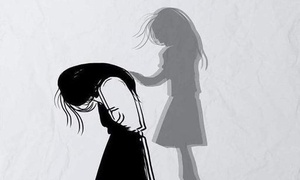
But what if, when she committed the murders, her mind was already so severely disturbed that it was no longer working the way ours does?
That is the dilemma the Lindsay Clancy case puts forward.
If severe mental illness actually caused a loss of her ability to perceive reality and comprehend the wrongfulness of her actions, then she shouldn't be held criminally responsible for the crimes.
But that doesn't mean she should simply be allowed to go free.
There is a difference a very important one between accountability and punishment.
And sometimes we forget that difference.
People who knew Lindsay before the murders didn't describe her as someone who hated her children.
Her mother called her "a very loving mother."
Her former mother-in-law said she was "very nurturing, very loving."
Her former nanny told the jury she was "very concerned about the children's safety" and called her a "wonderful mother."
These descriptions do not negate what happened.
But they matter.
Because they make us think about what happened to the woman those people knew and the woman who strangled her children.
According to testimony at trial, her mental health had been deteriorating for months.
Her former mother-in-law said she was "anxious, depressed, having a hard time sleeping" and was "begging for help."
Her mother said Lindsay had confided in her family that she had thoughts of hurting her kids.
She received medical treatment.
She was medicated.
And the defense introduced expert testimony that Lindsay ultimately developed postpartum psychosis, including hallucinations and delusions, and was "completely disconnected from reality."
One defense expert testified that he believed she was psychotic at the time of the killings and that she believed an external force was controlling her.
The prosecution, however, argued that she knew what she was doing and introduced evidence that, it claimed, demonstrated her awareness and planning.
That evidence matters too.
This is why I am not simply arguing, "Well, she was mentally ill, so it doesn't matter what she did."
I am arguing something far more difficult:
The severity of the illness should matter when determining responsibility.
There is a huge difference between someone who commits a crime while aware of what is happening around them and someone whose mind is so severely distorted that they genuinely cannot recognize reality as it is.
If extreme psychosis completely robs a person of that ability, then criminal punishment for that individual, simply because that individual committed a heinous crime, does not necessarily serve justice.
It serves punishment.
And punishment is not the only response that can be called accountability.
A person who is found not criminally responsible can still be held in a secure psychiatric hospital.
They can receive compulsory treatment.
They can be held under close supervision.
For the safety of others, their condition can be monitored.
Because safety still matters.
Not criminally responsible is not the same as not being held accountable.
Sometimes, it means that the appropriate response to a terrible act is not punishing that person by locking her in a cell.
Sometimes, it means protecting everyone by having her confined, treated and monitored.
Three children died,That will never change.
Their lives will never matter any less.
Their deaths will never be any less tragic.
But justice does not have to equate to punishment at all costs.
When the mind of the accused becomes so profoundly ill that her entire reality is lost, criminal punishment cannot be the only measure of justice, Accountability can be.
And sometimes, accountability means making sure the person can never hurt anyone again, while ensuring that the illness behind the tragedy is treated, contained and taken seriously.
Not being criminally responsible does not mean nothing happened accountability has to take a different form.



 94