Score |
160


Grace Kiconco

 Student @ Makerere University Business School
Student @ Makerere University Business School



One Africa or 54 different Nations wearing the same Flag on special occasions
<p><span style="background-color: transparent;">Geography got there first, and identity is still catching up.</span></p><p>Africa didn't get to define itself before other people drew its borders. The lines that separate Nigeria from Niger, or split the Somali people across five countries, weren't drawn by anyone asking "who actually belongs together here." They were drawn in European conference rooms in the 1880s by people who'd never set foot on the continent. So when we ask "are we one Africa," we're kind of asking a question the map was never built to answer honestly.</p><p>And yet, something real does bind us. Not because a passport says so, but because history did. Colonialism happened to almost everyone here, even if the details differed. The scramble, the extraction, the imposed languages, the artificial borders, the long fight for independence, that's a shared inheritance whether you're in Kampala or Nairobi or Maputo. There's something powerful in that. Pan Africanism as an idea, from Nkrumah to Sankara to the AU today, isn't naive. It's a response to a very real, very shared history of being treated as a resource instead of a people.</p><p>I also think it's honest to admit the divide is just as real as the connection. A Yoruba trader in Lagos and a Maasai herder in Kenya don't share a language, a religion, a colonial power, or often even a sense that the other's struggles are "theirs" too. Add to that the fact that African economies were literally built by their colonisers to trade with Europe, not with each other, which is a big, boring, unglamorous reason why African trade is still lower than it should be. Unity isn't just a feelings problem. It's an infrastructure problem, a currency problem, a "why is it easier to fly to Paris than to the country next door" problem.</p><p>Another thing worth noting is that some of the divisions aren't colonial leftovers at all, they're pre colonial and legitimate. Africa had empires, kingdoms, rivalries, and distinct civilizations long before anyone else showed up with a map. Ashanti and Fante. Hutu and Tutsi tensions that predate European involvement, even if colonialism weaponized them. Pretending every African conflict is just colonial flattens a continent that had its own complicated politics for thousands of years before 1884. Real unity has to be honest about that too, or it's just a different kind of erasure.</p><p><br/></p><p>So what does African unity actually mean to me? Not sameness. Not one language, one currency, one government , that's a fantasy and honestly not even a healthy goal. It means something closer to solidarity without uniformity. It means African countries showing up for each other on the world stage instead of being picked off one at a time by outside powers who've always benefited from African disunity. It means young people across the continent, on TwoCents, on Twitter, on TikTok, at AFCON etc. feeling more connected to each other than any of our grandparents ever were, because for the first time, ordinary people are building the cultural links that governments never bothered to.</p><p>Maybe that's the real answer to the question. Not "one Africa" in the sense of a single nation, and not "54 nations" in the sense of total separation, but 54 nations slowly, unevenly, sometimes reluctantly, learning that their futures are tied together whether the founders of their borders meant for that or not.</p><p><br/></p><p>Geography gave us the map. What we do with it is still ours to decide.</p>



 143
143


Other insights from Grace Kiconco








Contributor Points
Points-to-Coupons

Referral Earning
Insights for you.

Dear African Parents,
Every "African parent" disapproves of suicide. "Why take his life over something so lit...
379 views
70 upvotes
75 comments

SOMETHING MUST KILL A MAN
Something must kill a man! That's what Emeka thought to himself that afternoon, outside...
239 views
39 upvotes
35 comments


BREAST IRONING
Ever heard of the breast ironing practice? well, I am from Cameroon and we have strong ...
1933 views
35 upvotes
41 comments

UNTAMED WORDS
They came with fire, but feared our flame,taught us silence, then gave it a name.Stole ...
402 views
33 upvotes
27 comments

My Greatest fear
My Greatest FearMy greatest fear isn’t death ,it’s the inability to write.I have a wild...
416 views
28 upvotes
29 comments
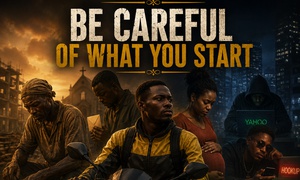

BE CAREFUL OF WHAT YOU START
Work hard.Be consistent.Be patient.These are the songs we hear,the sermons we swallow.B...
223 views
23 upvotes
25 comments


Divide The National Moi Moi
While embarking on my beauty stroll this evening, I pondered what I would write about. ...
988 views
20 upvotes
20 comments
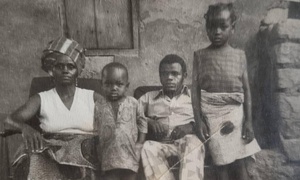

LET'S TALK ABOUT YOUR COUSINS
Family has always been the foundation of social relations.the ↗ very first people you c...
592 views
28 upvotes
25 comments
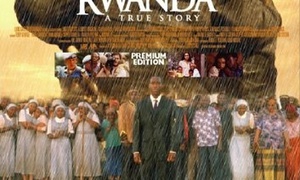

Hotel Rwanda 🇷🇼 part 1 Nomshu
Hotel Rwanda: Part 1 – How I Ended Up in the MadnessOkay, so you know how life sometime...
141 views
24 upvotes
24 comments
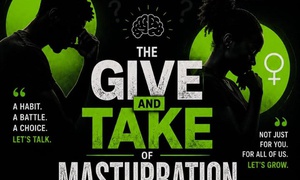
THE GIVE AND TAKE OF MASTURBATION
GBAM!Door closed.Shiiiiiiion!Window closed.The hand becomes the most useful and wonderf...
267 views
23 upvotes
28 comments