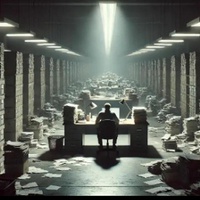
When we read a really good sentence, we picture someone. A calm figure at a desk, coffee going cold, eyes puffy from writing late into the night. Perhaps a professor, in glasses, with big grammar. It is a harmless habit, and probably a borrowed one, shaped by years of films and book jackets. The trouble begins when the picture becomes the standard, and the real writer is expected to match it.
Imagine a man named Mr Ade. He is sixty-three, a retired headmaster living in Ibadan. Three weeks ago, he buried his wife. They had been married for thirty-eight years.
Since then, the house has felt different. Her side of the bed is empty. Sometimes he still turns to tell her something before remembering she isn't there.
One night, he sits at the desk where he used to mark his pupils' essays. He opens his notebook and begins to write. He calls the piece "Longing".
He writes in the English he has known all his life, the kind he was taught in school and spent decades teaching to others. His sentences are complete, his words carefully chosen. When he is done, he sends it to a small literary journal. Perhaps someone will read it and understand.
Three days later, the editor replies. According to their AI detector, the essay has a 94 per cent chance of being machine-written.
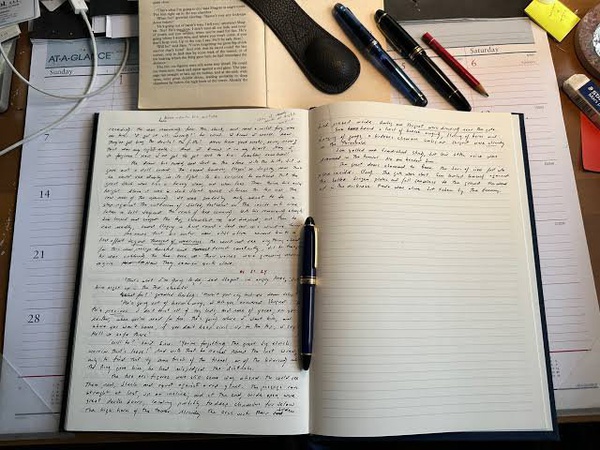
Mr Ade has his notebook. He has the crossed-out sentences, the words he struggled to find, his wife's name scribbled in the margin. But a notebook proves effort. It cannot prove sorrow. How does a man prove that he is grieving, to a system that has already given its verdict?
Mr Ade is invented. The doubt is not.
On 6 October, the Zimbabwean writer Simbarashe Kundizeza won the Caine Prize for African Writing with "The Blue Fighter". Five days later, The Atlantic published an article claiming the story was AI-written. It relied on Pangram, a detection tool, which reportedly flagged nearly the whole text. Kundizeza denied it, saying the story came from his family's experiences. The prize opened a review, and its conclusion is worth noticing: it found no evidence that generative AI had been used and confirmed him as the winner, as the BBC reported.
He was not alone. Trinidadian writer Jamir Nazir faced similar claims over his Commonwealth prize story, and Granta ended its partnership with the prize. Nazir said he had written six or seven drafts. Like Mr Ade, both men were asked to prove a negative, and neither had an easy way to do it.
The Atlantic article also called the story sentimental and full of tired tropes. That may be a fair literary opinion. Still, whether a story is clichéd and whether a human wrote it are different questions, and it is likely that a percentage score cannot tell them apart. Mr Ade's grief leaves no receipt, and neither does imagination.
The doubt did not begin with machines. In her 2009 talk "The Danger of a Single Story," Chimamanda Ngozi Adichie recalls a university professor who judged her characters not authentically African, because they were middle class, educated and drove cars. Her prose was never the charge. Her characters failed to match a picture of Africa the professor already held. It is likely that the same instinct now runs through language, and that polish, to some readers, fails to match the picture too.
Writers have argued for decades over what that picture should be. Chinua Achebe held that English could be bent to carry African experience, made new without being cut from its roots. Ngũgĩ wa Thiong'o, in “Decolonising the Mind”, answered that writing in the coloniser's language is itself a loss, and that African literature belongs in African tongues. I understand why Ngũgĩ's argument matters. I speak Igbo well, and I also know that English has become part of me, whatever its origins. Two giants disagreed, and neither can be easily dismissed. If they could not settle what an authentic voice sounds like, it seems unlikely that an editor or an algorithm can.
Consider the mirror. Imagine a British writer who studied Igbo in London and writes in it beautifully. A reader in Nigeria might well suspect AI. The doubt is human: we measure a voice against the face we expect to hold it. But the mirror is not symmetrical. English reached Igbo land through colonial rule, and it still opens doors in schools, courts and offices. Igbo from a British hand carries none of that power back.
So authenticity cannot mean conformity. A writer is not more African for adding proverbs, nor more artificial for being polished. Nor must anyone reach for Pidgin to seem real. Pidgin is a living voice with its own rhythm, and it should be a choice, never a certificate.
AI-written work is real. Some people paste a prompt and submit, and the recognition they receive is taken from writers who did the work. Writing communities like TwoCents are right to protect original writing. I am not arguing against that. But originality has never meant writing without influence. Every writer is shaped by what they read, and Mr Ade was shaped by his schooling too. The question is not whether a voice was influenced, but whether a person did the thinking and the labour. A detector measures patterns in text, not authorship. The Stanford findings suggest it can be biased, consistently misclassifying non-native English writing as AI-generated. Detectors may improve, but a score will still only be a probability. So the real problem is not the wish to protect originality. It is treating a score as a verdict.
A score should be a reason to ask, not a verdict. When a piece is flagged, the first step is a conversation with the writer, not a conviction. Look for evidence of process: drafts, notes, revision history, or a short conversation where the author explains their choices. Mr Ade's notebook finally counts for something here. It cannot prove his sorrow, but it proves his labour, and labour is what a fair process can actually weigh. No process is perfect, and a missing draft should never be proof of guilt.
The Caine Prize offers a working model. Its organisers said they had a responsibility to examine such claims, and promised a human-centred approach that supports writers, according to the AP. That is not softness. It is due process. Finally, judge the writing, not the writer's face. A community can say what it is looking for without hiding a template for what "sounds real."
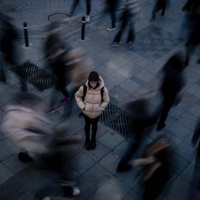
We never really see the person behind a good sentence. We see the face we expected, and when the writing outruns the picture, we call it suspicious. But who decides what sounds real? Not a reader's expectation, and not a percentage. A voice is yours because of the thought behind it, the experience it carries, the intention, and the labour of putting one word after another. I do not carry proverbs the way my grandparents did, and I am still the author of my sentences.
Mr Ade will keep his notebook. He cannot prove his sorrow, and he should not have to prove it to a machine. But the words are in his hand, and her name is still in the margin. That should count for something, even in a world that would rather trust a score than the man.



 10