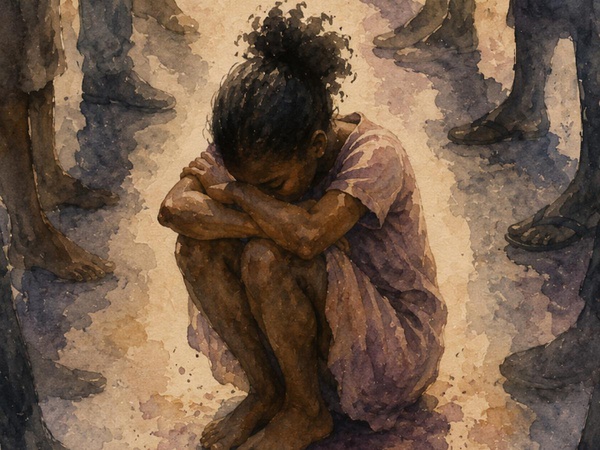
You say I don't wake up in the morning to take care of the house, yet you never have a clear example of how the house should look.
You say I don't contribute to the cooking, yet I was sent to a boarding school before I could learn to wield a knife.
You say I'm too selfish, always putting me first, yet whenever I put others first, it goes unnoticed or gets criticised.
You say I should call my siblings to order, yet you're the one who gave them the authority to treat me like a servant and a stranger in my own home.
You say I should consider your feelings and emotions, yet whenever my emotions and feelings are brought up, they're sidelined. They're regarded as unnecessary, and I'm told I should toughen up.
I'm also a human.
You say I should always call our relatives, yet when I do, they assume it's to complain or ask for money.
The activities of other family members are translated to me, as though I am responsible for every silence, every problem, every unanswered call.
You say you don't see my use in the home, yet when I leave, you can't seem to find anything or do anything.
The home remains a mess. Everyone is suddenly incapable. And somehow, me being a thousand miles away is to blame.
Maybe I was never the faulty daughter.
Maybe I was simply the daughter who was expected to know everything without ever being taught.
The daughter who was expected to give without being allowed to need.
The daughter who was expected to be responsible for people who were never my responsibility.
The daughter who was expected to be strong because everyone else had decided that my feelings were an inconvenience.
I have spent so much time trying to understand what exactly I am doing wrong.
Maybe the problem isn't that I don't do enough.
Maybe the problem is that whatever I do has become expected, and whatever I don't do becomes evidence against me.
So when I leave, the absence of what I used to do suddenly becomes visible.
The house notices.
Everyone notices.
But somehow, I'm still the faulty one.
I am tired.


 156