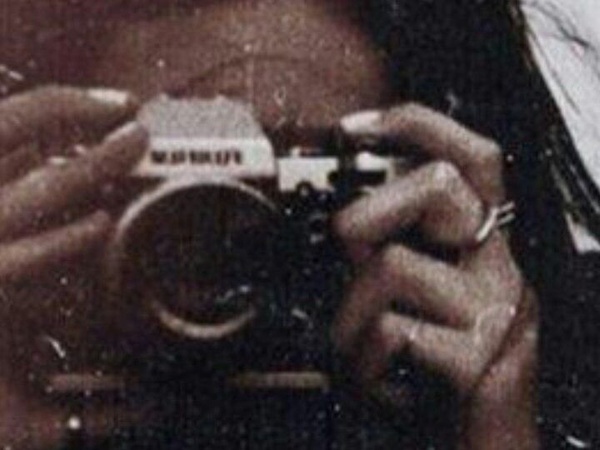
I don't have opinions. I have a lens, a battery, and whatever you point me at.
On a Thursday afternoon I was lifted above a crowd. I did not ask why. I never do.
Three hands held me that day, and I recorded all three exactly the same way. That is my only talent, and my greatest fault.
A young lady was the victim. She was 17.
A group of men stopped her bike. I will not describe the rest. I was built never to look away, but you do not have to watch it again.
What I can tell you is what else was in the frame. A bike wheel, still turning. A ring of people. Laughter, loud enough to cover her voice. And a dozen other screens held up like mine.
No one moved toward her.
The first hand held me for the thrill. The second hand held me for the likes. The third hand trembled. I felt it. It lowered me halfway, then lifted me again, because no one else had moved. I recorded that too.
I logged the date, the place, the length. I had no field for what it cost her.
By evening I was in a thousand hands, passed from one share to the next. The video went viral. Only then did the explanations arrive, and the word they used was "tradition."
I have no opinion on that word. But I know who held me. So let someone who understands it better take over.
Her sister's account
This account is imagined, built from what many families describe. It is not about any real person.
I am the older sister of the girl in that video. I won't tell you her name, and I won't tell you what happened to her on that road. I will tell you only what is mine to tell: what it did to our house.
The clip reached our family's WhatsApp groups before it reached our family. Strangers had watched my sister's worst moment more times than I could count, and they were already arguing about her. "Why was she outside?" "Didn't she know it was festival day?" She was at home, sobbing into a pillow, while her face went round the country.
Then came the explanations. One elder said it was our culture. A neighbour said it was a family matter and that we should not bring shame to the household. A relative told my mother, gently, to keep quiet and let it pass. Another said the boys were hoodlums who had spoiled the festival, which made it sound as if the festival were the victim.
At the police station, we were asked whether we really wanted to take this further. Nobody said "we won't help you." They only asked, again and again, until we were tired.
My sister stopped going out, then stopped going to school. A girl who loved her bike would not look at it.
Since when did "tradition" become a licence for assault?
The writer
I want to answer the sister's question, because it reaches far beyond one festival. When harm is done in tradition's name, in front of a crowd or behind a cover-up, who answers for it?
Start with the word itself. A tradition is something a community chooses to keep. The festival may be one. The assault was never part of it, and nobody at its planning meeting voted for it. "It's our culture" is usually said after the harm, as an excuse, not before it as an invitation.
That is not respect for culture. It is using culture as a shield. Challenging that shield is not an attack on any tribe, religion or community. It is a defence of what is worth keeping in them.
But who decides which traditions are acceptable? My answer is the people a custom touches, starting with those who have the least power in it.
A practice that survives only because the people it harms are not allowed to say no is not a tradition. It is enforcement.
Two easy answers fail. "Only the men who did it" is comfortable, because it lets everyone else feel clean. "Everyone who watched" feels fair, but it blurs the line between the man who committed the act and the frightened person who watched it. I think responsibility rises with power and duty, and it comes in different kinds.
The men who did it answer for the act, in court. No custom is a defence. But men as a whole owe more than not being the ones who do it. They owe the willingness to be the first to speak when other men go quiet.
Keeping quiet doesn't make it better, it makes it worse.
The crowd answers according to what it could safely do. Someone who laughs or joins in made a choice. Someone who films for views chose attention over a human being. A frightened onlooker who could only shout, call for help, or later give a statement is not guilty in the same way, and treating them as if they were makes the real offenders harder to see.
Documenting harm is also not the same as broadcasting it: evidence belongs with the police, a lawyer or a support group, never in a viral chain with a survivor's face in it.
The gatekeepers answer for the aftermath, and the aftermath is where impunity is made. The elder who defends it, the relative who says "keep quiet," the officer or court that treats it as a "family matter": without them, a crime is one terrible afternoon. With them, it becomes a pattern. Some crowds cheer. Gatekeepers decide whether anything follows.
The numbers show how deep this goes. The 2018 Nigeria Demographic and Health Survey found that 31 percent of Nigerian women had experienced physical violence since the age of 15. The 2023–24 survey put the figure at 19 percent. Whichever number you trust, look at the silence: in the latest survey, 58 percent of women who had experienced physical or sexual violence neither sought help nor told anyone.
The law is not the missing piece.
By early 2024, the federal Violence Against Persons Prohibition Act had been adopted in 35 of Nigeria's 36 states. What is missing is everything after the law: a complaint that is taken seriously, a file that is not lost, a case that is not "settled" at the station.
Run that afternoon again. The festival has stewards in visible vests, and girls have a number that actually rings.
The first hand puts the phone away and runs for a steward. The second hand calls that number. The third hand stops trembling, and its owner steps forward, still recording, and shouts loudly enough to break the spell: "Stop! The police are on their way." Two others step in beside him, and a crowd that was a wall becomes a set of witnesses.
The footage goes to a lawyer and the police, not into a group chat. Afterwards the elders say publicly that the festival belongs to everyone and the crime belongs to no one.
So what does justice look like? Four things.
Accountability: the laws already exist, so what is needed is enforcement: real prosecutions, including of officials who bury cases. Officials who won't sweep the case under the rug.
Protection: safe reporting, support, and no blaming her for being outside. That's unfair.
Prevention: communities that separate their traditions from the crimes committed in their name.
Control: the survivor decides whether, when and how her story is told. Not the media, not the movement, not even those who love her.
Back to the lens
I did not record her sister's account. I did not need to. I have been passed through enough hands since to know how the story went.
I told you I have no opinions. That was never quite true. A lens can be neutral. A witness cannot.
I am a camera. I cannot step in. I cannot shout. I cannot walk into a police station or sit with a girl who has stopped going to school. I can only watch, and I watch the same way whether you hold me for evidence or for entertainment.
That is the part you cannot hand to me.
On that Thursday, the first hand wanted a thrill, and the second wanted an audience. The third hand trembled. It was afraid, and it was the nearest thing in that frame to a way out. It was holding the one thing that was never neutral: a witness. It could have changed everything, and next time, it still can.
You will be that hand someday. You will see harm, and a crowd, and a screen in your palm, and a second to decide. You will decide whether to step in, whether to call for help, whether to send what you recorded to someone who can use it, and whether to share a stranger's worst moment or protect it. You will decide whether "tradition" is a reason or an excuse, and whether "keep quiet" is advice or a cover-up.
I said I have no opinions. Here is the nearest thing to one: I would ask the question I never ask.
Why?
Ask it. And if the answer is "tradition," ask again. Then be the hand that steps in.


 37