Have you ever read something that made you remember just how far you've come?
Something happened to me recently.
I was reading a piece on TwoCents by Tyronos titled Mental Health and Politics (Part 1).
Chai!
The articulation. The expressions. The way this person connected one argument to another.
I had to slow down and read some sentences again. Not because I couldn't pronounce the words, I just wanted to understand the ideas being communicated.
I was following the arguments, making connections and appreciating the writer's thought process.
Then, at some point, I burst out laughing.
Something had just taken me several years backwards.
I remembered a little girl who could read English but didn't understand English.
Omo! 😭
Let me explain.
Growing up, my dad read newspapers a lot. He would also give me newspapers to read.
But there was a problem.
I could pronounce the words. I could read sentences aloud. I could even finish a whole paragraph.
But ask me what I had just read, and you might have to wait for a while.
Sometimes, I would look at the words and wonder what they were trying to communicate.
And it wasn't only English.
My brother understood things faster than I did. He could read multiplication tables and solve mathematical problems.
Meanwhile, I was somewhere wondering how everybody was getting their answers.
I knew two plus two was four, but how were they doing the other calculations?
Even telling the time was a problem.
My dad would explain how to read the clock. He would describe the different sides, the hands and where they were supposed to point.
He tried.
But sometimes, even after all the explanations, I still wouldn't get it.
And let me tell you something: my dad wasn't just encouraging me. He was also using the rod.
I received my fair share of beating, but somehow, the understanding still wasn't coming.
Funnily enough, there were some things I figured out by myself. I learnt to tell the time independently in Primary Five.
I can't even explain how that happened.
Oh my!😩😂
I remember my Primary Three teacher, Mr Sunday, who had his own special way of dealing with me. He would draw my head, ears and eyes, put the drawings around the school, circle them and send me home with them to show my dad.
I remember those days.. I don't take my books home o.😩😂
And I'd lie our teacher forgot to give us assignment.. my dad went to our school to know exactly why our teacher was that lazy.
The rest.. they say is history.😂
At some point, I began to tell myself things.
"We can't all make it in life. We can't all be brilliant. Some will fail, some will pass. Let me hold unto my side; let my brother do his own too."
I wasn't even jealous of my brother.
I wished I could understand things as quickly as he did, but I didn't resent him for it.
I simply assumed that perhaps we weren't all going to be good at the same things.
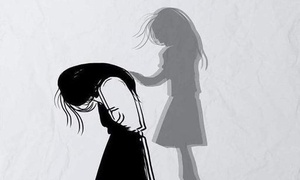
Looking back, that thought makes me wonder how early children can begin to limit their expectations of themselves.
My dad kept encouraging me to read, and I believe his persistence played a part in my journey. But I don't think he fully understood what I was struggling with.
There were books I read as a child that I only began to understand years later.
And that brings me to something interesting.
After my experience, I became curious about what I had struggled with. I did some research and discovered that there are different terms for difficulties associated with reading and understanding language.
One of them is decoding without comprehension.
This describes the ability to recognise and pronounce written words without adequately understanding their meaning.
There is also dyslexia, which can affect word recognition, reading fluency and spelling, sometimes alongside comprehension difficulties.
Developmental Language Disorder (DLD) can affect how a person understands and uses language, including vocabulary and sentence structures.
And hyperlexia describes an unusual pattern of advanced word-reading ability, sometimes accompanied by difficulties with understanding language.
These are different experiences and conditions. I am not saying I had any of them because I was never assessed or diagnosed.
But discovering that such difficulties exist made me think about other children.
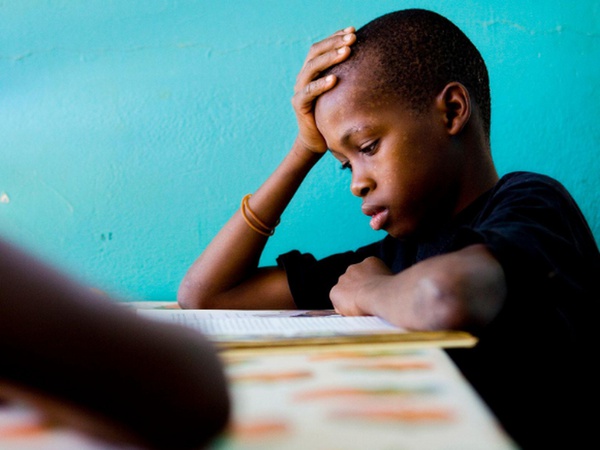
How many children are struggling to understand what they read?
How many can pronounce words beautifully but cannot explain the meaning of a passage?
How many are being beaten, scolded, compared with their siblings or labelled unintelligent without anyone investigating why they are struggling?
And perhaps the most important question:
How many children have already concluded that they are not meant to succeed academically simply because learning hasn't come easily to them?
I think parents and teachers need to understand that children don't all process information at the same pace or in the same way.
Sometimes, repeating an explanation louder, giving more instructions or administering punishment doesn't address the actual difficulty.
A child who struggles consistently may need a different teaching approach or an assessment by someone qualified to identify learning and language difficulties.
As for me, I look at where I am today and smile.
The same girl who could read a paragraph without understanding it can now sit with a piece of writing like Mental Health and Politics, unpack its arguments and appreciate the writer's articulation.
And that is what made me laugh.
Little Deborah, see us now! 😭❤️
I don't know exactly what made things click for me as I grew older. I don't know whether it was exposure, practice, maturity or a combination of different things.
But I know I have come a long way.
And perhaps that's why I want us to pay more attention to children who struggle with learning.
Don't be too quick to conclude that a child isn't intelligent because they aren't demonstrating intelligence in the way you expect.
Sometimes, there's more going on than you realise.


 50