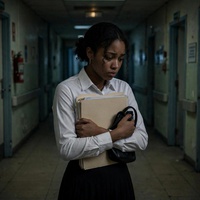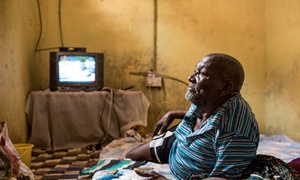
The African voice is being unfairly put on trial in the age of artificial intelligence, and the existence of AI should not make human intelligence, particularly African expression, something that must constantly prove its authenticity.
Let's talk.
When it comes to suspicion as a writer, it is not entirely new to me.
In 2018, during my SS3 graduation, my principal asked me to write the farewell speech. I was the Head Girl, but the director had initially preferred the Head Boy. I wrote the speech, occasionally borrowing my mother's button phone to look up words. When I submitted it, my principal asked, "Who wrote this for you?" I told him I did.
On graduation day, the Head Boy had not prepared his speech. I was asked to read the one I had written. The hall went quiet as I read. When I finished, the MC stood up clapping, including everyone else present, then he asked who had put the speech together.
Again, I said I had.
That experience encouraged me to take writing seriously. I began writing stories in notebooks, with my siblings as my first readers. Years later, however, I didn't know I would find myself defending my work against a suspicion that did not exist when I first began writing.
The truth is that, as writers, our voices are shaped by where we come from, what we have experienced, what we have witnessed, the languages we speak and the people we have encountered.
These influences affect how we think, what we notice and how we express ourselves. Yet, in an age when machines can generate convincing writing, a piece that sounds unusually polished or unfamiliar can quickly become suspicious, even to people who seem to have studied writing so well.
I remember a woman who once commissioned me to write an article of about ten pages about the struggles of the young Nigerian. She gave me four or five days and warned me not to use AI. I researched, reviewed my sentences and worked on the article before submitting it. Her response was that I had used AI and that she could have done the work herself in a minute.
I told her I hadn't. She did not believe me.
Eventually, I became reluctant to research and polish my work. The more effort I put into improving it, the more likely I seemed to be accused. I began leaving things untouched rather than inviting another suspicion. Eventually, I stopped working with her.
The consequence of that suspicion was not merely an accusation. It changed how I wrote. How many more writers have to go through this cycle before we recognise the damage suspicion can do? A writer should not have to choose between producing good work and being believed.
Back to the topic before us, I strongly stand that African expression cannot be one language, culture, accent or experience. A Nigerian writer may draw from Pidgin, Yoruba, Igbo, Hausa or any of the many languages spoken across the continent.
But what happens when the way we express ourselves does not fit someone's expectation of what human writing should sound like? When an expression is unfamiliar, a sentence is unusually polished or a writer's voice carries influences that the reader cannot recognise, does that make the work artificial? Or does it reveal the limitations of the person judging it?
This is not merely a personal concern. In October 2026, Zimbabwean writer Simbarashe Kundizeza won the Caine Prize for African Writing for his short story, The Blue Fighter. Days later, an AI-detection tool reportedly flagged almost the entire story as AI-generated. Kundizeza denied using AI. According to reports by the BBC and The Guardian, following an investigation involving interviews and examination of draft metadata, the Caine Prize cleared him and confirmed that his award would stand.
This experience exactly is what demonstrates why an automated assessment should not be treated as proof of authorship. A tool can raise suspicion, but suspicion alone cannot establish that a human writer did not produce the work.
A writer's expression may carry the rhythm of conversations at home, the humour of a neighbourhood, the wisdom of a proverb or the details of a cultural practice. These influences can shape writing in ways that may be unfamiliar to someone outside that experience.
Consider someone describing an Igbo meal they have encountered. Their description may be shaped by watching it being prepared, tasting it, observing how it is served and listening to the people who make it. They may remember the smell, the ingredients, the occasion on which it was served or the conversations around the table. These details give the description its texture.
Someone who has never had that experience may rely on information gathered elsewhere. Both may produce a description, but they are not drawing from the same relationship with the subject.
This does not mean that only people who have personally experienced something can write about it. Imagination, research and empathy also make writing possible. However, our experiences influence how we interpret information and make creative choices. They shape the details we notice and the meanings we attach to them. There is no single African experience against which every African writer should be measured.
This means that the way we express ourselves may not always fit someone's expectations of what human writing should sound like. An unfamiliar expression, an unusually polished sentence or a writer's voice carrying influences the reader cannot recognise does not make the work artificial. It may simply reveal the limitations of the reader's understanding or exposure.
Who then, decides what an African voice should sound like? Is it the reader, the detector, the institution or the writer? If our expressions are shaped by different cultures, languages, environments and experiences, then authenticity cannot be measured against a single expectation. A voice should not become suspicious simply because it does not sound familiar to the person listening.
AI can assist with writing. It can generate arguments, imitate emotion and produce impressive sentences. But generating emotional language is not the same as having lived the experience behind it. A machine can describe a family gathering, but it has not sat at that table, heard those conversations or formed memories of the people there. A writer draws on such experiences when choosing which details matter and what they mean.
And even when a writer has not personally experienced something, their imagination, research and interpretation remain part of the creative process.
The existence of AI, therefore, should not become a reason to distrust human expression. We should take plagiarism and dishonest use of AI seriously. Writers deserve protection, and originality matters. But a polished sentence, an unfamiliar expression or a writing style that does not match someone's expectations cannot, by itself, establish that a machine produced the work.
When I say protecting originality, it should mean examining a writer's process, drafts, ideas and ability to explain their choices, rather than judging authenticity by how a piece sounds. Automated detection should not be treated as unquestionable proof.
Native intelligence is more than the ability to arrange words correctly. It is the knowledge we draw from our surroundings, the connections we make, the experiences we interpret, the research and questions we ask and the meanings we create from them. It is expressed differently because people do not all live, observe or think in the same way.
My farewell speech was mine in 2018. My voice did not begin with AI, and it should not need to defend its existence because AI now exists.
The African voice should not have to sound less polished, less intelligent or less like itself to be believed. Our voices do not become artificial simply because they sound different from what someone expects an African voice to sound like.
Who gave me those words? My experiences, my research, my observations, my feelings and the world around me. But not AI.


 19