The magistrate’s fan was broken, so the courtroom smelled of warm paper, damp wool and the sour sweat of people waiting to be absolved.
On the evidence table sat a single torn gele, indigo silk, stiff with dried festival mud. Nobody in the gallery looked at it. They looked at the ceiling, their shoes, or the backs of the heads in front of them.
Bello, a retired magistrate, did not bang his gavel. He simply opened the ledger.
The inquiry had been convened by a local civic committee after complaints about the treatment of women during the town's harvest festival. Representatives of the residents' association and market women's group had helped organise it. They had asked Bello to preside because of his years on the bench. Those called to give accounts had agreed to attend.
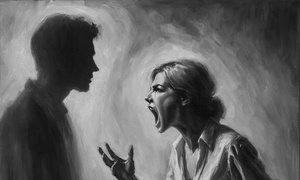
“This is a public inquiry, not a criminal trial,” he began, his voice barely audible against the hum of the generator outside. “I am not here to convict anyone. But we will establish who failed in their duty when a woman went out to celebrate the harvest of her own town and returned with bruised ribs, a torn wrapper, and her face circulating on hundreds of phones before nightfall.”
He nodded to the clerk.
“Before we begin, there is one request from the woman at the centre of this matter. She has agreed to submit a statement, but she does not want her name or face made public. Her statement will be read with her permission. Nobody is to use this hearing as an opportunity to circulate her identity or images.”
He turned towards the clerk.
“First.”
Tunde stepped into the witness box. He was twenty-six, broad-shouldered, wearing a freshly ironed kaftan that still bore the creases of a tailor’s table.
“You struck her,” Bello said.
“The masquerade whip is part of the rite, sir,” Tunde replied, his chin steady. “Everyone knows not to cross the square during the second drum. Even the elders expect us to enforce the boundary.”
“Did the elders hold your wrist?”
“No, sir.”
“Did the drum force your hand?”
Tunde hesitated. “It is our custom.”
“Custom does not have hands, Mr Tunde. You do. Step down.”
Bello turned a page.
“The custodian.”
Chief Okafor did not walk to the stand; he proceeded towards it, his coral beads clicking softly against his chest. He looked at Bello the way a grandfather looks at a boy who has forgotten his proverbs.
“You told the youth that enforcing the boundary preserves the sanctity of the rite,” Bello said.
“Without boundaries, a festival becomes a market,” Chief Okafor replied calmly. “Our fathers guarded the square so the town would remain whole. If we dilute every rule because modern ears find it harsh, what remains of who we are?”
“Tell me, Chief, when your fathers guarded the square, was it to protect the women of this town, or to hunt them?”
The chief’s jaw tightened. “The rite was never meant for cruelty.”
“Yet when cruelty wore the mask of your rite, you called it heritage.”
Bello leaned forward.
“A custom that requires a woman’s humiliation to survive is not heritage. It is a carcass you are forcing the living to carry.”
The chief looked down at his beads. He did not answer.
“Next.”
Chinedu approached, clutching a cracked smartphone against his chest like a shield.
“You stood four feet away,” Bello noted. “You had a loud voice. You were close enough to see what was happening. Yet the video shows sixty-two seconds of uninterrupted assault, held remarkably steady.”
“I needed proof, sir!” Chinedu burst out. “If I didn’t record it, the elders would say it never happened! I posted it so the world would fight for her!”
“And did you try to get her help? Did you blur her face before you gave strangers the chance to recognise her?”
Chinedu’s mouth opened, then closed.
“I... I uploaded it straight from the square.”
“You wanted outrage,” Bello said. “You got three thousand shares. She got strangers recognising her at the bus stop. Recording a crime may preserve evidence, but it does not give you ownership of the victim’s pain.”
He paused.
“Her face, her name and her story are not public property. She has the right to decide whether she speaks, what she shares, and how her experience is told. You had no right to make that decision for her.”
Bello glanced towards the second row.
“The mother.”
Mrs Adeyemi rose slowly. Her wrapper was tied tightly, as though holding her together. When she reached the box, she did not look at the torn gele on the table.
“When your daughter came through the door injured, you locked the gate,” Bello said. “You told the neighbour who helped her walk home that it was a family matter. Why?”
Mrs Adeyemi’s voice trembled with terror.
“You do not live on my street, sir. You do not know how quickly a girl’s name turns to ash. I have two younger daughters in that house. If people say our bloodline brings scandal to the festival, who will knock on our door? Who will buy from my stall? I was trying to save her future!”
The courtroom went very quiet. Even Bello paused.
“I see,” he said, his tone losing its edge, turning heavy. “You were protecting her from the town.”
“Yes, sir.”
“By finishing the town’s work inside your own living room.”
Mrs Adeyemi gripped the wooden rail until her knuckles paled. A single tear finally broke free.
“Where else was I supposed to hide her?”
“Nowhere,” Bello said. “You were supposed to stand in front of her.”
He motioned to the clerk.
“The pastor, the DPO, and the youth chairman. Together.”
The three men stepped up to the bar, one in a clerical collar, one in starched police blue, and one in a tailored senator suit.
“Three doors,” Bello said, looking from one to the next. “She knocked on all three. Pastor, you told her that bitterness poisons the soul and urged her father to accept an apology over palm wine so the church would not be divided.”
“The scripture commands peace, sir,” the pastor murmured.
“Peace without justice is convenient for the person who caused the harm. Forcing a bleeding woman to shake hands with her attacker is not reconciliation. It is a gag.”
He turned to the Divisional Police Officer.
“Officer, after she reported the assault at your station, your desk sergeant told her to ‘go and settle with the community elders’. You were informed of her complaint, yet no proper action was taken.”
“We are understaffed, sir, and community friction—”
“Your duty is to enforce the law, not to surrender it to community convenience,” Bello cut in. “When the uniform retreats, the street belongs to the strongest fist.”
Finally, Bello looked at the youth chairman, who had spent the entire morning staring at his polished loafers.
“You organised the post-festival reception,” Bello said. “You saw the video. You know Tunde. You drank with him that night.”
“I didn’t touch her, sir,” the chairman said quickly. “I hate violence against women. Ask anyone. Even my sisters—”
“If that woman had been your sister, would you have poured Tunde a drink?”
The chairman swallowed hard. The silence stretched until the generator outside sounded like thunder.
“No, sir,” he whispered.
“Then your decency is merely a family favour, not a principle.”
Bello closed the ledger.
“Before I make my findings, the clerk will read the woman's statement.”
The clerk unfolded a sheet of paper.
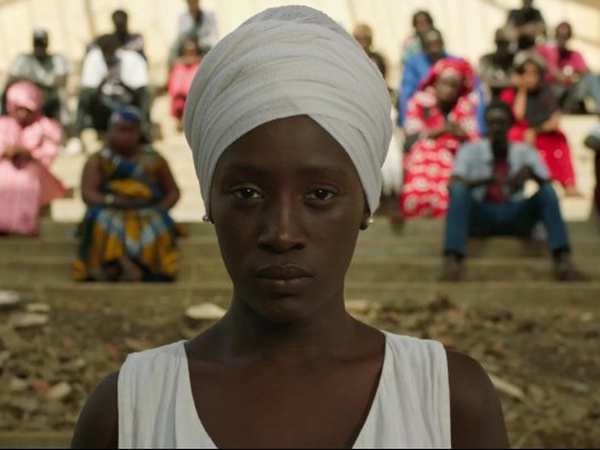
“I did not go to the square to challenge anybody. I went there to celebrate with other people from my town. I knew there was a boundary. I didn't know crossing it meant somebody could beat me like that.
“When I got home, I was told not to make trouble. My mother said she was protecting me. But I was the one who had been hurt. Then the video started going round. People recognised me. Some asked what I had done to deserve it. I hadn't even decided who I wanted to tell, and strangers were already discussing what happened to me.
“I want the people who beat me to answer for what they did. I want the video taken down. I want to go to the market without people looking at me and whispering.
“I don't want to apologise to anybody. I don't want another meeting where people will tell me to forgive and move on because they want the matter to end.
“I am not asking anyone to destroy the festival. I just want to know why I cannot celebrate in my own town without being hurt.”
The clerk folded the paper.
Bello remained quiet for a moment. Then he picked up his pen.
“The findings of this hearing are as follows,” he said as his nib scratched the paper.
“First: Tunde’s actions must be investigated, and the evidence of the assault referred to the appropriate authorities. Tradition is no defence for deliberately harming another person.
“Second: Chinedu must preserve the original recording and make it available to investigators. He must also remove the victim’s identifiable footage from the platforms where he published it and stop its further circulation. Evidence must protect the truth without exposing the survivor to another punishment.
“Third: The conduct of the desk sergeant and the Divisional Police Officer must be formally referred to the appropriate police authorities for investigation. A woman reporting violence must not be sent away to settle it with the very community that failed to protect her.
“Fourth: Chief Okafor’s council must suspend its use of physical force in enforcing the festival boundary until the practice has been reviewed and clear safeguards put in place. A culture strong enough to survive centuries is strong enough to shed its cruelty without dying.”
Bello set the pen down and looked at the torn indigo gele on the table.
“The hearing also recommends that the woman be offered medical support, protection of her identity, and access to justice without pressure to withdraw her complaint or appear before the public. Her wishes must guide how her story is handled. Her silence must not be mistaken for consent. Her forgiveness, if she chooses to offer it, must not be demanded as the price of peace.”
He looked around the room.
“Justice for the complainant requires more than punishing one hand. It requires removing the shields from every hand that held the door closed while she screamed.”
He tapped the gavel once. It gave a dry, final crack.
“The hearing is adjourned.”
Outside, the afternoon sun hit the courtyard like a slap. The crowd spilled down the concrete steps into the noise of Lagos: yellow buses honking, hawkers balancing trays of groundnuts, men arguing football scores beside a vulcaniser’s shed.
At the bottom of the steps, the youth chairman stopped.
Ten feet away, beside a parked danfo, a conductor had grabbed a young woman’s wrist, laughing loudly as she tried to pull her bag free while two passengers chuckled from the window.
The youth chairman looked at the girl’s face. He did not know her surname. She did not attend his church. She was not his sister.
Behind him, Chief Okafor paused on the top step, watching him.
The youth chairman took a breath and stepped off the curb.
“Leave her hand,” he called.
The conductor turned.
“Who are you?”
“Let her go.”
The conductor laughed and tightened his grip.
The chairman looked towards the passengers still watching from the window.
“You people can see what he is doing." Chairman said
"Please, come down.” one of the passengers responded..
For a moment, nobody moved.
Then one passenger climbed out of the bus. Another followed. The conductor released the woman's wrist and stepped back, muttering under his breath.
The young woman pulled her bag against her chest.
The chairman stood beside her until she was ready to walk away.
At the top of the steps, Chief Okafor was still watching.
This time, the chairman did not look back.



 11