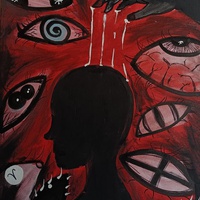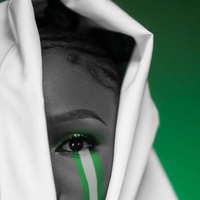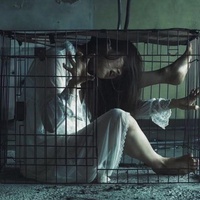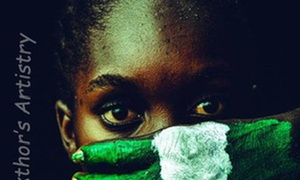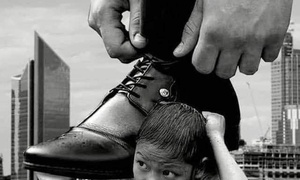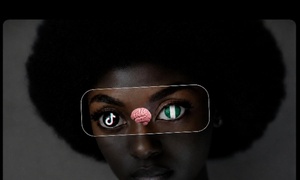
Being a full-time Nigerian can be a blessing and a curse.
We have access to some of the world's finest mineral resources. We have young, brilliant, entrepreneurial minds that lie untapped, we have pride and dignity and a voice that echoes thunder when it is united. But Nigeria is also one of the poorest, most corrupt, most insecure countries in the world.
Being Nigerian is a full-time job, I wonder why we never learn that in school. For an average Nigerian, mathematics is an uninvited companion in our everyday lives. Before you leave your house, you have to calculate and account for every meal you can afford to have that day. You have to leave your house hours before work starts so you can catch transport. You have to dissect and monitor every split second like in a practical demonstration. You have to draw a map of roads to follow and roads to avoid so your name doesn't appear as a headline;and God forbid you forget to plan for the unexpected.
But the thing is, we always still find ways to laugh. We complain, we make jokes, we turn our suffering into memes and somehow find a way to get through another day. I wonder if that is what makes us so interesting, or if we have simply learnt to make entertainment out of things that should never have been normal.
A blessing and a curse, indeed.
Nigerians are said to be one of the most resilient people in the world. I often wonder if that's true or if we've simply run out of alternative responses. The ability of the average Nigerian to simply "move on" without batting an eye is deadly concerning.
Perhaps we are simply unpacking our set response to trauma from where we were slaves on our own land. But whatever that response to disappointment is, I find it... oddly fascinating.
Mama Nkechi gets scammed of her child's school fees. Everyone shouts and cries and curses, and eventually she's taking a loan like nothing ever happened.
Our government decides to take away our ability to vote, protests and billboards are up for a month, and eventually we begin to forget. Amazing, isn't it?
No matter how long we grieve, no matter how long we fight, no matter how loud we shout, we always, always, move on.
Electricity disappears for six whole months, we move.
Children are kidnapped, raped and tortured, we move.
A patient dies because a hospital didn't have any oxygen tank, eventually, we move.
It always seems like we have no choice, like our response to pain should be constant, but how and when did we get to this point where resilience has become our national coping mechanism? Why have we taken our ability to endure as a sorry excuse for not demanding better?
We had to be resilient to survive once. Now, our hands are tied and our backs are bent with one answer shoved down our throats, to resign...to move.
But where exactly are we moving to?
"I'm sorry for the inconvenience" is a phrase that has probably done more work in Nigeria than most government officials.
Anyway, Nigeria is truly sorry for the inconvenience. But don't ask us why, we are simply learning from those that were here before us.
The electricity company is sorry for the inconvenience of leaving our nation in darkness for years on end.
A transport company is sorry for the inconvenience as your loved ones get kidnapped from their vehicle.
The president sends his apology for not fulfilling any of his campaign promises as his tenure nears its four-year mark.
A school apologises for the inconvenience after its staff repeatedly harassed and assaulted its students.
A community is "sorry" about taking away your rights for the sake of traditions.
Terrorists are indeed "sorry" for the gruesome unrest they still cause.
Oh, and wait, just wait; yesterday, a mother apologised to her children for the inconvenience of selling them as sex slaves.
I know that look you have on your face now, but you really can't judge us if you haven't lived as us.
And I'm truly sorry for the inconvenience of dumping all of this on you. Don't expect me to take it away, though. It's our reality. You, just like us Nigerians, have to bear it until you can dump it on someone else without expecting any change.
It's the circle of wrongs.
Papa Emeka buys a product for ₦2,000 and sells it for ₦10,000 because, well, business is business. An underground enterprise buys expired produce, changes the expiry date on the label, and then sells it to unsuspecting Nigerians. Somebody gets robbed, speaks out, and our first response is to ask what they were wearing, where they were, or why they didn't know better.
We are not a serious people.
We keep crying for change every day, but we oppress the next person just as much, maybe even more than the government does.
We charge more than quadruple the price of a regular item. We cheat ourselves. We find cheaper ways to produce things that WE use, putting our health and lives at risk. We mock victims for speaking out and demanding justice.
We keep reaching for a country that would rather condone robbers and murderers than sense any trace of homosexuality.
We openly condemn discrimination whenever we experience it and still participate in it whenever it benefits us.
We harm ourselves with ethnic bias, intertribal war, cultures that encourage harassment and violent attacks on people. And we're actively rooting for a change of government.
And don't even get me started on tribalism. We can spend an entire day complaining about how a particular government has failed us, then turn around and decide that someone from another tribe is automatically less deserving of an opportunity. We complain about being treated unfairly, but we have no problem doing the same to someone else.
We cannot keep asking for a better country while defending the very things that make it difficult to live in one.
We want change. We just don't always want to be changed.
What a joke of people we are.
The country of "at least".
Amidst the fast rising list of struggles and complaints, the average Nigerian has learnt to be quiet because "at least you're alive", "at least your life is better than someone else's."
You shouldn't complain because at least you're not hooked to a ventilator machine, or you're not fighting cancer or kidney disease.
You can't afford two decent meals a day, but at least you have a job.
Your salary can't take you through the month, but at least you have a salary.
You can't afford to move out of that uncomfortable living situation, but at least you have a roof over your head.
You can't find a job after school, but at least you have an education.
You can't afford basic healthcare as a university graduate, but at least you're still alive.
Nigeria is my home, our home!!!
Why do I have to feel guilty for wanting more?
Why does it seem like I'm ungrateful for asking for a life?
I want to live, not just survive.
And before you say it, I know: "At least I'm alive."
I know I am. But is that all I can be?



 2