Score |
234


Ibn Abdullah 🦁

 Momma's Boy @ Abubakar Tafawa Balewa University Bauchi
Momma's Boy @ Abubakar Tafawa Balewa University Bauchi



What is, what was and what might be.
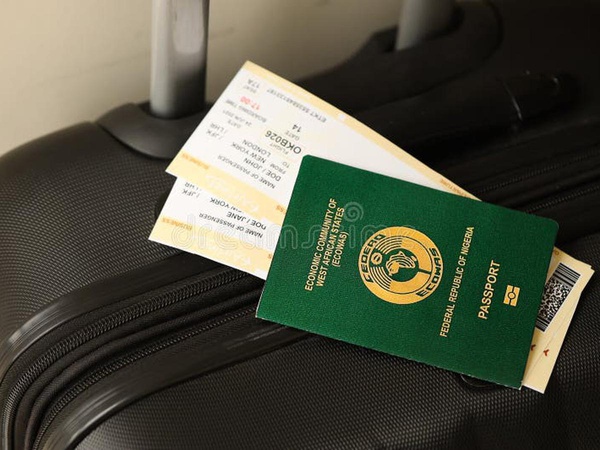
<p>Wazobia started well.</p><p><br/></p><p>Adeiza led Wazobia to victory against the allied forces of the Westanians and Ming Xhi. The final battle of Benin saw the Wazobian forces encircled behind Benin’s towering walls. A large dragon born of Ming Xhi sorcery and a massive cannon born from Westanian craftsmanship stood against them. Yet, under Adeiza’s leadership, they prevailed.</p><p><br/></p><p>And so, Wazobia became a nation.</p><p><br/></p><p>Farouq stared at a marble statue of Adeiza riding a large lion. He could only wonder what Adeiza would think of what his nation had become.</p><p><br/></p><p>“Farouq!” Mrs. Ade called, snapping the distracted boy back to attention.</p><p><br/></p><p>He finally turned away from the statue of Adeiza and joined the column of classmates as the museum tour guide continued his exposition on the brilliance of Wazobia’s White Witch. On and on the tour guide went, giving them detail after detail about the exploits of the great Wazobian founders.</p><p><br/></p><p>Farouq knew it all.</p><p><br/></p><p>He had studied the history. He had bathed in the words.</p><p><br/></p><p>The battle over the Atlantic, where Bialese warrior Emeka the Horned Demon led Wazobia’s forces against Westanian ships. The recapture of Zazzau, where the great Zonan Prince Aminu began the reconquest of Northern Wazobia.</p><p><br/></p><p>Farouq had studied more than the conquests of the founding fathers. He studied the economics of an infant Wazobian republic. The diplomatic brilliance of Titilayo the Witch particularly stood out to him. She had opened Wazobia’s doors to trade and reconciliation in a post-war era. Her efforts brought Wazobia prosperity, peace, and propulsion.</p><p><br/></p><p>Farouq still had pictures of Ikenga, the first man on the moon, plastered on his wall, the green-white-green flag fluttering with pride.</p><p><br/></p><p>Farouq recalled lessons from his history teacher: tales of a Great Wazobia. A land of much beyond promise. A land that was the envy of other lands.</p><p><br/></p><p>From Zazzau to Walli Ille to Abala.</p><p><br/></p><p>Ancient Karnakian prosperity interwoven with Wazobian intellect.</p><p><br/></p><p>They were leaders. Leaders of men. Leaders of nations.</p><p><br/></p><p>The nations were sprinkled like colorful pieces of a neatly disorderly mosaic, like the threads of an intricately woven tapestry. They were sovereigns. In many a field, they claimed the crown. In science, they excelled beyond borders. Their finances sustained nations beyond her walls. Their art was the gallery to which nations prostrated.</p><p><br/></p><p>The nations were all under her wing.</p><p><br/></p><p>The beasts were its source of might, quite true, but beyond that, there were its people.</p><p><br/></p><p>Bold and beautiful, they came in many shades.</p><p><br/></p><p>The three titans: Walia, Zonan, Biala. And many more in between.</p><p><br/></p><p>They were prosperous as one.</p><p><br/></p><p>Until war reared its ugly head once more.</p><p><br/></p><p>Wazobia went to battle within its walls.</p><p><br/></p><p>It burned.</p><p><br/></p><p>The beasts that built Wazobia became its destruction. And now they were no more.</p><p><br/></p><p>And the vultures would never absent a bloody feast.</p><p><br/></p><p>They came.</p><p><br/></p><p>The Westanians took whatever their ships could contain. Ming Xhi still had chests full of Wazobian treasures.</p><p><br/></p><p>Farouq couldn’t help but wonder...</p><p><br/></p><p>Where did Adeiza’s Wazobia go?</p><p><br/></p><p>How did it get so depraved?</p><p><br/></p><p>When did it all go wrong? </p><p><br/></p><p>Was it when the first flame of civil strife was lit?</p><p><br/></p><p>Was it when instability birthed opportunists?</p><p><br/></p><p>Was it when duty that guided leadership was replaced by self-gratification?</p><p><br/></p><p>At home, he lay in bed, looking upon the Wazobian emblem on his ceiling.</p><p><br/></p><p>He had never once been any less patriotic.</p><p><br/></p><p>But he stared hard at his international passport, then at the visa, and felt no conviction whatsoever to stay in the nation he so dearly loved.</p><p><br/></p><p>He was leaving.</p><p><br/></p><p>He was sad to leave, but he was remorseless.</p><p><br/></p><p>Patriotism did not mandate self-destruction.</p><p><br/></p><p>He could support Wazobia externally.</p><p><br/></p><p>He did not believe that, but he also believed it.</p><p><br/></p><p>Cognitive dissonance.</p><p><br/></p><p>Both were true.</p><p><br/></p><p>What could he do, though?</p><p><br/></p><p>Stay?</p><p><br/></p><p>And then what?</p><p><br/></p><p>To quench a burning house, you have to go outside to get water. And going outside happens to be the only guaranteed way to escape the flames.</p><p><br/></p><p>Farouq loved his house, but he did not want to burn along with it.</p><p><br/></p><p>Farouq loved Wazobia, but Farouq had a life he wanted to live.</p><p><br/></p><p>Farouq loved Wazobia, but he had dreams he wanted to touch.</p><p><br/></p><p>Farouq loved Wazobia, but he had worries he wanted to discard.</p><p><br/></p><p>He did not want his life’s terms to be dictated by potbellied pseudo-homosapians drowning in agbadas and suits who cared a little below nothing about the average Wazobian.</p><p><br/></p><p>He did not want to live where he missed his cousin’s wedding for fear of the peril of the road.</p><p><br/></p><p>He did not want to live in a place where people were reduced to nothing more than survivors.</p><p><br/></p><p>He did not want to live in a place where a leader’s words weighed a marble column less than a feather.</p><p><br/></p><p>Farouq admired Wazobian history.</p><p><br/></p><p>Adeiza, Muazu, Chukwuebuka, Adebayor... and more.</p><p><br/></p><p>Many a name have lead this nation.</p><p><br/></p><p>Leaders of a prosperous Wazobia.</p><p><br/></p><p>Farouq wished he lived in the Wazobia they saw.</p><p><br/></p><p>But he didn’t.</p><p><br/></p><p>Farouq loved Wazobia.</p><p><br/></p><p>But nothing was stopping him from leaving.</p>



 91
91


Other insights from Ibn Abdullah 🦁









Contributor Points

Points-to-Coupons

Referral Earning

Insights for you.

Drums Before Guns
Before we had tanks, we had talking drums. Before we had political parties, we had prai...
316 views
32 upvotes
29 comments





We want to live🥺
There's something I've noticed about Nigerians in the diaspora.They sometimes seem to h...
118 views
24 upvotes
27 comments


All that I lost
It's not a good dayAt least not for meEven with the imposter fledEven with all the clar...
321 views
26 upvotes
20 comments